This story begins before I even knew I was going to Chile. Summer of 2008 back in Chicago in between my two years in France.
Risen, James, and Eric Lichtblau. “Bush Lets U.S. Spy on Callers Without Courts.” The New York Times, December 16, 2005. Read Article
Cauley, Leslie. “NSA Has Massive Database of Americans’ Phone Calls.” USA Today, May 11, 2006. Mainway Metadata Database Context
Mark Klein Whistleblower Documents / Hepting v. AT&T. Electronic Frontier Foundation (2006). Class Action & NSA Room 641A Case Details
PBS FRONTLINE. “Spying on the Home Front.” Directed by Michael Kirk. Aired May 15, 2007. Watch / Read Program Transcript
PBS NOVA. “The Spy Factory.” Directed by Scott Willis. Aired February 3, 2009. Program Overview & Transcript
July of 2010 went to Chile. Moved in January to calle Gorbea in an apartment building for a year. That must have been 2011.
When did I move into Centro Cultural Manuel Rojas? January 2012.
This took place at the place on Lucretia Valdez? The studio in a larger building rented from lady.
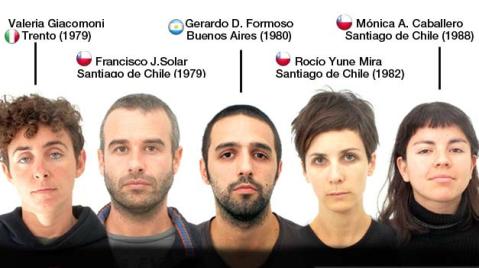
Key Dates of Caso de Bombas
October 4, 2011 (Pre-trial Release / Measure Changes): Following a ruling by the Santiago Court of Appeals invalidating key evidence presented by the prosecution, the Santiago 8th Guarantee Court ordered the release of the remaining defendants from preventive prison, placing them under alternative measures (such as house arrest or night-time confinement) prior to trial.
June 1, 2012 (Verdict & Acquittal): The Tercer Tribunal de Juicio Oral en lo Penal de Santiago unanimously acquitted all six remaining defendants.
July 13, 2012 (Final Sentence): The court delivered the formal written sentence confirming the acquittal of all charges.
October 4, 2012 (Supreme Court Ratification): The Supreme Court of Chile rejected an appeal filed by the prosecution and the Ministry of Interior seeking to annul the trial, finalizing the acquittal and permanently ending all legal restrictions on the defendants.
The part of the story where I intersect it briefly must have been around July 14 or perhaps it was after Oct 4.
I was too lonely for the first section of time in Chile.
Moving into the apartment was a little better, but living by myself still seemed unnatural. I met La Daesha and she invited me to a party at Centro Cultural Manuel Rojas. There were Argentines playing music, and I danced. 10 out of 10 for fun times.
I kept going over there. Singing, dancing, working on creative projects that was what was going there. Everyone doing something different. Writing, directing, acting, doing journalism, toying with a media company people were doing it because they had to funnel their creative energy somewhere and this was the place. There wasn’t any self consciousness about it. The environment where there was no embarrassment in saying can I read this out loud to you? or turn up the music, or let the space be taken over by dance.
My friend from the states contacts me and he has finished a dual PhD with the U of Chicago and wants to hike Patagonia in the Torres del Paine. I knew I wanted to go on this trip, so I would need enough money saved.
I moved into the Centro Cultural with my own big room and it was long conversations by day and parties every night. They were parties with a purpose though. A theatre troupe benefit, a poetry slam night, the Argentine trio. Sometimes we collected money for the groups by selling beer.
Ratón had his literary salon there in the patio. He, Cristoból and some other guys. Usually only 3 people. Really intense conversations about the details of the prose. Would other phrases be better? The reading out loud was the test to see if the line worked or not. Occasionally, they read them aloud in a packed bar by the side of the park which made for a fun night out.
My navigation of chilenismos improved.
It was the birth of distinctions in funniness. When you grow up in a culture that has funny people few and far between, you might say, for example, that’s the class clown, that’s the funny guy. And you meet one here or there.
At this time in my life, I don’t know what happened. My ears opened up, I met the critical mass of people, and all of the sudden all of these distinctions regarding the ways in which people are funny begin to emerge. And then funny just became non-descriptive. Anyone and everyone had their moments.
Lucho lived there and was a social worker. We started walking down the corridors of Chilean history. The history of Radio Bío Bío. The school where they had all met each other. How they were rounded up to spit on at the funeral of
Lucho taught me how to walk through the market. You walk all the way down the path observing the fruits and vegetables. This way you are showing the first tomato guy that you are examining both all of the tomatoes and all of the prices. Then when you go back to buy them, the negotiating kicks off with a big, unstated compliment. (I have seen all the tomatoes at this market and these are the best). I have a big round naive looking baby face so Lucho did all the haggling.
It was here at the Centro Cultural I had a moment of culture shock. I saw a guy, who only had 10 luca to his name, give all of it to another person because they asked for it. I thought this is friendship, this is generosity in a way I had scarce seen in my life.
One of the best parties was the night that Chinoy came to sing on the patio.
The main joy of living at the Centro Cultural was also the main challenge. Waking up every day to cleaning up after a party to start a workday was somewhat tedious. The bathroom flirted with being asceroso with tanto frecuencia so I got a studio nearby in a gorgeous old building made into flats.
There’s this way that food get wrapped up with psychology. For me, I loved cooking and having meals with friends. Dinner parties were my absolute favorite. My choice for a last supper would probably include a dinner party in Chicago with select guests. Anyhow, I was newly aglow with the ability to cook for someone else. I also loved all the food.
After going to the market and bringing in a big haul, Lucho went off to work the next day and I hit the more Americanized grocery store with my old lady cart.
He came back and was like oh geez look at all this food. He was like let’s have a dinner party.
Lucho had told me that he knew Cariñoso. That he knew where the casas Okupas were and the whole scenario.
Lucho was a social worker and from what I could gather he went to this other neighborhood that was supposed to be really bad and ruled by gangs. He goes in there on his bicycle and did social work for the government, like telling women how they could apply for assistance and counting people. He said this neighborhood was so bad that when the gang leader died and was taken through the streets all the people shot off their guns into the air as a salute.
Lucho had a look, he said his nickname had been Penguino. You see, his hair was extremely thick and black from his Mapuche mother, but he was tall and white toned from his European descended dad. Since his dad was stepping out on his wife, that made Lucho a wacho. To me, he was a wachón.
We had both been following the Caso de Bombas. Lucho told me he had been friends with Cariñoso. Said he was a handsome dude. I saw his picture in the paper a couple of times with a kind of deer in headlights look so I doubted he was that good looking.
Lucho says we are going to a party. There is going to be a big party at someone’s house. It was the biggest party I have ever seen or attended. The vibe at this party was so punk I can’t even describe it. So raging, it made my memory of listening to Henry Rollins seem chill. We left the party. I had found it. The party that was too much party.
A couple of days later Lucho asked to borrow my cell phone to arrange the dinner party.
Cooking in the kitchen is a special sort of flow.
The guests arrive.
Laughing, joking, talking, stories flowing with the wine.
He was good looking, the kind that gets better as he speaks. He was humble and funny and alive.
The next afternoon, I went back over to ensure the kitchen was clean. A police officer knocked at the door and asked for el Jacinto. He hadn’t lived there in a number of years. He had had an outstanding warrant for not paying child support so that was the pretense of their visit. To ask if he was there. I told the officer no, he didn’t live here.
Greenwald, Glenn. “NSA Collecting Phone Records of Millions of Verizon Customers Daily.” The Guardian, June 5, 2013. https://www.theguardian.com/world/2013/jun/06/nsa-phone-records-verizon-court-order.