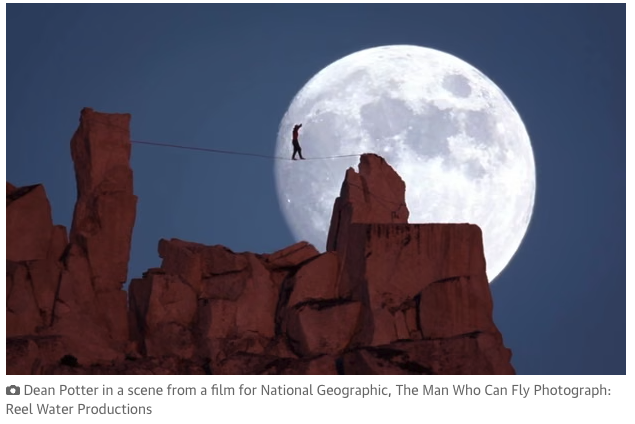
This quote of Dean Potter’s brought to the public’s attention in the series the Dark Wizard on April 14, 2026 presents the viewer with a question: what is this relationship between art, spirituality, and athletic prowess playing out in the mountains.
But first, what I read before that fishes in the same water.
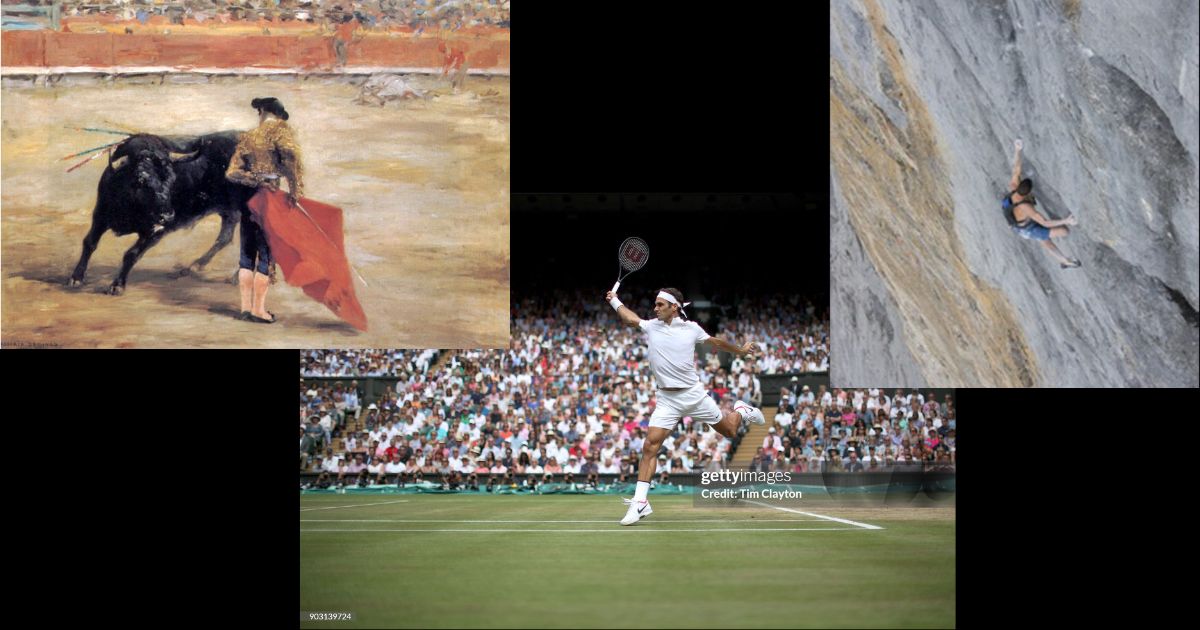
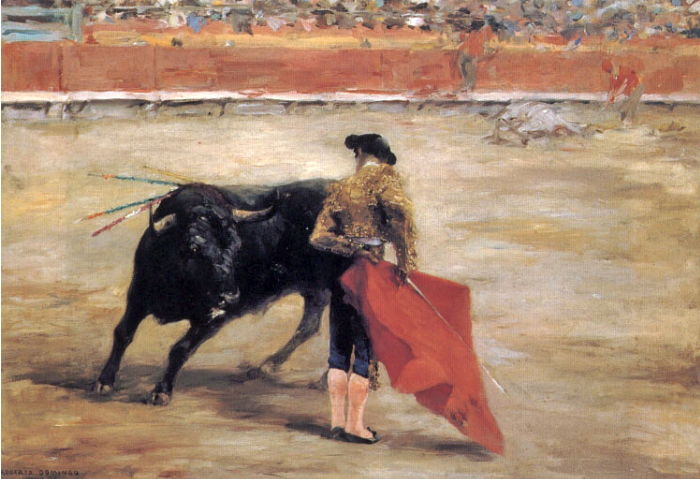
Ernest Hemingway’s Death in the Afternoon explores the moment in the sport when the bullfighter is straddling the line between life and death. This is Man vs. Animal. The climax of the artform is the death in the tragedy. Imagining a looking-on we see the moment the man faces death in the midst of his most graceful movements. In dominating the moment, he lives.
David Foster Wallace’s String Theory essays seems not as closely related to bull fighting and mountain climbing because typically no one dies during the match. Nonetheless, DFW does use the tennis arc of life to explain the little spiritual mini deaths that can accompany waves of those with athletic prowess. We could call tennis Man vs. Man.
From DFW we get the idea that great feats of the athletic arts defy or reach the outer edges of what we know about physics. If what he is describing is true, that there has been a movement in tennis precipitated by Federer on the racket where the force and spin and angle created a movement that somehow left a residue, witnessed, but inexplicable in the boundaries of the laws of mechanics. then that can of Federer moment would be a miracle. Here we get the miraculous.
Existentialism is often associated with decisionism. Face a face the existential threat, one must take decisive action. The decision puts an end to the endless blah blah blah of political romanticism.
In bullfighting we see the decisive action in face of death; in tennis the winning shot is the one that is “unanswerable– the decisive shot.
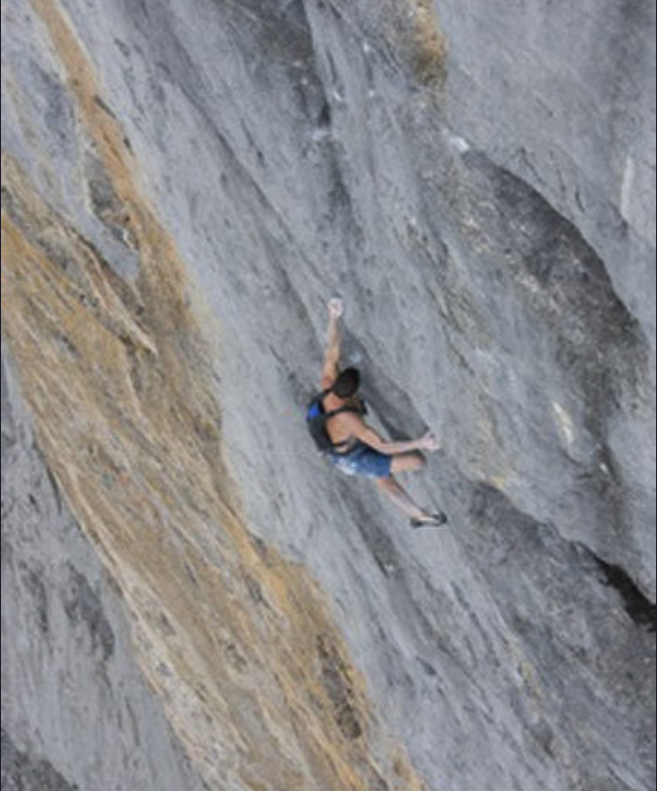
Finally, when we examine the sport-art of mountain climbing we get to Man vs. Mountain.
In bullfighting and mountain climbing whomever takes up the sport is also taking up this line that Carl Schmitt says is the role of the sovereign, which is making decisions in the face of existential threats to existence.
We want to be careful in extended metaphors to places too far afield but we also want to know what it feels like to negotiate that tenuous line.
The second is the exploration of the spectator. Like ancient Greek tragedy, bullfighting takes place in a theatre meant for it. So does tennis. In mountain climbing the spectatorship aspect of the sport is not less important, but the theatre is a natural one.
So in each investigation we have the artistry developed by the practicioner, and the spectatorship developed by the fans.
Another issue we can note is the role of lines and geometry in each sport. In bullfighting we have the angles that the fighter is trying to dance towards. In tennis, DFW discusses the lines of the ball as vector lines. In mountain climbing, route setting, one of the important modes of “origination” is about seeing lines.
Its the life or death on the line that charges up the artistry for the bullfighter.
With Hemingway’s opener, we know its going to get serious. He wants to study life and death via violent death.
Hemingway is wrapping his writerly mind around the sport in an effort to learn and understand. One of the draws for him is “where it puts him emotionally”.
Bullfighting was the sport of over the top violence, cruelty and death especially back in the day when they used horses and there was no protection for them. The horses would cruelly get gored by the bull and have their innards all over and bleed out in front of everyone. The lack of necessity of this element became apparent not only by the universal abhorrence to watching the horses agonizing death; but also by the finer point Hemingway makes that the bull fight doesn’t really need the gorey death of the horse because the tragedy “centers on the bull and the man”. Man versus animal and its a spectator sport.
So, now we will have a grip my interest. Like ancient tragedies, there are spectators, and spectatorship may be integral to what is going on. Spectatorship is of supreme importance to our study.
Hemingway himself noted that the sport is excessively horrible for those who identify with animals.
Crucial to my aims he notes that as the enjoyment and knowledge are in a loop here “as in all arts the enjoyment increases with knowledge of the art.”
David Foster Wallace’s String Theory
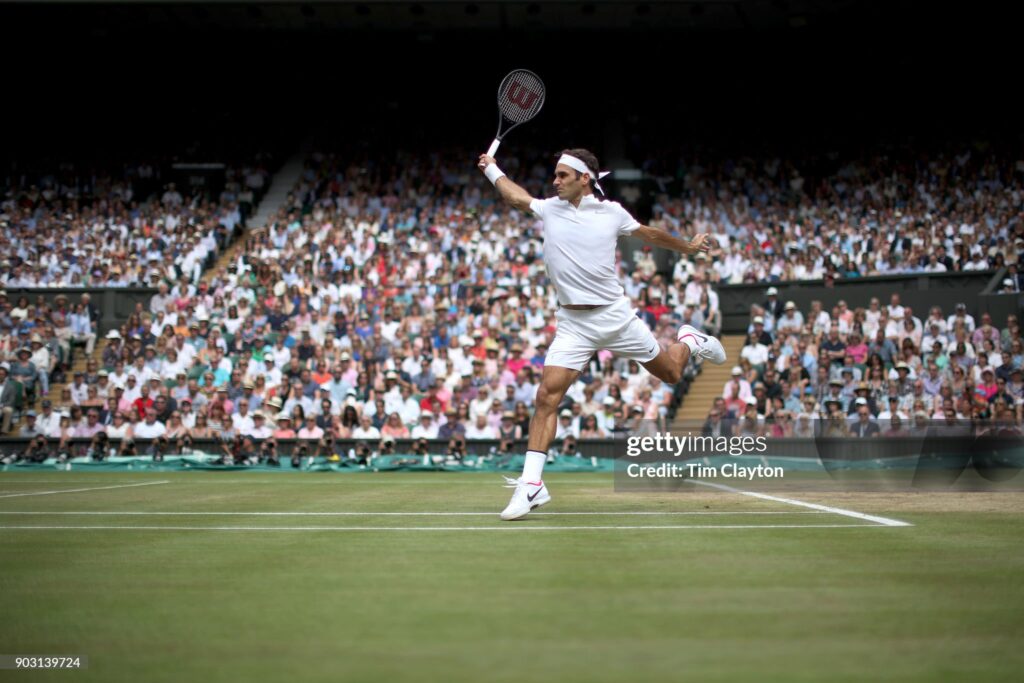
String Theory is a book that is really a collection of essays. In it, DFW examines the seemingly impossible shots that defy physics and define winning moments. As a fan of tennis, he examines every aspect of the sport. He dials into what must be happening between the stringing of the rack and the top spin of the ball. I almost want to know the math.
In the case of mountain climbing we have the horizon lines on the landscape or the crag outline against the sky; in tennis the vector lines of possibility on the court. Seeing the line is a special skill valued in both.
DFW goes into sport against nature about how hard it is to do the sport in the wind. Its almost as though nature is working at odds with your ability to complete the basic moves of the game. In this case artificial (the game) is no match for nature.
In mountain climbing the same. As well as experiencing the weather as a possible antagonist, nature is also conceived of as indifferent. the theatre of agony only, not lowering itself to play or care about your game.
The game of tennis involves a bunch of straight lines whereas the landscape is rolling and unstraight as can be. Like building a little French garden inside an English one.
Tennis inspires geometric thinking and that is knowledge of some of the laws of nature. and yet no tennis player’s angles are able to stop the wind.
Clearly, the weather can also be to one’s favor, the wind in your proverbial sail.
So, artists are dancing with nature and the nature on display can be antagonistic, indifferent, or favorable. What difference does it make… well as we will see, one aspect of fandom is investigating every little detail to figure out which detail makes the difference.
In this way it harkens back to the Arendt quote we are exploring in this blog that “one word, one look can suffice to change every constellation”.
DFW talks about how tennis works the imagination. He also talked about Zen like acceptance and true adult sadness.
In the devastating critique of the Tracy Austin sports memoir, DFW makes a larger cultural statement about why we love great athletes.
“Top athletes are compelling because they embody the comparison based achieement we Aramericans revere — fastest. strongest — and because they do so in a totally unambiguous way, Questions of the best plumber or the best managerial accountant are impossible even to define, whereas the best pitcher, free-throw shooter, or female tennis player is, at any given time, a matter of statistical record. Top athletes fascinate us by appealing to our twin compulsions with competitive superiority and hard data.”
The love of being the best is of course very old in the Western tradition.
And the love of hard data has its place in our socio-cultural hierarchy of values.
But obviously a twich goes off in the brain because of course who the best is is debatable. Was Simone Biles still the best gymnast in the world even though she chose not to perform on a certain day?
Aren’t there many times when who the best is is quite debatable, like some dominating in certain stats while other claim other stats. Being the best, being considered in the conversation about being in any field of Elysium is at stake every game, every outing.
But the numbers thing. There is a certain cut and dryness about them that is appealing. Like we will definitely win the war if we have the right number of munitions. But its not about whether or not reducing every problem to a math problem is a category mistake in some instances or not; its about the psychological satisfaction in the mind when a problem is reduced to a math problem it can be resolved, decided, determined — in a way that cannot translate in moral culpability.
Turn it into a math problem not to solve it but to feel the relief that it is solvable. 42.
Then on page 26, in the essay about Tracy Austin’s uninspiring ghost wrote autobiography — DFW lays down the conclusion really of all the essays.
“Plus they are beautiful. Jordan hanging in midair like a Chagall bride.
Sampras laying down a touch volley at an angle that defies Euclid. And they’re inspiring. There is about a world-class athletes carving out exemptions from physical laws, a transcendent beauty that makes manifest God in man.
So really more than one theory then. Great athletes are profundity in motion. they enable abstractions like power, and grace and control to become not only incarnate but televisable. To be a top athlete performing, is to be that exquisite hybrid of animal and angel that we average that we average unbeautiful watchers have such a hard time seeing in ourselves.”
Then he goes into the spectators search to know every detail.
p.28 DFW is talking about the fanatic’s drive to the Story to “let us penetrate the indefinable mystery of what makes some persons geniuses, semi-divine, to share with us the secret and so both to reveal the difference between us and them and to erase it, a little, that difference … to give us the (we want, expect, only one, the master narrative, the key) Story.”
p.27 The feeling the reader searches for is how it feels to be both beautiful and best.
Some part of the genius has to do with the warping of time, the young age expressing a mature game.
p.31 It come out that there was a dark side to professional tennis at this time. People were throwing matches to make way for tv commercials. So, commercial incentives were throwing the sport.
p.33 DFW draws on the Greek idea of teche “a state in which Austin’s mastery of craft facilitated a communion with the gods themselves.” He goes onto describe what could have been the highest aim of the memoir that it missed. “the seductive immoritality of competitive success and the less seductive but way more significant fragility and impermance of all the competitive venues in whic moral humans chase immortality.
DFW describes Austin’s downs as “just like death but you have to go on living afterwards”
Then we get into the crisis involved in using the word “inspirational” which has managed to “suggest everything and mean nothing”.
Note p.34 There is no one at the other end of the line is a metaphor taken from corded telephones. provide pic.
p.37 There’s a difference between the geniuses in motion and the geniuses in reflection.
For a genius in motion, presence has to overcome any self conscious fear, so trying to do something hard becomes harder with others watching.
we would “cease to be wholly present in our wills, and choices and movements.”
DFW goes on to describe what we mean when we say someone is a natural and it is the same as a person who is highly trained.
“It is not an accident that great athletes are ofted called “naturals”, because they can, in fperformance, be totally present: they can proceed on instinct and muscle-memory and autonomic will such that agent and action are one.”
So the answer to the question of what is going through a great athletes head could be “nothing”, they are not in reflection, they are in instinctual motion.
Who else has nothing in their mind and is present? Well, monks of course. And also idiots. DFW observes that these great athletes could be idiots or mystics or both or neither.
And he is also talking about the level of acceptance an athlete is forced to have when their body changes in a major way. This level of acceptance comes off as “natively wise and profound in the childlike way some saints and monks are enlightened” but he also puts a question mark at the end of this.
The conclusion is where we the reader/spectator get to come back in.
p. 39 “It may well be that we spectators, who are not divienly figted as atheles, are the only ones able to truly to see, articulate, and animate the experience of the figt we are denied. And that those who receive and act out the figt of athletic genius must, perforce, be blind and dumb about it — and not because blindness and dumbness are the price of the figt, but because they are its essence.”
This difference between presence and reflection is the philosophical vs. political way of life dichotomy in a different realm.
Next we can see what is in an overlong title, not edited.
“Tennis Player Michael Joyce’s Professional Artistry as apradigm of Certain STuff about Choice, Freedom, Limitation, Joy, Grotequerie, and Human Completeness”
In whatever way tennis will approach the grotesque in this chapter it won’t compare to the bullfighting grotesque.
The essay opens with the exquisite detail noticing of the fan. Attention is paid to all manner of variation in style.
The into rackets and conditioning.
The categorizing of different styles offensive, defensive, powerbaseline. An appreciation for what each player brings.
Mention of Wagner– Wagnerian aggression and power.
Insert music sample here.
p. 62 has to turn to Italian word in music
rules about coach/competitor communications
p.63 special kind of seeing due to the speeds
p.64 all of the different variables to be taken into consideration
p.66 DFW uses the cute metaphor from early computing — that tennis require so much control, tactical imagination and artistry that there is “smoke coming from the mainframe”, in other words we are reaching the human limit of ability to process all of the variables at one.
p.67 DFW runs up against the physical brillance does not equate to any kind of articulateness whatsoever.
“All of this excellence somehow does not exclude the lack of thinking evident in the vapidity of some interviews.” He goes onto say that to achieve this the athlete has to live in a small world with a narrow aescetic focus.
p.68 after sponsorships made it to the clothing, then there is an intensity around each garmet the player is wearing.
Then DFW delivers an account of how one competitor could possibly best another. The two athletes are “constrained by different limitations.”
Now we segue back into the observations of a perfect body.
There’s a certain ambivalence about whether or not Joyce is a hero, an exemplar. It turns out he’s both happy and un.
So he doesn’t fall back into the mold of a Greek ideal. There’s more ambivalence.
What DFW identifies as the grotesque is the “radical compression of his attention and self” that allowed Joyce to become a “transcendent practicioner of an art”.
Next we arrive at Democracy and Commerce at the US Open
First the observations of the well heeledness of the crowd along side the fact of ads on every plausible piece of equipment used in the stadium and the tennis stars making money from product endorsements.
When, of special interest to us, DFW sets up an extended metaphor drawing on the Peloponnesian War. Sampras is Athens, and Philippoussis is Sparta.
So far the likeness is in the match up of two greats.
p.96 repetition of the word Wagnerian in a description of the “beautiful” Pete Sampras.
We have Philippoussis’ movement being likened to dance
We have the awkward way in which ads interrupt the play.
DFW sidetracks into garb, noticing fans of different countries have different default outfits for spectatorship.
Thinking of every detail that goes into the possibility of spectatorship, DFW gets into the different transportation styles used by different types of fans.
p.102 What is in a name is Daniel Nestor. Refers to a general in Homeric epic so it harkens to a time before the Peloponnesian War.
Greek names around give his metaphor more credence.
p.122-123 DFW spells out the metaphor a little more clearly. Sampras is more “naval” while Phillipoussis more oligarchic.
Then an almost flippant analysis “Athens clean-cut nice-guy image is a bit overdone– the whole exhausting affair was about commerce right from the beginning.”
p.103 We have a technology throwback for our younger readers as DFW mentions paper tickets.
Goes on and on about the commercial aspects of the game.
He gets into a play by play of the Sampras Philippoussis match. You know someone is a fan when they are capable of an articulate and energetic play by play.
Then it all pays off. He can tell us without telling us.
p.107 “Now a huge roar that makes the whole Stadium’s superstucture woddble sinifies that the forces of democracy and human freedom have won the third set.”
About commerce right from the beginning. I don’t know about you but I winced when I read that the first time. This guy thinks the Peloponnesian War was just about commerce? What numerous metaphors and conceits have to be mowed down to nil to get to such a streamlined one liner. What has he lost in translation? Like “when it just comes down to commerce” its like saying it didn’t really matter, there wasn’t anything in there but trade logic. To reduce it to the economic feels like a loss. Like he read the book but didn’t get the point.
But then on page 107 he redeems himself. During the play by play a type of talking on one’s feet blurting out the moves as they occur, he says the forces of democracy and freedom and we know he’s thinking of Athens-Sampras.
The stadium is roaring for democracy and human freedom the crescendo of winning the game is glorious because the values are shining.
The yes of relief when the game is decided. The intensity of gasps and pauses during the arc with the ahhs when the ball finally touches the racket.
The extended metaphor hits its low when its reduced to commerce, just like the stadium plastered with wanton tattoos of brand deals on every available surface. With giveways no one wants that are hard to avoid, and cluttered aesthetics. When the stadium is reduced to its overpriced nachos and ubiquitous interpollations of spectator as consumer, it hits a low as a place to be.
But when the metaphor resolves, and we see that the match is a playing out of values that were acted out the Spartan discipline, the Athenian confidence and the topspin revovling and Philippousis dancing and Sampras defying physics can we roar at the ending. Being there in person, to see how it all played out, what each brought to the match, and left off the court — witness to all the physics.. I’m sure it was exciting and then a relief to watch it resolve.
In the examples of Dean
there is the moment that he falls to his knees after the slackline walk with no net in China and cries.
Dean Fidelman’s testimony to this moment is regarding the sadness of risking one’s very precious life for a big bag of cash. Something that has inherent value soaring above exchange value for the definition of exchange value. Like in the exact moment it was all about God and luck, he was trying to make it all about cash, signaling some sort of deep misunderstanding of the very event that was centered on him, that made him a center.
The rudeness to the Chinese and demanding to see and touch the cash like a baby in a bag in his arms somehow shows him spirituality sunk quite low. Then he proves he has spiritually bottomed out by humiliating his only friend who he needed in all ways. He’s letting out the deep demons of bad personhood, greed, being demanding, humiliating friends.
These issues, wanting the cash and butt weed, were clearly mere preoccupations for his mind with something other than his imminent testing of fate.
It was the contradiction between saying this is my big spiritual act and then also acting like a greedy baby that is jarring.
Dean’s falling to his knees and bowing into his cry at the end of the walk was about more than the stark contract between spirit and commerce.
The crying after the walk was in gratitude to God, the angels, fate and luck all buoying him. How much spiritual power did that take? As though he proved to himself that God loves him. As though he dared God to prove it and was answered yes. Imagine knowing that the legions of angels and gods and the Father and the son and everyone conspired to facilitate your walk so not even a butterfly flapped its wings in a distracting way. Its the definition of pressing one’s luck to the farthest possible limit. So I think it was a falling to his knees in gratitude.
A conquering of fear, a perfection of balance and movement at the limit of his ability which was also the limit of anyone’s.
Testing fate is the wrong word. Dancing with the sky and she likes it so gracefully you live, whereas if the sky or the airway or a pebble, wind gust, negative thought, misplaced toe — the most minor lack of physical grace, then death. So, he danced with fate, in public, for everyone to stare. Having a life or death moment — of the utmost concern to the deepest place of his spirit — and being the circus clown for a bag of cash simultaneously.
There’s a lot of talk about good style in climbing and here we have an interesting intersection of the means of production, the dominant industries means of alienation all coming together to create the scene of a sea change in this issue.
To put a finer point on it, good style for a Stone-master entailed humility, not showy off ness. Part of the coolness of a first ascent was the chosen-ness feeling of the first group to witness or be able to testify to it. Those who were there-ness.
New slang word in climbing which is to spray which is endless post about how you’re going to do something cool. While to an older generation this would seem like way too much to tell everyone, braggadocio, and just something that would not be of good style. Now the algorithm demands it. You basically are supposed to post a couple of times in lead up to the main thing because the videos have to be so short and that’s a strategy. This incentive of the algorithm takes away from the brotherhood of the chosen ones who saw the special deed with their own eyes or were one of the first to hear about it.
But style also has to do with lore, and lore, legacy. So, good style in climbing also has to do with being able to place oneself in a tradition. What’s the beta means how did someone before me get to the top.
If you listen to Peter Croft talk its all about who did this before me, how did they do it, was was good or bad style about that that I will also do or not do.
But then a level of maturation. Being able to see line that you want to do. The European approach of the flash I find a cool challenge that somewhat mimics the wilderness situational-ism like what if I had to climb this right now,… could I?
Choosing the line. Or choosing the linkup (multiple objectives in a day).
To me the way to guide imagining the perfect linkup is much like imagining the perfect day. For mountaineers its related to the relation of the sun to the mountain, the moisture, heat, potential resting spots all of these considerations that make one think about your relation to the rock and time.
Imagining the link up is how thinking and nature come together so woman can place herself artfully in time and place.
Thinking aspect, existentialism aspect, knowledge of geography, movement through nature as prayer.
Thinking up the objective is one sort of imagining and being prepared, an essential part of style. Preparedness requires thinking through all of the contingencies. So you’re imagining the path before you before you do it.
There is a consensus aspect to taste. Kant the solicitation of other’s agreement in judgement’s of taste.
Examples of bad taste in climbing. Spending way too long on the mountain being a total glutton.
Over-bolting which is marring the environment with no usefulness.
Then there are Ethics
Not being a good partner could risk the life of your friend. Trusting others.
Crash pad stashing is litter.
Sandbagging I’m not sure if that is out of trickery or humility. I thought it was humility but reports of it having a trickery element at times.
Goes into the difficulty of grading routes and the specificity of grading standards in relation to geographical area.
Is a lot like the scoring of ice skating. How ice skating is scored.