You are currently viewing Classical Hellenistic Architecture and Art History
thedyinggaul

Classical Hellenistic Architecture and Art History

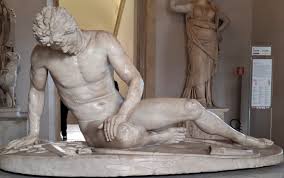
The feature photo is of the sculpture called the Dying Gaul. This of course refers to person defeated by the Romans, but it makes a very serious point about the relation of Greek and Roman cultures. The Greeks were obsessed with the idea of the perfect form, and they were highly competitive as the Olympic Games demonstrated. 

While in the text of Tacitus we here constant reference to Aristotle’s Golden Mean, in this sculpture we see how the Greek celebration of the idealized form made its way into Roman society.  

Why would a Roman person make a Greek-like sculpture of their dying enemy? 

The answer is in the concept of isonomia — which is a form of equality.  The only adversary worth having is an equal.  The battle wasn’t glorious if he who was defeated was not your equal. So, the recognition of the isonomia of their adversaries was central to their idea of greatness in victory. 

So, with one sculpture we learn something about how Roman artists inherited ideas from Greek philosophy. 

Check out this article by Seymour Howard


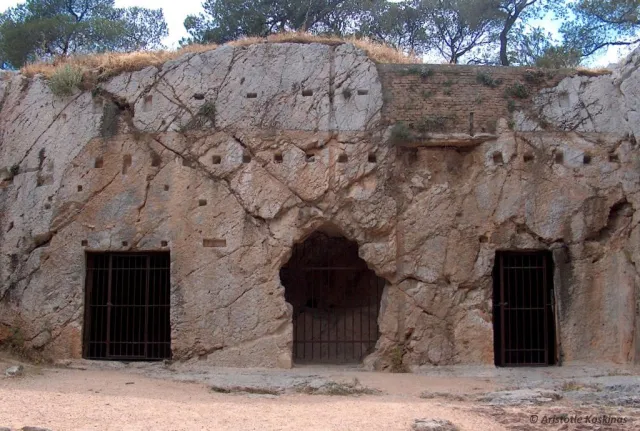
Below is the prison where Socrates was imprisoned. Athens, Greece, on Philopappou Hill.

prison of socrates 1

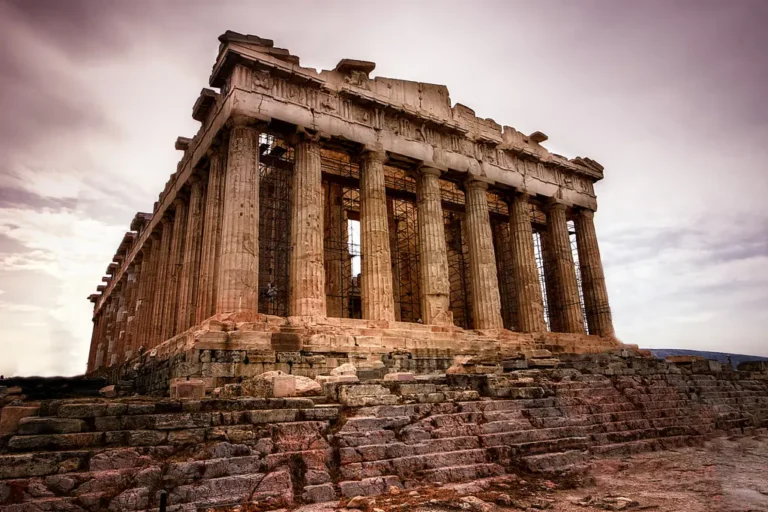
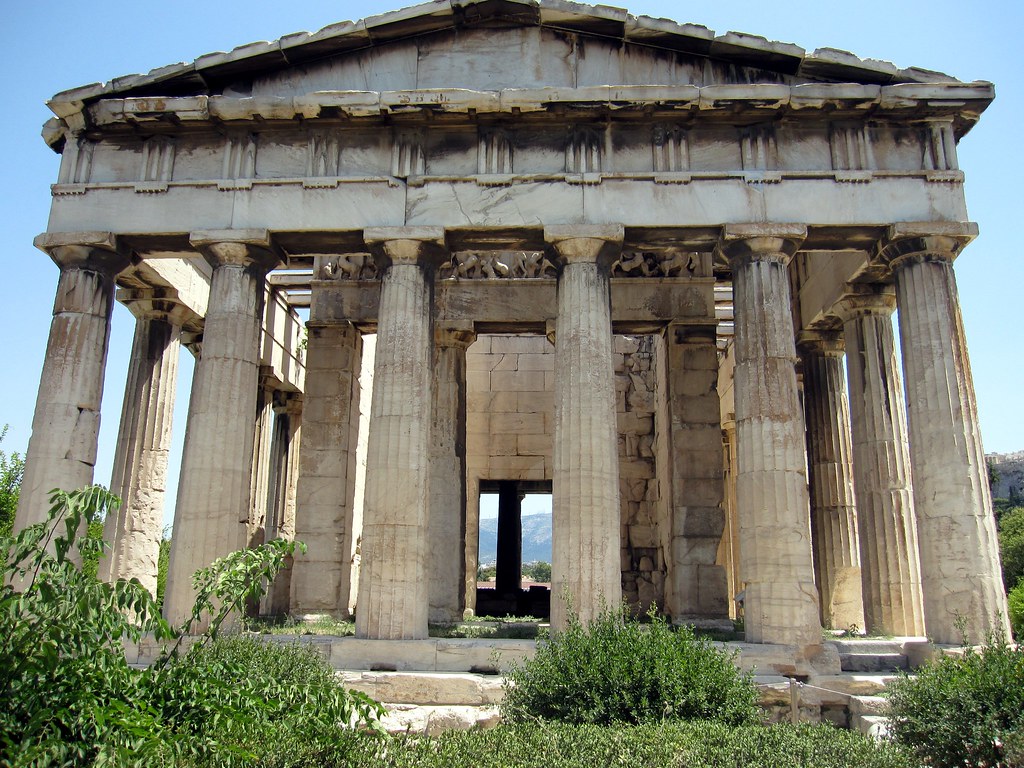
This is a photo of the parthenon.

Beard, Mary. The Parthenon: Revised Edition. United States: Harvard University Press, 2010.

Connelly, Joan Breton. The Parthenon Enigma: A New Understanding of the World’s Most Iconic Building and the People Who Made It. United States: Knopf Doubleday Publishing Group, 2014.

Lehman, Geoff., Weinman, Michael. The Parthenon and Liberal Education. United States: State University of New York Press, 2018.

parthenon feature

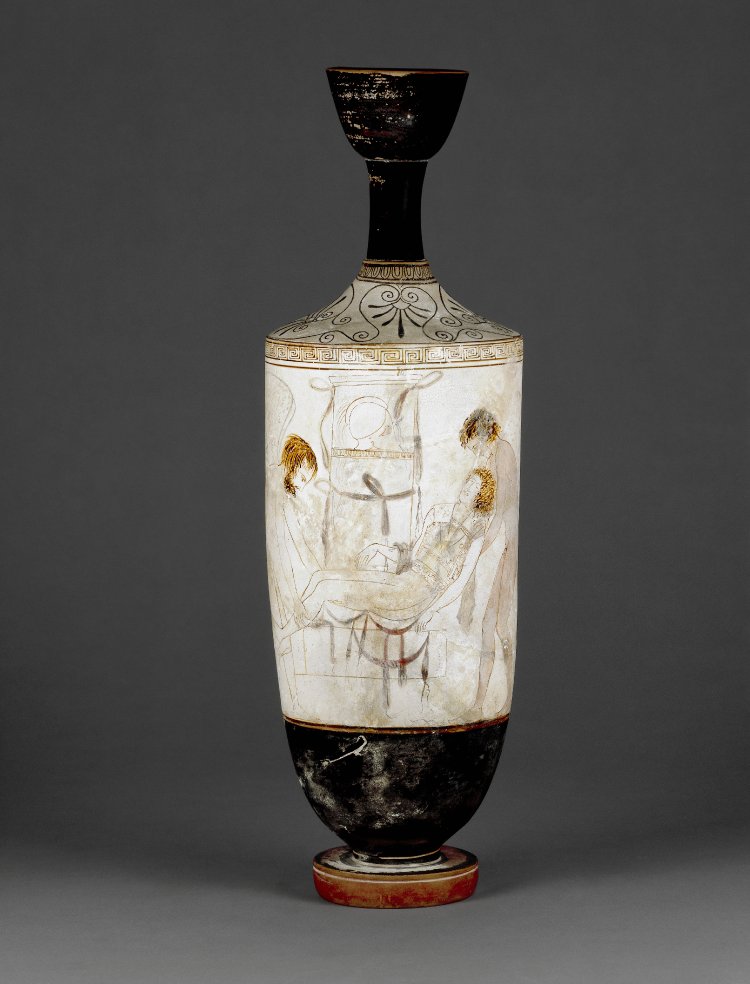
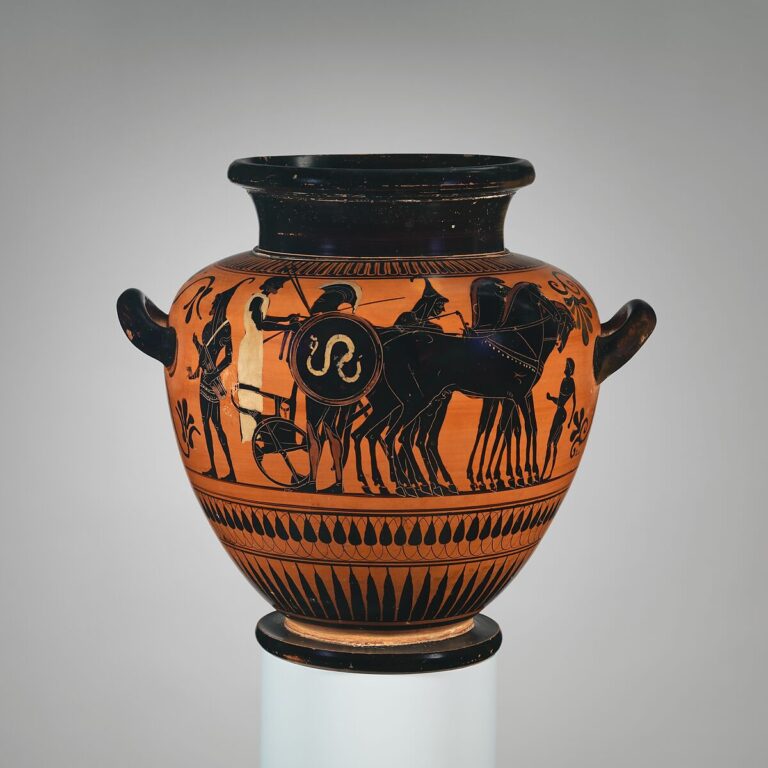
Learn more about this vase here

Also see 

Kurtz, Donna C.. Athenian white lekythoi: patterns and painters. United Kingdom: Clarendon Press, 1975.

The story here is how artists adapt to new materials if the traditional materials are banned for some reason. 

thanatos and hypnos carrying a fallen warrior bm

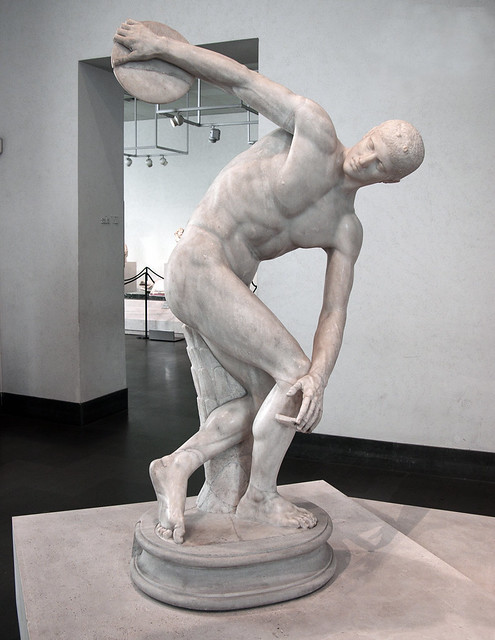
This is called the disc-thrower, or Discobolus by Myron in 450 BCE and its at the Metropolitan Museum of Art. 

This is a copy made by a Roman artist. 

This underscores that culturally, one thing that the Romans admired and adopted from the Greeks was the appreciation for the excellence of the form of the human body.  Attempt to show the exemplar.   

myrondiscusthrower

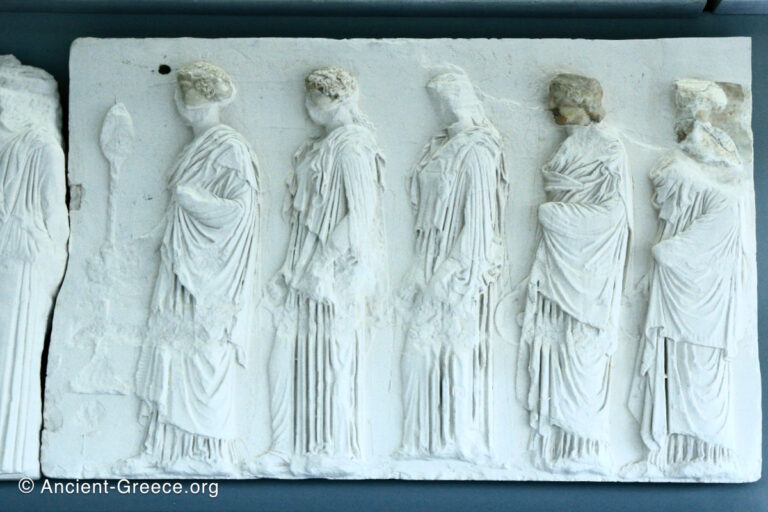
Parthenon frieze. Block E VIII. 447 – 432 BCE. Acropolis Museum, Athens.. 447 – 432 BCE. Acropolis Museum, Athens.

Find out more about the Parthenon Frieze here

Jenkins, Ian Dennis. The Parthenon Sculptures. United Kingdom: Harvard University Press, 2007.

Robertson, Martin., Frantz, Alison. The Parthenon Frieze. United Kingdom: Oxford University Press, 1975.

Boardman, John. John Boardman on The Parthenon. United Kingdom: Thames and Hudson Limited, 2024.

Parthenon Frieze 59b

You can learn about this piece from the Met Museum here

Department of Greek and Roman Art. “Athenian Vase Painting: Black- and Red-Figure Techniques.” In Heilbrunn Timeline of Art History. New York: The Metropolitan Museum of Art, 2000–. http://www.metmuseum.org/toah/hd/vase/hd_vase.htm (October 2002)

This article is a good place to start to learn more. 

Here is another free downloadable article

This is another free downloadable article

athenianvasepainting

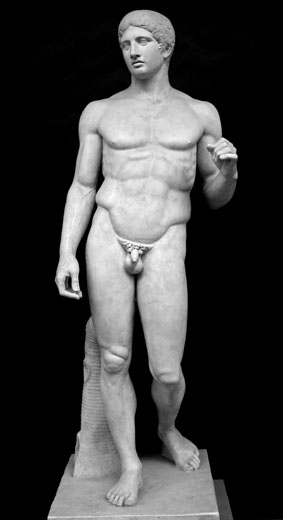
This sculpture is called the spear-bearer.  Learn more about Doryphoros here

Naples, Archaeological Museum 146

Size
2.02m
Accession

Purchased in 1884 from the casting establishment of Naples Museum

References

Lippold: Griechische Plastik, 163 (n.14 – actually on next page), pl. 59.1
Richter: Sculpture & Sculptors of the Greeks (1950), 56 & 248, fig.645
Walston: Catalogue of Casts in the Museum of Classical Archaeology (1889), 64, no.280
Lawrence: Classical Sculpture (1928), 211-, pl. 61
Moon: Polykleitos, the Doryphoros and Tradition

Date
Early Roman. Original: c.450 BCE
Sculptor
Of original: Polykleitos
Provenance

Pompeii

doryphorosspearbearer

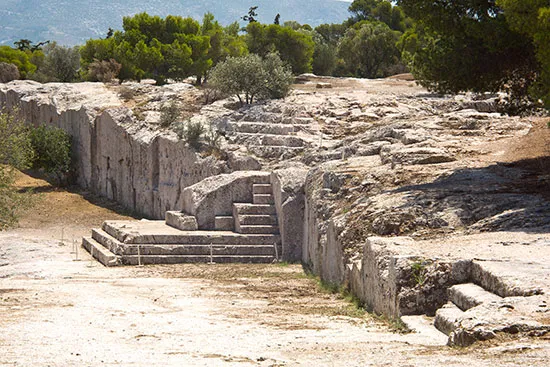
Agora has been translated marketplace or meeting place. Indeed there is a large area of Athens, Greece containing various landmarks that is altogether known as the agora. 

We know Socrates walked around the agora examining questions with his friends. 

This image shows remains of a place like where they were walking around carrying out the dialogues in this early, oral tradition of philosophy. 

Which Plato wrote down in one possible origin of literature or philosophy? 

pynxkidsbrittanica
agoraioskolonos
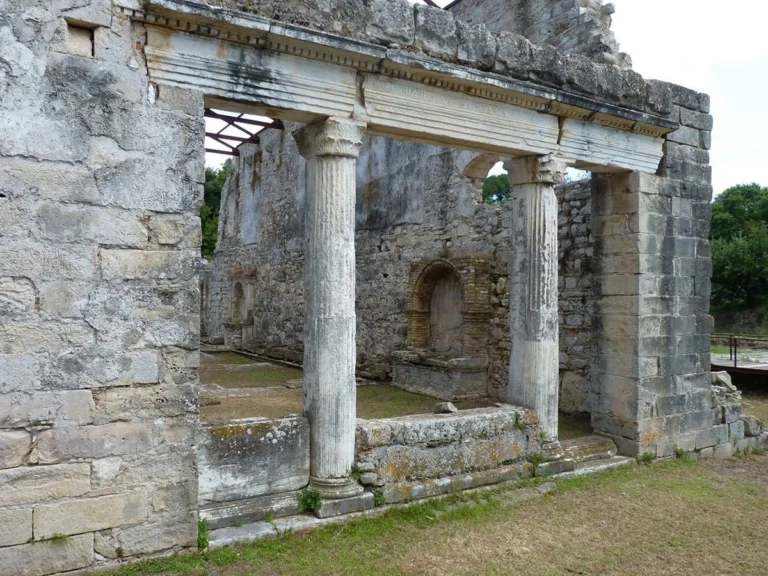
paleopolis corfu temple of hera

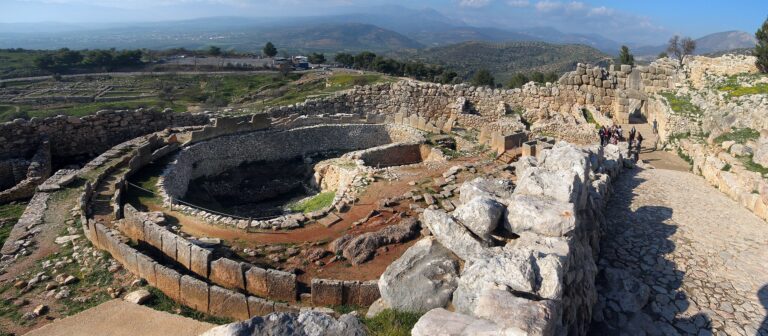
The Citadel of Mycenae with two grave circles where many artifacts were found. 

Check out this academic work by the archeologist

This is an extensive online resource to facilitate further study. 


Grave Circle A Mycenae

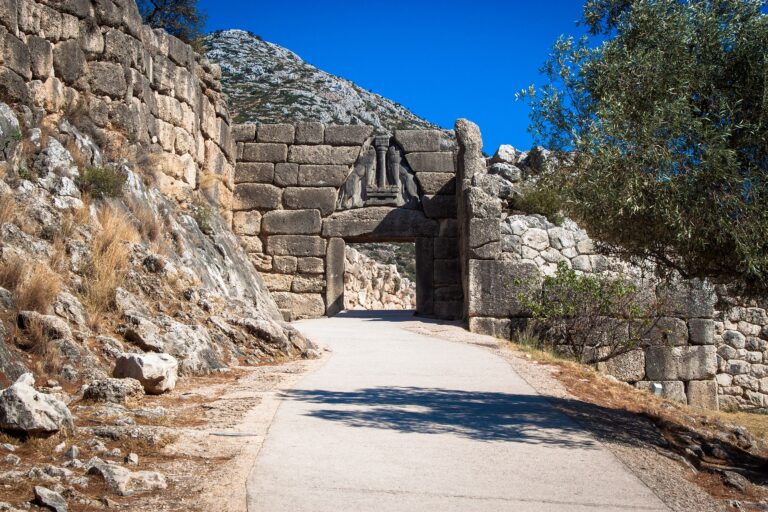
The iconic Lion Gate (Πύλη των Λεόντων), the main entrance to the fortified citadel of Mycenae, Greece, built around 1250 BC during the Late Bronze Age, famous for its massive “Cyclopean” stones and the heraldic relief of two lionesses flanking a central pillar, symbolizing royal power and protection for the powerful Mycenaean civilization

de Grummond, Nancy Thomson. Encyclopedia of the History of Classical Archaeology. N.p.: Taylor & Francis, 2015.  See essay inside called George Emmanuel Mylonas, Mycenae and the Mycenaean Age (1966)

Iakōvidēs, Spyros. Late Helladic Citadels on Mainland Greece. Belgium: E.J. Brill, 1983.

Biers, William R.. The Archaeology of Greece: An Introduction. United Kingdom: Cornell University Press, 1987.
 

2560px Path upto the Lion Gate, Mycenae (28693130016)

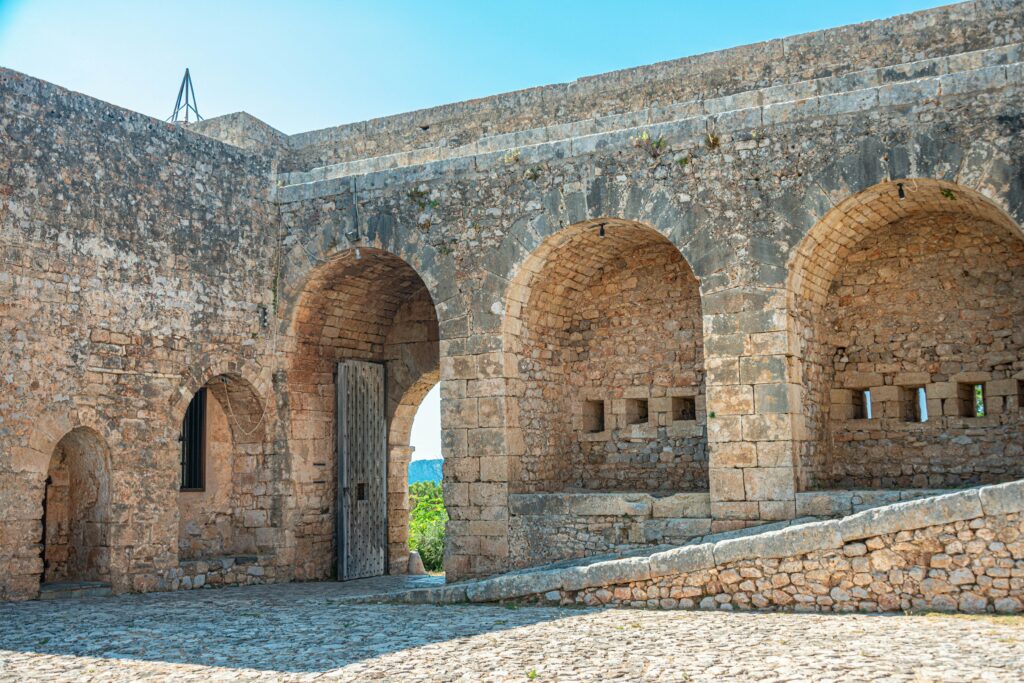
This is Nestor’s Palace. We want to check this place out because it features in Homer’s epic poems.  

You can read an article about archeological finds here

You can also find a full text account here

There is also a digital library at U of Nebraska with info here. 

The palace featured in the story of the Trojan War, as Homer tells us that Telemachus:

went to Pylos and to Nestor, the shepherd of the people, and he received me in his lofty house and gave me kindly welcome, as a father might his own son who after a long time had newly come from afar: even so kindly he tended me with his glorious sons.[2]

nestorspalace