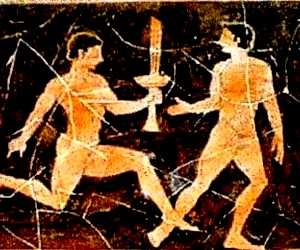
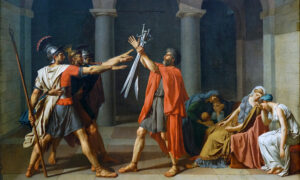
Hobbes, Thomas. Hobbes: Leviathan. Edited by Richard Tuck. Revised Student edition. United Kingdom: Cambridge University Press, 2002.
I have the one with the plain blue cover.
I was personally so fascinated by this text, I spent a decade of my life on it and do not regret that whatsoever.
Written by a reader of classic texts, the Leviathan displays a practice of citation, drawing from texts he studied.
Experienced the trickiness of tying religious confession to the authority of the sovereign, due to the political outcomes of the Reformation.
How can there be a commonweal represented by a sovereign in a way that could bring order out of disorder, last and be unified.
Starting with the title
Mentioned in the
Psalter
and
The Book of Job
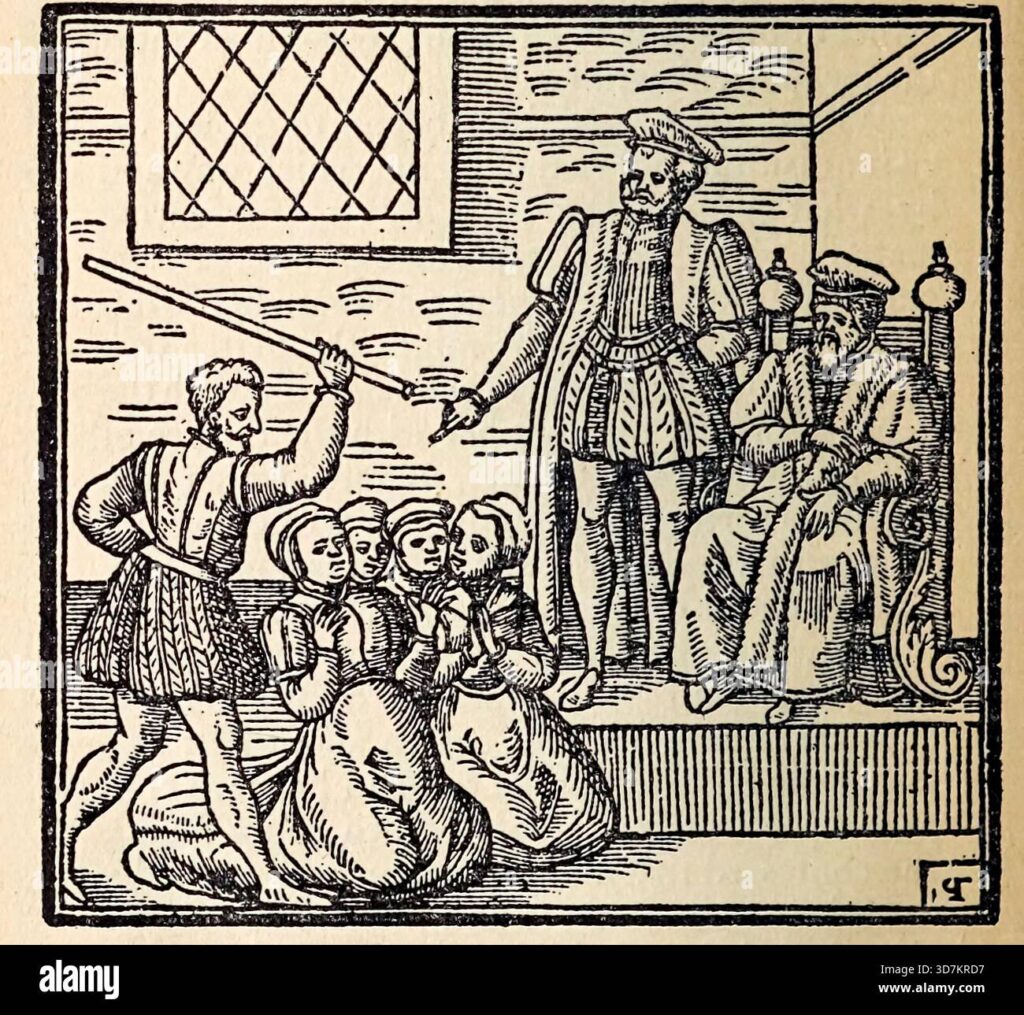
Museum Collection: The British Library: King James’s Daemonologie
Museum/Location: Original manuscripts and early editions are held in the British Library, London, and the National Library of Scotland, Edinburgh.
Provenance: Written by King James VI of Scotland (later James I of England) in 1597. The work was a response to the North Berwick witch trials. While the text discusses various demonic entities, including the Leviathan as a symbol of pride or the devil, early editions are primarily typographic. Illustrations associated with the King’s views on the preternatural are often found in the woodcuts of related contemporary pamphlets, such as Newes from Scotland (1591), which were frequently bound or associated with the Daemonologie.
Scholarly Article Citation: Maxwell-Stuart, P. G. “The King, the Witch, and the Devil: James VI’s Daemonologie and its Context.” The Seventeenth Century 35, no. 4 (2020): 421-438.
Next Image
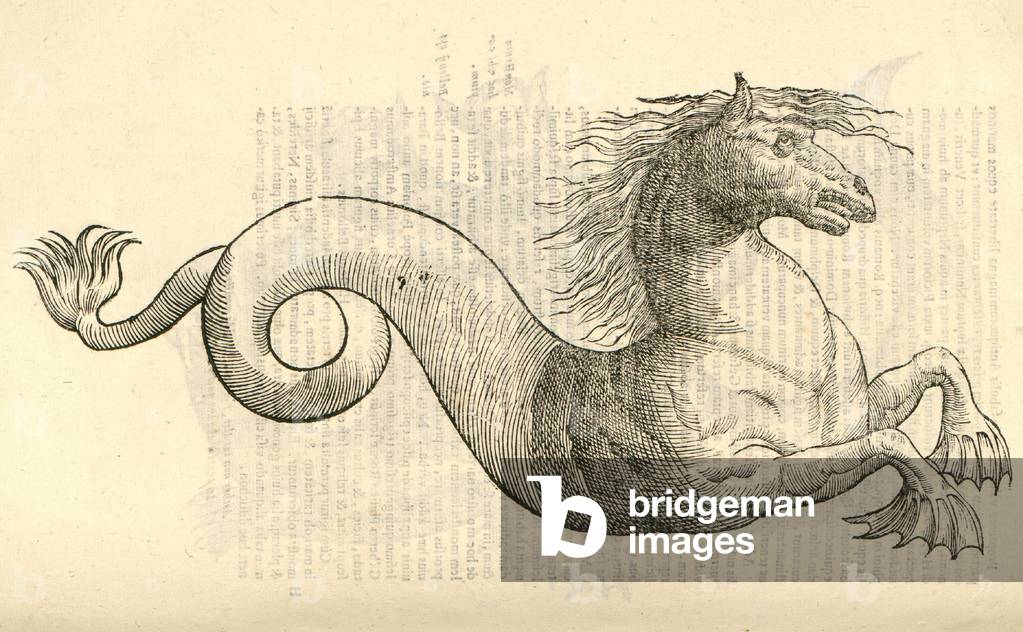
Provenance/Digital Archive: Ghent University: Aldrovandi’s Monstrorum Historia (Digital Copy)
Aldrovandi, Ulisse. Monstrorum Historia: Cum Paralipomenis Historiae Omnium Animalium. Edited by Bartolomeo Ambrosini. Bologna: Nicolò Tebaldini, 1642.
Giovanni Battista Coriolano (Italian, 1595–1649) and other woodcut artists under Aldrovandi’s direction.
Current Location: University of Bologna Library (BUB), Italy (Special Collections).
Museum Collection: The Ulisse Aldrovandi Digital Collection (University of Bologna)
Provenance/Digital Archive: The Linda Hall Library: Monstrorum Historia (Full Digital Copy)
Exhibition: The Getty: The Marvelous and the Monstrous
Provenance: This work was the culmination of Aldrovandi’s “Theater of Nature.” Although he died in 1605, his manuscripts were meticulously compiled and published by his successor, Bartolomeo Ambrosini. It represents the transition from the medieval “bestiary” to the early modern “encyclopedia.”
Scholarly Article Citation: Azzolini, M. (2025). Aldrovandi’s planned history of marvels: Writing the preternatural into nature. Journal of the History of Collections, 37(2), 221–238. https://doi.org/10.1093/jhc/fhaf006
Findlen, Paula. “The Economy of Scientific Exchange in Early Modern Italy.” In Possessing Nature: Museums, Collecting, and Scientific Culture in Early Modern Italy, 346–392. Berkeley: University of California Press, 1994. (Analyzes how Aldrovandi’s woodcuts functioned as “visual evidence”).
Olmi, Giuseppe. “The Collector’s Cabinet: The Museum of Ulisse Aldrovandi.” The Journal of the History of Collections 1, no. 1 (1989): 1–15. (Explores the relationship between the physical specimens and the published illustrations).
Tongiorgi Tomasi, Lucia. “The Scientific Illustration of Animals in the Sixteenth and Seventeenth Centuries.” The Journal of the Warburg and Courtauld Institutes 48 (1985): 239–251. (Discusses the specific woodcut techniques used in the Monstrorum Historia).
Tugnoli Pattaro, Sandra. “The Method of Ulisse Aldrovandi.” In The Book of Nature: Continuity and Change in European Natural Philosophy, edited by S. Dirk and L. Nauta, 115–130. Leuven: Peeters, 2005.
Scholarly Repository: The Grotius Collection at the Peace Palace Library
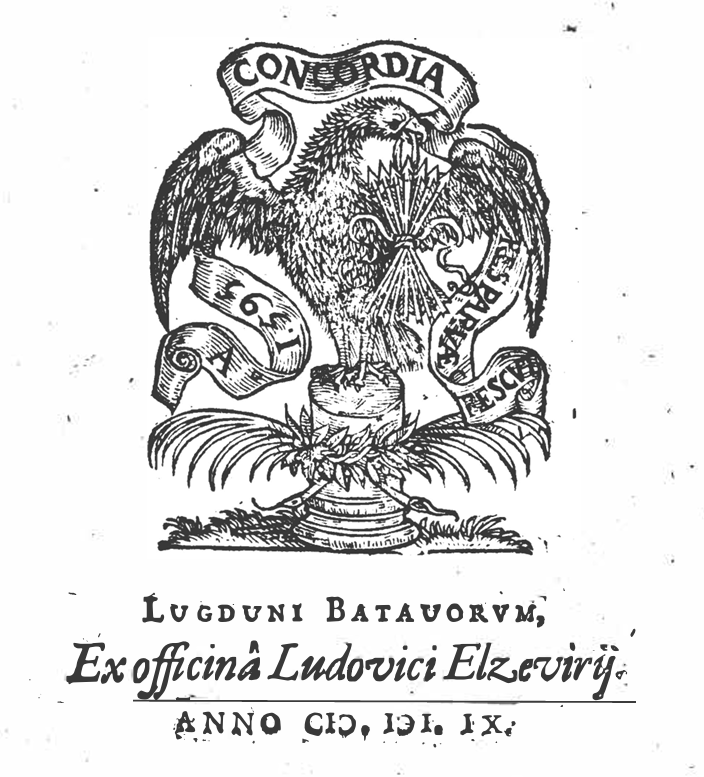
Grotius, Hugo. Mare Liberum, Sive, De Jure Quod Batavis Competit Ad Anglicana Commercia. Leiden: Ludovicum Elzevirium, 1609.
Provenance: This work was originally written as a chapter of a larger legal brief (De Jure Praedae) for the Dutch East India Company (VOC) following the seizure of the Portuguese carrack Santa Catarina. It was published anonymously in 1609 during the Twelve Years’ Truce.
Valeriano, Pierio. Hieroglyphica, sive, De sacris Aegyptiorum, aliarumque gentium literis commentarii. Basel: Michael Isengrin, 1556.
Museum/Location: Major collections are held at the Vatican Library (Biblioteca Apostolica Vaticana), the British Library, and the Bibliothèque nationale de France. The original woodcut illustrations were designed specifically for the Basel publication.
Internet Archive – Getty Research Institute Copy
Bayerische Staatsbibliothek (MDZ) – 1556 Basel Edition
Provenance: Giovanni Pietro dalle Fosse (known by his humanist name, Pierio Valeriano) was a protégé of Pope Leo X and a tutor to the Medici family. His Hieroglyphica was the first Renaissance encyclopedia of symbols, building on the rediscovery of the Hieroglyphica of Horapollo. It remained the definitive visual dictionary for European intellectuals—including Hobbes—for over a century, undergoing multiple expansions (notably the 1575 Lyon edition).
The Etymological “Joining”: During his time in Europe, Hobbes likely encountered the Rabbinic etymology of Leviathan (from the root l-v-h), meaning “to join” or “to couple.” In Jewish commentary (notably the Westminster Assembly’s annotations which Hobbes knew), the Leviathan is called such because its scales are “compacted together” or “joined.”
Leon Modena (Leone Modena)
Modena, Leone. Historia de’ riti hebraici: vita e osservanze degl’hebrei di questi tempi. Paris: Apresso Giacomo Gazoni, 1637.
Museum/Location: Original manuscripts and rare first editions are held at the Biblioteca Nazionale Marciana (Venice) and the British Library (London).
Provenance: Written at the request of an English nobleman (Sir William Boswell) to explain Jewish life to Christians. While the first “official” edition was published in Paris in 1637, it circulated in manuscript form in Venice during the 1620s and 30s—exactly when Hobbes was visiting the city.
Scholarly Article Citation: Cohen, Mark R. “Leone Modena’s Historia de’ riti hebraici: One Hundred Years of Editing and Adapting a Jewish Classic.” The Jewish Quarterly Review 111, no. 4 (2021): 582-610.
Hobbes’s Application: He transformed this biological “joining” into a political “covenanting.” His Leviathan is not a monster of chaos, but a “joining” of individuals into a single legal person.
The Messianic Banquet (The Midrashic Leviathan): In Jewish eschatology, the Leviathan is slain at the end of time to serve as a feast for the righteous.
Simone (Simhah) Luzzatto
Luzzatto, Simone. Discorso circa il stato de gl’Hebrei et in particolar dimoranti nell’inclita città di Venetia. Venice: Appresso Gioanne Calleoni, 1638.
Museum/Location: Rare copies are preserved in the Correr Museum Library (Venice) and the Bodleian Library (Oxford).
Scholarly Article Citation: Veltri, Giuseppe. “The Power of Tradition and the Tradition of Power: Simone Luzzatto’s Socio-Political Philosophy.” Jewish Studies Quarterly 28, no. 3 (2021): 275-294.
Current Biblical scholarship has moved away from seeing the Leviathan as a mere “whale” or “crocodile” (as 18th-century rationalists did) and instead views it through the lens of Comparative Near Eastern Mythology.
Leading scholars now treat the Leviathan as a symbol of “Cosmic Chaos”—a force that God does not necessarily “destroy” at the beginning of time, but rather “subdues” or “manages.”
The Jewish Tradition: The “Chaoskampf” and the Feast
In Hebrew scholarship, the Leviathan ($לִוְיָתָן$) is increasingly linked to the Ugaritic monster Litanu.
The Bound Monster: Scholars like Jon D. Levenson (Creation and the Persistence of Evil) argue that in the Hebrew Bible, the Leviathan represents “the forces of chaos.” Unlike the Greek “Ex Nihilo” (creation from nothing), the Jewish tradition often depicts God struggling with and defeating a pre-existing watery chaos.
The Messianic Banquet: In Rabbinic Midrash (specifically Baba Batra 74b), the Leviathan is a dual creature (male and female). God killed the female to prevent them from destroying the world. At the end of time, the righteous will feast on its flesh.
Scholarly Insight: Robert Alter (The Hebrew Bible: A Translation with Commentary) notes that in Job 41, the Leviathan is described with “mythic grandeur” to show Job that the universe contains terrifying, non-human elements that are nevertheless part of God’s design.
The Christian Tradition: The Serpent and the State
Christian interpretation historically shifted the Leviathan from a physical monster to a moralized personification of the Devil, though modern scholars focus on its political-theological weight.
The “Harrowing” Symbol: St. Jerome and later Medieval commentators linked the Leviathan to the “Crooked Serpent” of Isaiah 27:1. In this view, Christ is the “hook” that catches the Leviathan, rescuing humanity from the jaws of Hell.
The Political Beast: Oliver O’Donovan (The Desire of the Nations) and Carl Schmitt (The Leviathan in the State Theory of Thomas Hobbes) explore the Christian “Political Theology” of the beast. They argue that the Leviathan represents the “Mortal God”—the highest power on earth that exists to prevent the “Behemoth” (the monster of civil war and anarchy).
Scholarly Insight: Walter Brueggemann (Theology of the Old Testament) emphasizes that the Leviathan is “God’s plaything” (Psalm 104). This suggests that while the world is dangerous to humans, it is fully under control by the Divine
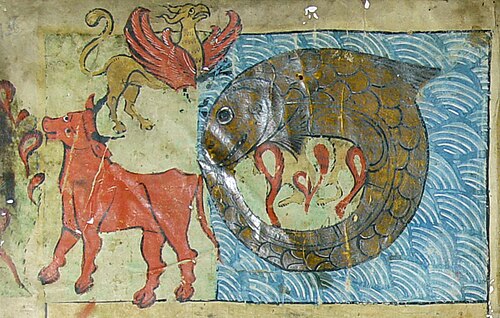
The Three Beasts
This illumination depicts the three massive creatures God created to rule their respective domains, which, according to Jewish Midrash, will be served as a banquet for the righteous in the World to Come (Olam Ha-Ba):
Leviathan ($לִוְיָתָן$): The great sea monster, shown here as a giant fish biting its own tail (an ouroboros motif). This circular form symbolizes the boundary of the ocean and the cyclical nature of time.
Behemoth ($בְּהֵמוֹת$): The ox-like land beast, depicted on the left in red. Legend says it consumes the grass of a thousand mountains every day.
Ziz ($זִיז$): The giant bird/griffin shown above the Behemoth. Its wings are said to be so large they can eclipse the sun and protect the earth from the southern winds.
Citation & Provenance
Manuscript: The North French Hebrew Miscellany (also known as the French Biblical Miscellany).
Date: c. 1277–1302.
Location: The British Library, London (Shelfmark: Add MS 11639, folio 518v).
Scribe/Artist: Likely Benjamin the Scribe. It was created in northern France (possibly Troyes or Sens).
Medium: Tempera and gold leaf on vellum.