This story is one so profound it lives on the tradition of Western political thought as a touchstone.
When later so and so says to be a founder you must be either a foreigner, or of unknown parentage. We immediately think back to Oedipus, the King with unknown origins.
Sheds light on the behavior of tyrants, when they become jealous of their power, they don’t want any rivals.
Oddly, being of unknown parentage frees the figure from the weight of class which can come with its downfalls. For example both Aristotle and Polybius note that sons of aristocrats normally comport themselves in less of a manner and frequently become oligarchs.
So a long ago story about a King with an unknown origin. The story of Romulus and Remus is the other one with a similar beginning of rulership story.
Of course the origin that is unknown comes to slap him in the face as his destiny plays out and he comes to know his mother in the worst way.
How would we be able to understand Freud’s Oedipal complex without this story.
It has a resonance with the story of Romulus and Remus with the parentage in the beginning unknown.
This story features many other characters whose actions flow from their character, and the story flows so well, where one scene feels inevitable on the heels of the prior, so much so that we wonder if making choices is the right word.
In fact when we look at the scenes unfolding from a distance and we recognize ourselves or some movement in it, we wonder if the whole of the tragic sequence will tell us something about our destiny in relation to divine and posited law.
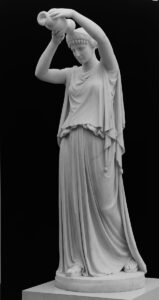
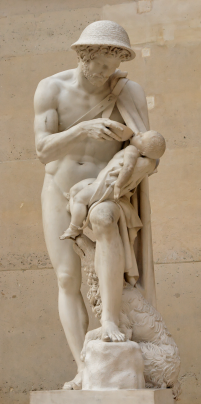
“The Child Oedipus Revived by the Shepherd Phorbas” (or Œdipe enfant rappelé à la vie par le berger Phorbas)
Artist: Antoine-Denis Chaudet (French, 1763–1810).
Completion: Left unfinished upon Chaudet’s death in 1810, it was completed between 1815 and 1818 by fellow sculptors Pierre Cartellier and Louis-Marie Dupaty.
Medium: White Marble.
Dimensions: Approximately 1.96 meters (6.4 ft) in height.
Current Location: Musée du Louvre, Paris (Department of Sculptures, Richelieu wing, Cour Puget).
Accession Number: N 15538.
History: A plaster model of the sculpture was first exhibited at the Salon of 1801. The finished marble version was later housed in the Luxembourg Museum before being moved to the Louvre.
Isabelle Lemaistre, Skulptur aus dem Louvre. Sculptures françaises néo-classiques. 1760-1830 (1990): This exhibition catalog provides an in-depth analysis of the work’s place within the transition from the 18th to 19th-century French style.
Jean-René Gaborit, Sculpture française II – Renaissance et Temps Modernes (1998): This is the definitive collection catalog for the Louvre’s holdings, detailing the technical execution and history of the piece.
Chicago Style Citation (17th ed.)
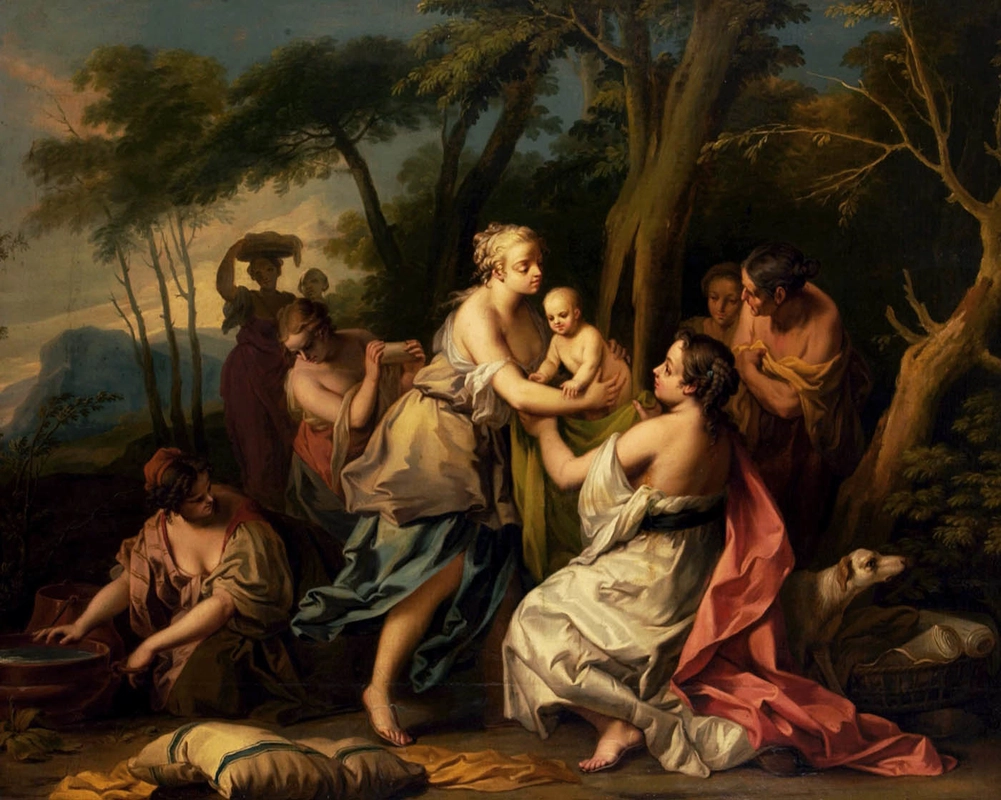
Bibliography: French School. The Finding of Oedipus. 17th–18th century. Oil on canvas, 121.7 x 150 cm. Bolton Library and Museum Services, Bolton, UK.
Footnote:
French School, The Finding of Oedipus, 17th–18th century, oil on canvas, 121.7 x 150 cm, Bolton Library and Museum Services.
Pre-1954: Private Collection / Unknown.
1954: Acquired/Purchased by Bolton Museum and Art Gallery (now part of Bolton Library and Museum Services).
Current: Held in the permanent collection of Bolton Library and Museum Services (Accession Number: BOLMG:1963.P.37).
VADS (Visual Arts Data Service): The painting is documented in the National Inventory of Continental European Paintings (NICE). It notes the “close analogy” between this work and Nicolaes Verkolje’s The Finding of Moses (Thyssen-Bornemisza Collection), which has led to ongoing scholarly debate about whether the Bolton painting is French or Dutch.
Garnier-Pelle, Nicole. Antoine Coypel (1661–1722). Paris: Arthena, 1989.
National Inventory of Continental European Paintings (NICE). “The Finding of Oedipus (BOLMG:1963.P.37)
Wright, Christopher. The French School: National Inventory of Continental European Paintings. London: National Gallery, 2006
Wright, Christopher, and Catherine May Gordon. British and Irish Paintings in Public Collections: an index of British and Irish oil paintings by artists born before 1870 in public and institutional collections in The United Kingdom and Ireland. Yale University Press, 2006.
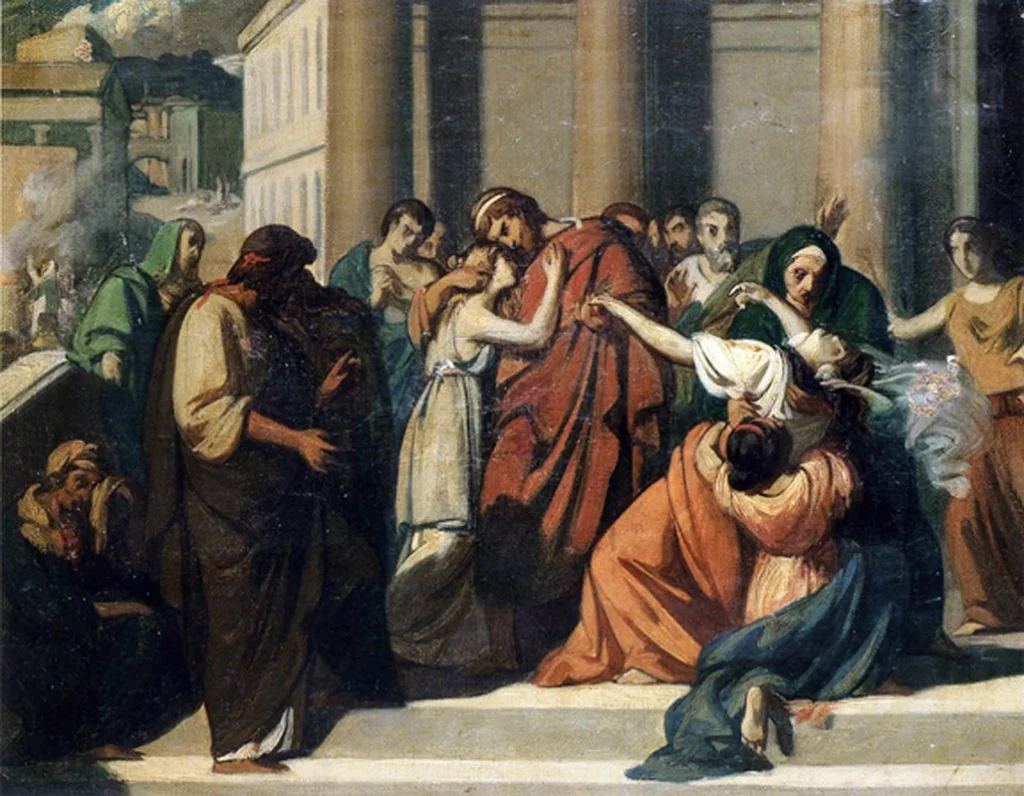
Full Title: Oedipus Bids Farewell to Jocasta (French: Œdipe fait ses adieux à Jocaste or Œdipe se séparant de Jocaste)
Artist: Alexandre Cabanel (1823–1889).
Date: 1843.
Medium: Oil on canvas (it is technically a study or sketch).
Dimensions: Approximately 33 x 41 cm (13 x 16 inches).
Current Location: Musée Comtadin-Duplessis, Carpentras, France.
Dimensions: 33 x 41 cm (13 x 16 inches).
Inventory Number: Often cited as part of the Musée Duplessis collection.
Cabanel, Alexandre, and Andreas Blühm. “Alexandre Cabanel: the tradition of beauty.” (No Title).
Gjertson, Stephen
https://stephengjertsongalleries.com/alexandre-cabanel-the-tradition-of-beauty/
https://inguimbertine.carpentras.fr/
Alexandre Cabanel at ARC
Inventory Tip: Search for the “Prix de Rome” archives at the École Nationale Supérieure des Beaux-Arts (ENSBA) in Paris, as they hold many of the winning sketches and records from Cabanel’s student years.
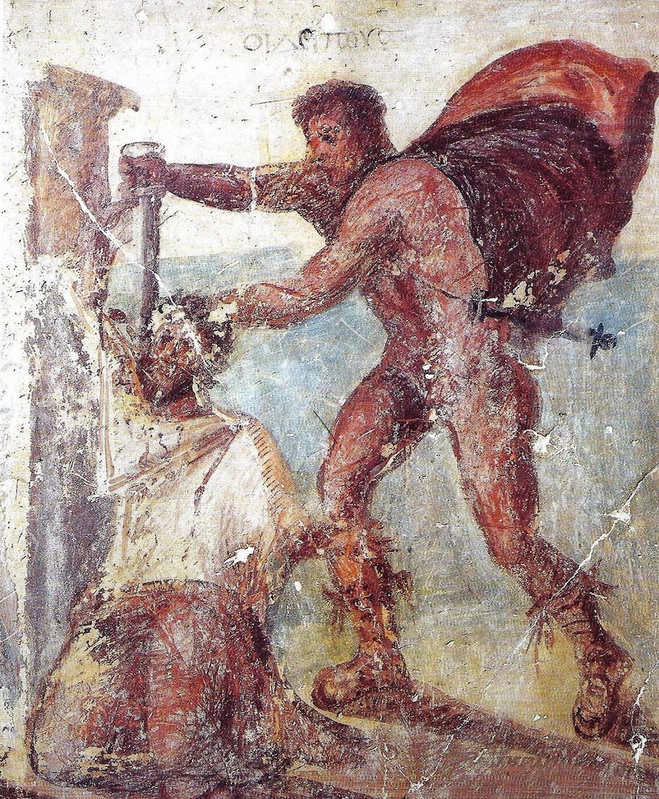
The Oedipus Cycle
Museum: Egyptian Museum in Cairo (EMC), Tahrir Square.
Gallery Number: Gallery 50, Ground Floor (Greco-Roman Section).
Official Museum Link: Painting with Mythological Scenes of Oedipus
Note on Site: While the originals are in Cairo, the site of Tuna el-Gebel (near Mallawi, Minya) contains the original tomb (House-tomb 16), which still features replicas of the paintings in situ.
Venit, M. S. (2012). “Oedipus in Egypt: An Oedipus Cycle in Graeco-Roman Tuna al-Gebel.” Études et Travaux, XXV, pp. 401–415.
Gabra, S. (1941). “Maison funéraire 16.” In Rapport sur les fouilles d’Hermoupolis Ouest (Touna el-Gebel). Cairo: Université Fouad I. (Section by P. Perdrizet, pp. 97–100).
Why it’s important: This is the primary archaeological record from the mission that discovered the fresco in February 1934.
Gabra, S., & Drioton, É. (1954). “Peintures à fresques et scènes peintes à Hermopolis Ouest (Touna el-Gebel).” Cairo: L’Organisation Égyptienne Générale du Livre. (See Plate 15).
Why it’s important: This volume contains the first high-quality watercolor renderings and plates used by scholars to study the colors and details that have since faded.
Venit, Marjorie Susan. Visualizing the afterlife in the tombs of Graeco-Roman Egypt. Cambridge University Press, 2015.
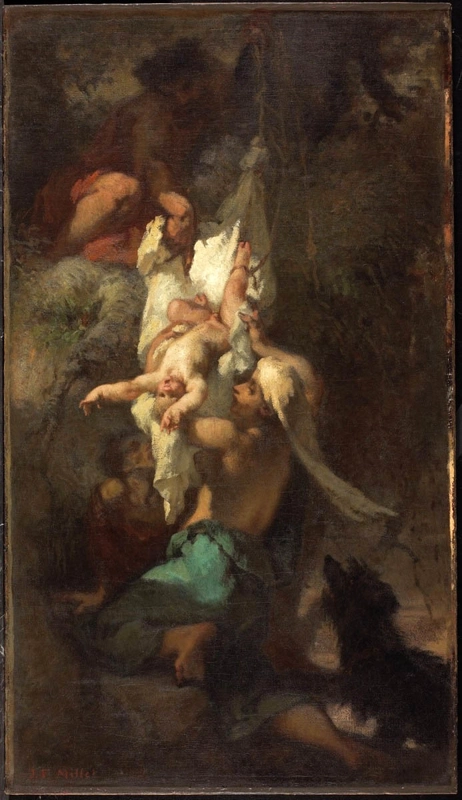
Oedipus Taken Down from the Tree Oedipe detache de l’arbre
Chicago Style Citation
Millet, Jean-François. Oedipus Taken Down from the Tree. 1847. Oil on canvas. 136 x 77.5 cm. National Gallery of Canada, Ottawa.
Provenance
1847: Sold by the artist to M. Linet, Paris.
1887: Collection of M. Faure, Paris.
1894: Boussod, Valadon et Cie, Paris.
1894: Sold to J. S. Forbes, London.
1914: Purchased by the National Gallery of Canada (Ottawa) from the Lawrie & Co. sale.
Laughton, Bruce. “Millet’s ‘Oedipus’ and the ‘Cercle de l’Union Artistique’.” The Burlington Magazine 117, no. 872 (1975): 732-35
Murphy, Alexandra, Susan Fleming, and Chantal Mahy-Park. Jean-François Millet. 1984.
Murphy, Alexandra R.. Jean-François Millet: Drawn Into the Light. United Kingdom: Sterling and Francine Clark Art Institute, 1999.