Tacitus, Cornelius. The Agricola: and The Germania. United Kingdom: Penguin Books, 1971.
I read the Penguin Classic edition with the Agricola and the Germania.
The copy I want to read now is online at the Loeb Classical Library and dates to 1474.
This version is a revision of a previous translation. So H. Mattingly translated the texts in 1948 and S.A. Hanford published the revision in 1970, and wrote an introduction.
The text recites a funeral oration Tacitus gave for his father in law, Agricola, the governor of Roman Britain.
Tacitus himself introduces the eulogy by saying he is “recording the bondage we once suffered, and “acknowledging the blessings we now enjoy”, p. 53
The eulogy reflects cultural ideals of the first century AD, and describes what it meant to be virtuous.
Tacitus gives numerous examples of the lesson of the Aristotelian mean as exemplified by Agricola.
Here we can see the connection between war as the theatre where the virtuous behavior is seen.
In order to fully appreciate it, we could read a secondary literature book on the Role of funerals in society at the time.
Germania was a social study of the way of life of a freedom loving people, as a warning that they may attempt to live free from Roman imperium.
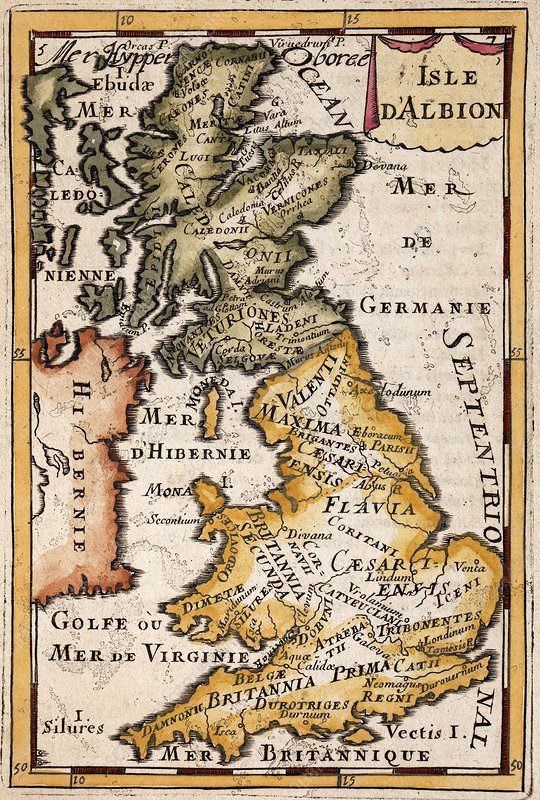
In order to better understand these texts, we want to see maps of the campaigns. Who are the map makers we encounter a 1683 map by authored and illustrated by Alain Manesson Mallet in his book “Description de L’Universe”.
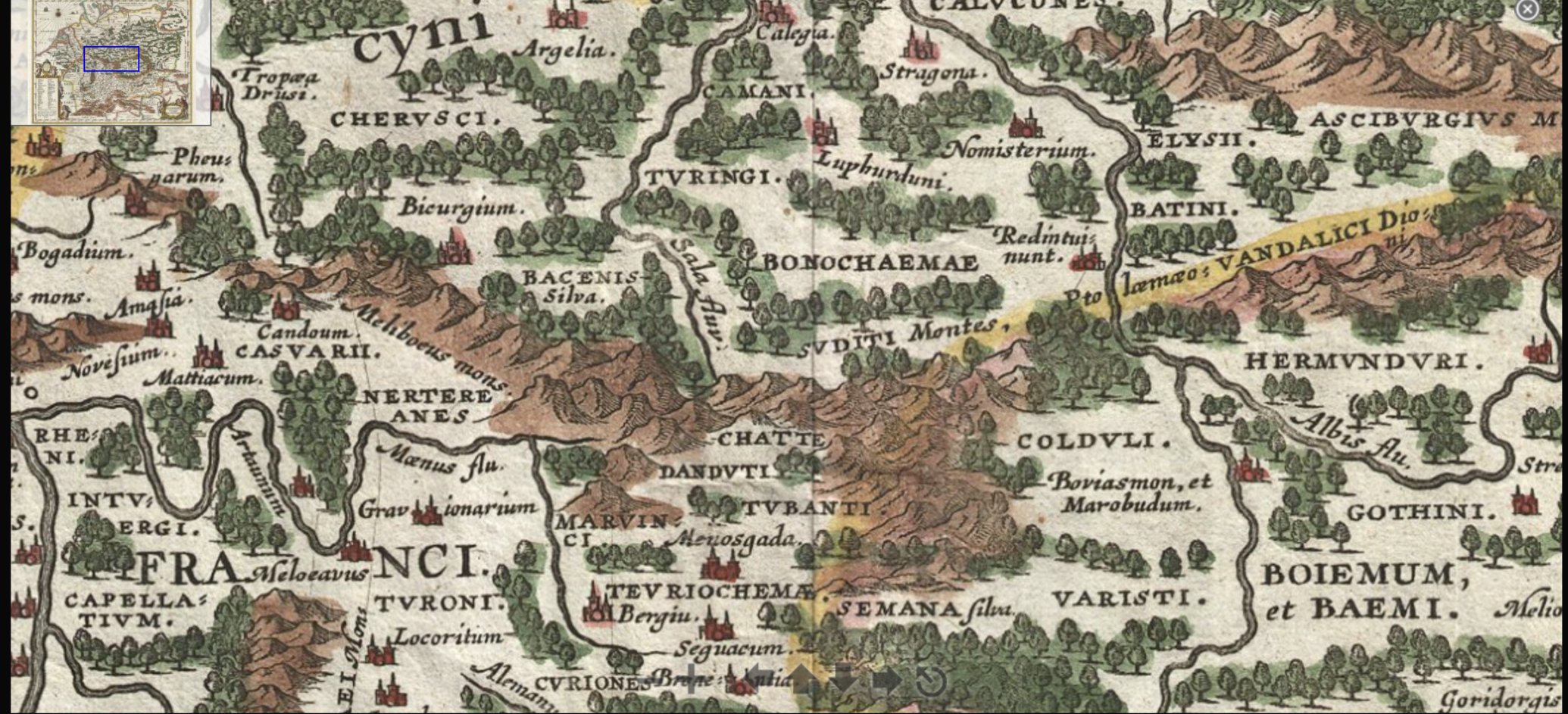
And also a 1657 Janssen map.
For more on archeological sites see my excursus on Roman Art and Archaeology in the late Republic and Augustan Age.