

Read more about the article John Rawls Theory of Justice
veilofignorance

John Rawls Theory of Justice

If men’s inclination to self-interest makes their vigilance against one another necessary, their public sense of justice makes their secure association together possible. Among individuals with disparate aims and purposes a shared conception of justice establishes the bonds of civic friendship; the general desire for justice limits the pursuit of other ends. One may think of a public conception of justice as constituting the fundamental charter of a well-ordered human association. Existing societies are of course seldom well-ordered in this sense, for what is just and unjust is usually in dispute. Men disagree about which principles should define the basic terms of their association. Yet we may still say, despite this disagreement, that they each have a conception of justice. That is, they understand the need for, and they are prepared to affirm, a characteristic set of principles for assigning basic rights and duties and for determining what they take to be the proper distribution of the benefits and burdens of social cooperation.

Continue ReadingJohn Rawls Theory of Justice
Read more about the article Michael Sandel Liberalism and the Limits of Justice
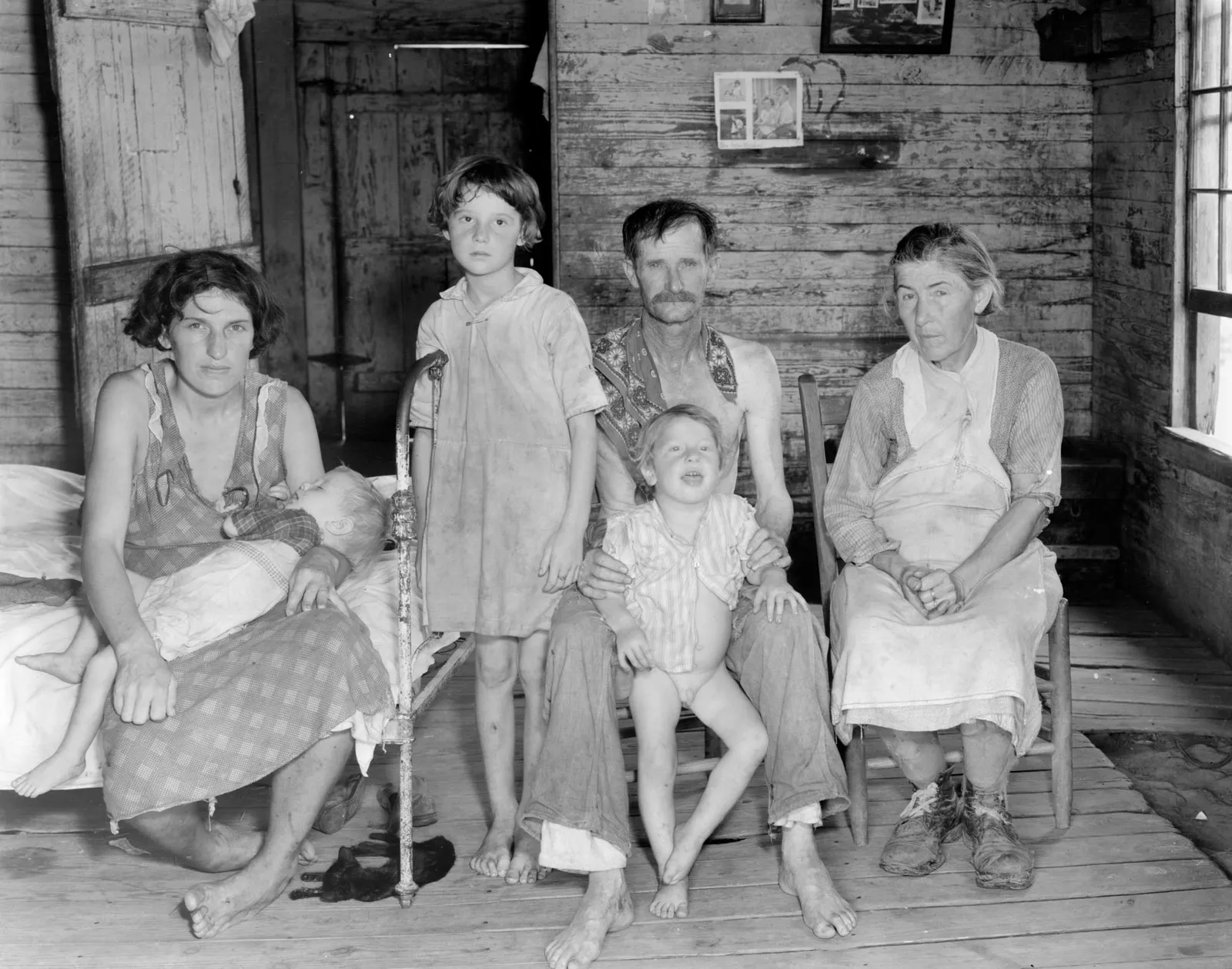
Bud Fields family Walker Evans photograph Hale

Michael Sandel Liberalism and the Limits of Justice

For justice to be the first virtue, certain things must be true of us. We must be creatures of a certain kind, related to human circumstance in a certain way. We must stand at a certain distance from our circumstance, whether as transcendental subject in the case of Kant, or as essentially unencumbered subject of possession in the case of Rawls. Either way, we must regard ourselves as independent: independent from the interests and attachments we may have at any moment, never identified by our aims but always capable of standing back to survey and assess and possibly to revise them (Rawls 1979: 7; 1980: 544–5). DEONTOLOGY'S LIBERATING PROJECT Bound up with the notion of an independent self is a vision of the moral universe this self must inhabit. Unlike classical Greek and medieval Christian conceptions, the universe of the deontological ethic is a place devoid of inherent meaning, a world ‘disenchanted’ in Max Weber's phrase, a world without an objective moral order. Only in a universe empty of telos, such as seventeenth-century science and philosophy affirmed, is it possible to conceive a subject apart from and prior to its purposes and ends. Only a world ungoverned by a purposive order leaves principles of justice open to human construction and conceptions of the good to individual choice. In this the depth of opposition between deontological liberalism and teleological world views most fully appears.

Continue ReadingMichael Sandel Liberalism and the Limits of Justice
Read more about the article Michael Walzer Spheres of Justice
1338 1340 lorenzetti good government country 1

Michael Walzer Spheres of Justice

And equality is simply the outcome of the art -- at least for us, working with the materials here at hand. For the rest of the book, then, I shall try to describe those materials, the things we make and distribute, one by one. I shall try to get at what security and welfare, money, office, education, free time, political power, and so on, mean to us' how they figure in our lives; and how we might share, divide, and exchange them if we were free from every sort of domination.

Continue ReadingMichael Walzer Spheres of Justice