
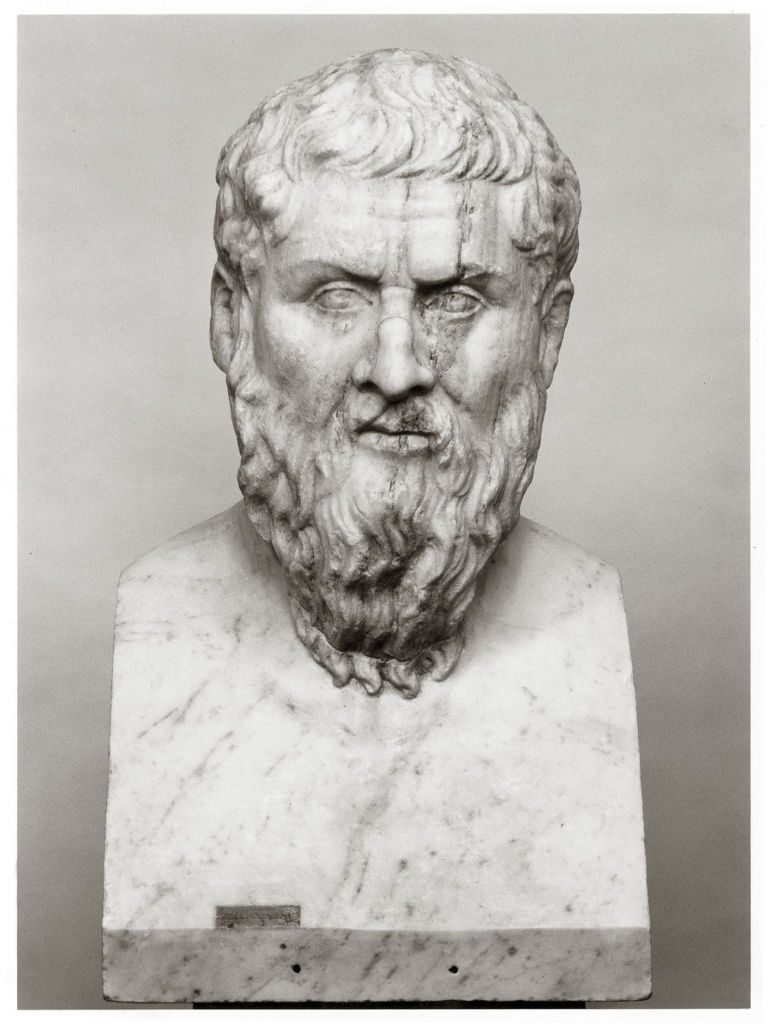
S. Sara Monoson Plato’s Democratic Entanglements
Plato’s depictions of intellectual labor in his dialogues contain a puzzle. On the one hand, the dialogues voice some of the most aggressive attacks on the intellectual merit of theatrical enterprises in all of Western litera-ture. Most famously, the Republic banishes poetry from the ideal city(607a–e). In the Laws, moreover, the Athenian Stranger decries the deterioration of democratic politics into a “wretched theatocracy” (theatro- kratia, 701a1). On the other hand, Plato likens serious intellectual toil, including philosophic understanding, to being a theater-goer. Through-out his dialogues he sustains a delicate metaphor: “Intellectual labor is like the activity of being a theate¯s,” where theate¯s refers to an audience memberat the theater, during the dramatic competitions held on grand civic festival occasions.