
To study ancient political thought requires imagination, to think through the differences between a polis- a city state in the Periclean Age model, and today’s modern state.
In order to understand a political organization or how stable or long lasting it will be, it is also necessary to understand the social structure, mores, language, habits, and culture that undergird the political organization. Using terms like Western, Greek, and Roman are over general. Then distance between models and historical accounts brings up questions between idealism and realism.
Since language is our medium of thought, a true scholar of this period would be interested in learning Greek so as to read the text in its original language. If you’re interested in studying the ancient Greek language, here are some resources.
To aid our imagination in understanding more about the Peloponnesian War, we ought to study geography. For maps of the Peloponnesian War available online, see here.
We will also need to know the historical context text in order to understand the horizon of events.
Since one of the main goals is to help ourselves see what these authors were saying, we will want to take a deep dive into classical art history and archeology with special attention to certain places and figures.
Likewise, since we will be reading Livy, Tacitus, Sallust, and Cicero it may be helpful to learn latin.
The texts describe places that we have pictures of, they are archaeological sites. See my excursus on Archaeology and Art History Roman Republic and Augustan Age here.
The term “ancient” in the “Western” tradition, words so big and vague they are almost meaningless placeholders. Two very different polities — those of Athens and Rome — comprise the shorthand for the dominant political values that defined them.
Where to begin the history of western political philosophy?
The textbook I read in undergraduate philosophy class opens with the dating of 585 BCE the beginning of philosophy because Thales of Miletus successfully predicted an eclipse of the sun.
The time of Socrates was (470-399) BCE, and since many philosophy classes in the Western tradition begin with Plato’s dialogues, this is one starting place. It helps us define those who came before as the “pre-Socratics”. The Pre-Socratic philosophers are very interesting and could serve as starting points for different themes of philosophical inquiry.
Numerous Greek philosophers refer to the The Oracle at Delphi an alternate practice of knowing, pre-existing the walking around the Agora method of philosophy depicted by Plato. An oracle does not meet the standard of knowing — the difference between knowledge and true belief as happenstance. Oracles are not going to meet an epistemic standard. The utterances of oracles are not scientific study in the sense because they were not repeatable events, not reproducible. However true they turn out to be, its not knowledge its confirmation of the validity of the oracle. This is all to say, the stories of oracles are in the Western Tradition but they cannot be at the beginning of philosophy, because the account of them is not knowledge despite turning out to be true.
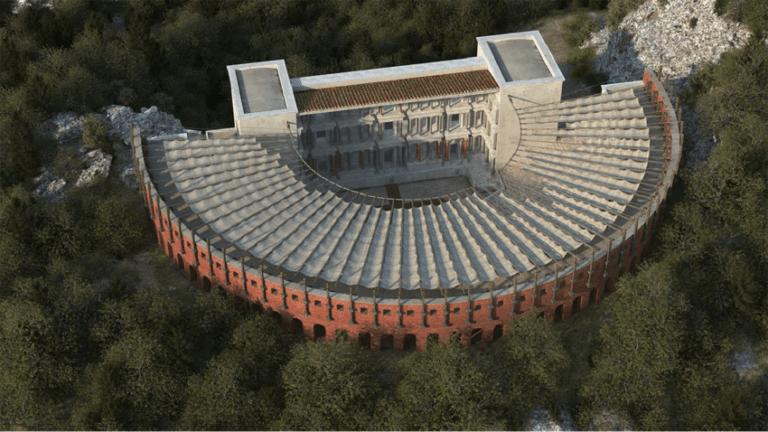
Another main contender for the beginning of the history of political philosophy is to be found in theatre going. This question we have to keep in brackets. Is theatre-going the beginning of philosophy or political philosophy, or just the history of political philosophy since its referred to so many times. Much later in the tradition, with Husserl phenomenology as a proposed approach epistemology. Indeed, there is are phenomenological studies of the dynamics of theatre and their relation to knowledge production and representation. In this way, the practice of theatre going finds an entry into the history of philosophy.
Sophocles, the playwright was a bit older, but contemporary with Socrates’ time. The Theban plays could be considered the beginning of political philosophy due to the philosophical themes, tragic structure, and social function. 497-405 BCE.
Theme of political thought: The conflict in Antigone seems like the whole question. What is the relationship between the divine law and the posited law? And the conflict is happening in her life, which becomes a painful contradiction.
Tragic structure: Aristotle in the Poetics zooms out to perceive what is this tragic structure all about? What is the climax? Why does it seem inevitable? Its like we are learning how actions flow from character like water flows downhill. Can we map this structure onto human history? Are we actors in a drama that is unfolding despite and somehow without us, or are we willful beings alone responsible for each choice? So then when we get into the structure of a tragedy we get into themes of free will and the question of the relation of the individual to circumstance, family order, and community. Free will is a question that repeats itself in many forms throughout the tradition. Does history have a structure is one of the main questions as well. What does tragedy teach us about history, justice, character, goodness, ethics, and community?
But on the other hand, tragedy does not meet the criteria of being in the tradition of philosophy proper. These plays create no standards, formulate no criteria, articulate any doctrine, put forward any definitions. There are plenty of doubts about “applicability” whatever that would mean. So, it seems like its at the beginning of political thought and epistemology, it brings up philosophical questions, but we will still have to keep in brackets if it can “count” as the beginning of political philosophy.
Sophocles’ tragedies are indeed part of the Western tradition of political thought and they will be referred to by Aristotle’s Poetics, Marx the 18th Brumaire, Hegel, Freud, and René Girard off the top of my head.
Nevertheless, I put Sophocles in an excursus and not on the syllabus proper.
Next the Homeric poems could make a play to be at the beginning of Western political thought. Ulysses tying himself to the mast becomes a metaphor for a polity tying itself back to its constitution. The theme of recognition when he arrives from whence he came. The character of Achilles, the lesson of the Trojan Horse. Nevertheless, I put Homeric poetry in an excursus.
But there are problems with saying that philosophy begins with epic poetry. On the one hand, there are philosophical questions coming up about authorship, and if you can’t refer to author’s intent, then how to determine what is “meant” when variations of meaning open up in the pauses between words. Also there is mythology, and allegory which don’t sound as serious as philosophy.
I’m beginning where my college philosophy class started. Its not arbitrary. With this beginning, we are going to be able to observe how many future thinkers in the tradition are going to reach back, re read, re interpret, these same texts, and bring them to bear on their own formulations of the questions at the heart of political science.
Now that we are trying to get started with political philosophy, let’s go over the big words of philosophy and what they mean
Metaphysics– what is?
Epistemology– How do we know what there is?
Ethics — How should we treat each other, or how do we know what to do interpersonally?
I’m going to leave it there because my two favorites, poetics and politics are usually left off by the serious philosophy departments.
Is there room for political philosophy?, ask the political science departments and the philosophy departments? Since philosophy is second order thinking, political philosophy is trying to get above, say something general that could be true for all time about politics.
On the one hand we want to study something that seems very apart from what could be “true for all time” because social organization and cultural values have something to do with the polity, and these have changed over time.
How can we articulate what this “something” is in the most precise way? This leads us to dial down into historical details, to understand social and political contexts. Still, we want to get to the second order. What makes studying politics from a philosophical perspective different from chronicling historical events?
Political Philosophy in order to say something about polities in general, will be contextualized by but somehow abstracted from actual historical events, and so not the same thing as history.
Its also a bit different from a history of philosophy. The history of philosophy will address major shifts in thinking about epistemology “by what process is knowledge distinguished from true belief”.
This problem has bothered philosophers from the beginning. We want to walk with the philosophers, not the sophists. We want to know we are speaking the truth and not rhetoric for personal or narrow interest. Discernments in the qualities of rhetoric and attempts to distinguish philosophical method from rhetoric are a theme of philosophy. These directly affect the political sphere, where the action involves speech. The quality of public discourse is a major contemporary issue in political philosophy.
It turns out, history and history of philosophy come to bear on every chapter of the history of political thought.
Even with this reference to Thales, we find the first academic debate– wasn’t his discovery the beginning of science? What is the difference between science and philosophy? This question is going to come up repeatedly in different clothes.
Philosophy is second order thinking. Take the question to the next level of distance away. So its not, is this or that just or unjust but rather, a search for the form of justice, that is above and outside of this or that instance so it can be used as a measuring stick for all instances.
I think the cornerstone of political philosophy is theatre, and why I think this may arise here and there.
Questions that will arise in the readings on this syllabus include
What would our city-state be like if it were a mirror of the ideal soul?
What is the highest aim of our lives and what does living in political community have to do with it?
What is the technique for acceding to wisdom? How do they “do” philosophy. They walk around talking, and sometimes they party.
What were the characteristics of Athenian democracy when it was at its best? What were the worst injustices they carried out or suffered, could these have been foreseen or prevented? What do they think is the relationship between virtue and politics is? What are the tensions between the philosophical and political life? What was Socrates’ death all about?
In the case of the Roman civilization its various periods, what are the themes we see come up again when they ask after the same questions– what does being virtuous have to do with political life? What is a man at his best? What type of political organization will be eternal, and stable? Themes of power and authority, how do we make each other “see” the best course of action? What destroys social order?
Ideals of Citizenship
The classical period of Hellenistic history is referred to as the Golden Age of Athens or the Periclean Age.
In the case of the beginning, the context was a battle for territory between two great powers Athens and Sparta. What made them great? How did their cultural values spill over into their warfare styles? Pericles’ Funeral Oration talks about the ideals of Athens.
After painting a glorious picture of Athens, Thucydides recounts an experience of the Plague. The kind of havoc it wreaked socially, also left their polity- body hollowed out. The plague is an example of the antithesis of the ideal form of a polis. It was a starting over, a dissolution into chaos. A city state should be unified, by contrast the plague wreaks division, the breaking of traditional norms, social turmoil, and death. The end of the polity and the people. This scene serves as the inspiration for Hobbes’s war of each against all. Its also the first lesson in the relation of social and cultural norms to the political organization.
Thucydides: “Pericles’s Funeral Oration”; The Plague 431 BCE
Tacitus’ Agricola is from the Roman context but is placed side by side due to the similarity in themes. In this case it has to do with studying the characteristics of the ideal political leader, and the relationship between political heroism and the culturally specific vision of the good life these exemplary men displayed. AD 98. The Life of Agricola was AD 77/78 to 83/84
Consitutional Forms and their virtues
Next we explore how Aristotle characterized and described different types of polities. Aristotle, the early scientist, was into classification, or laying out the features of different kinds of states.
Aristotle Politics Book I, 1-2; Book II, 1-2; Book III, 6-13; Book IV, 11-13 c. 335–323 BCE
Book IV of Polybius’ histories is the text to read if you only have time for one. Its short and clear, and attempts to answer the question does political history move in a predictable way? Or why different kinds of states lead to disunity and the superiority of the form of a Republic for maintaining stability and striving towards eternity. One of the ongoing questions is how does word meet image. In the case of Polybius’ histories what he is saying can easily be sketched into a drawing.
Polybius Histories of Polybius.
150 BC. The Histories themselves cover the period from 264 BC to 146 BC, with Polybius focused on detailing the rise of Rome to world power during the 53 years between 220 BC and 167 BC.
Problems of Founding
Who were Romulus and Remus? Why was Rome founded twice? Does a Republic need dual consuls?
Livy The Early History of Rome, Book I, chapter 1-22
written 27-9 BCE Covers the time period of 753-293 BCE
What is Justice?
A man who takes justice into his own hands and is judged by his peers. How do we know which actions conform to the form of the just? Witness the way the conversation unfolds. The philosophical technique on display is the Socratic dialogue.
The Crito and the Apology are about how Socrates’ life came to an end. Was he corrupting the youth? If he is run out of town, why doesn’t he just run away to a neighboring town, his friends are ready to help him escape. Why does he refuse? Is the philosophical life compatible with politics? What about the relationship between citizenship and the soul?
These texts are grouped together and termed Plato’s early period 399-390 BCE
What is Justice?
The question returns in a later dialogue where we read about the famous likeness of the city and the soul. What kinds of people inhabit the Republic. 375 BCE
Persuasion versus Knowledge
What are the challenges to the public use of reason? What are the dangers of indecisiveness? What does the frustration feel like when you are unable to persuade your fellow citizens of something important? Nicias’ Letter 414 BCE
Thucydides The Plague, Nicias’s Letter
380 BCE
Realism vs. Idealism
The Melian Dialogue is where the phrase might makes right comes from. It describes the “realist” perspective of international relations where there is a power play between hegemons — think satellite wars and imperialism. This is one of the oldest expression of a way of thinking about international relations that persists to the present day.
Thucydides The Melian Dialogue
Republics in Constitutional Crisis
Republics aim to be stable to they can shine their light eternally. So, what can destabilize a republic? Nothing like assassination plots and government overthrow.
The dates of the Conspiracy late 63 to early 62 BCE
Sallust Conspiracy of Catiline
43-42 BCE.