On the featured image:
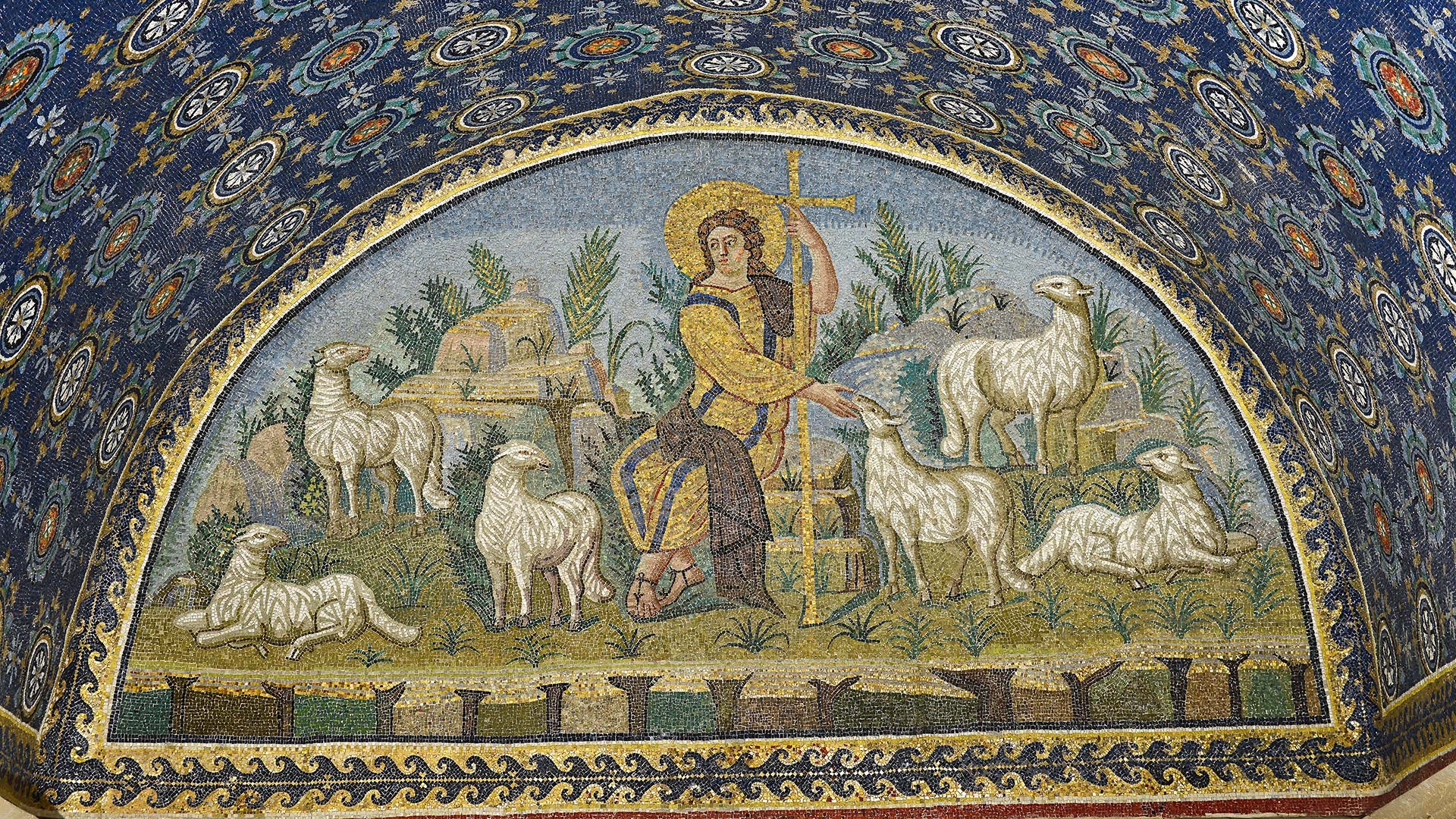
Mosaic of the Good Shepherd. c. 425 CE. Mosaic. Mausoleum of Galla Placidia, Ravenna.
Museum Location and Link Mausoleum of Galla Placidia, Ravenna, Italy. https://www.ravennamosaici.it/en/mausoleum-of-galla-placidia/
Provenance Constructed in the second quarter of the 5th century, the structure is traditionally attributed to Galla Placidia, the daughter of Emperor Theodosius I, as a funerary chapel. The mosaic program reflects the transition in late antique funerary art from secular Roman symbolism to distinct Christian motifs of salvation and the soul’s afterlife, with the Good Shepherd acting as the protector and guide for the departed soul into paradise.
Scholarly Article Citations Jensen, Robin M. “The Good Shepherd.” In Understanding Early Christian Art, 98–110. London: Routledge, 2000.
Sivan, Hagith. “The ‘Good Shepherd’ and the Imperial Cult: The Representation of Christ in the Galla Placidia Mausoleum.” Journal of Early Christian Studies 5, no. 1 (1997): 1–28.
Citation (Chicago Style) Jensen, Robin M. Understanding Early Christian Art. London: Routledge, 2000.