Read more about the article JL Austin How to do things with words
howtodothings

JL Austin How to do things with words

To sum up, we may say that the verdictive is an exercise of judgment, the exercitive is an assertion of influence or exercising of power, the commissive is an assuming of an obligation or declaring of an intention, the behabitive is the adopting of an attitude, and the expositive is the clarifying of reasons, arguments, and communications. p.162

Continue ReadingJL Austin How to do things with words
Read more about the article Ernst Cassirer The Myth of State
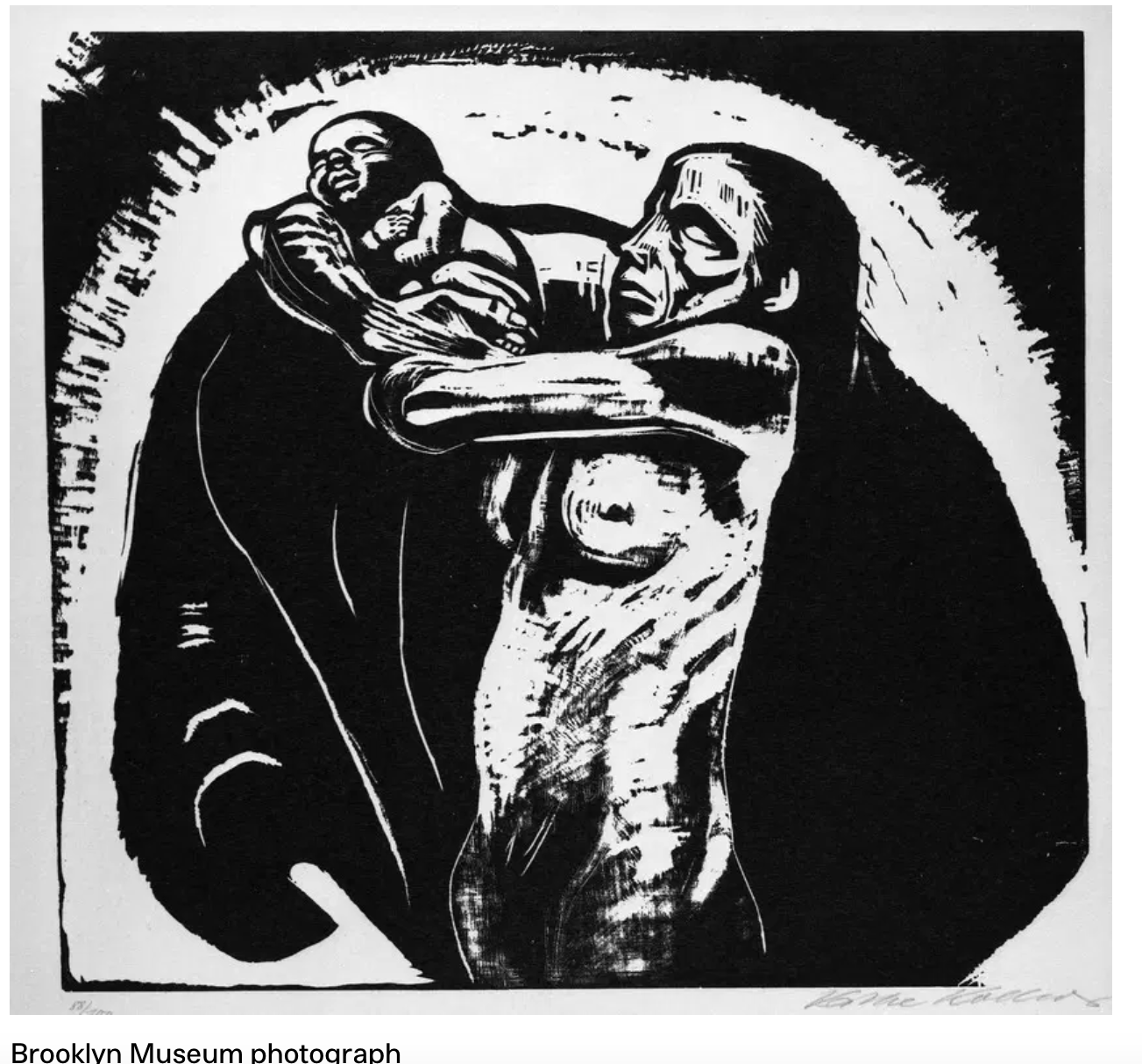
Painting 1946 cassierer

Ernst Cassirer The Myth of State

It is beyond the power of philosophy to destroy the political myths. A myth is in a sense invulnerable. It is impervious to rational arguments; it cannot be refuted by syllogisms. But philosophy can do us another important service. It can make us understand the adversary. In order to fight an enemy you must know him. That is one of the first principles of a sound strategy. To know him means no only to know his defects and weaknesses; it means to know his strength. All of us have been liable to underrate this strenth. When we first heard of the political myths we found them so absurd and incongruous, so fantastic and ludicrous that we could hardly be prevailed upon to take them seriously. By now it has become clear to all of us that this was a great mistake. We should not commit the same error a second time. We should carefully study the origin, the structure, the mehtods, and the technique of the political myths. We should see the adversary face to face in order to know how to combat him. p.296

Continue ReadingErnst Cassirer The Myth of State
Read more about the article Walter Benjamin The Origin of German Tragic Drama
GermantragicdramaStrobel bautista crop left

Walter Benjamin The Origin of German Tragic Drama

The intrigue alone would have been able to bring about that allegorical totality of scenic reorganization, thanks to which one of the images of the sequence stands out, in the image of the apotheosis, as different in kind, and gives mourning at one and the same time the cue for its entry and its exit. The powerful design of this form should be though through to its conclusion; only under this condition is it possible to discuss the idea of the German Trauerspiel. In the ruins of great buildings the idea of the plan speaks more impressively than in lesser buildings, however well preserved they are; and for this reason the German Trauerspiel merits interpretation. In the spirit of allegory it is conceived from the outset as a ruin, a fragment. Others may shine resplendently as on the first day; this form preserves the image of beauty to the very last. p.235

Continue ReadingWalter Benjamin The Origin of German Tragic Drama
Read more about the article Quentin Skinner Reason and Rhetoric in the Philosophy of Hobbes
laurentiushaechtanus

Quentin Skinner Reason and Rhetoric in the Philosophy of Hobbes

Finally, there is the still more rhetorically minded view associated with Renaissance humanism: that our watchword ought to be audi alteram partem, always listen to the other side. This commitment stems from the belief that, in moral and political debate, it will always be possible to speak in utramque partem, and will never be possible to couch our moral or political theories in deductive form. The approprate model will always be that of a dialogue, the appropriate stance a willingness to negotiate over rival intuitions concerning the applicability of evaluative terms. We must strive to reaching understanding and resolve disputes in a conversational way. p. 15-16

Continue ReadingQuentin Skinner Reason and Rhetoric in the Philosophy of Hobbes
Read more about the article Cicero On the Commonwealth and On the Laws
forciceroonthecommonwealth

Cicero On the Commonwealth and On the Laws

At this point you will see the political circle turning; you should learn to recognize its natural motion and circuit from the very beginning. This is the essential element of civic prudence (the topic of our entire discussion); to see the paths and turns of commonwealths, so that when you know in what direction any action tends, you can hold it back or anticipate it. Book 2 p.47

Continue ReadingCicero On the Commonwealth and On the Laws
Read more about the article Wittgenstein Philosophical Investigations
Duck Rabbit illusion

Wittgenstein Philosophical Investigations

The thoughts that I publish in what follows are the precipitate of philosophical investigations which have occupied me for the last sixteen years. They concern many subjects: the concepts of meaning, of understanding, of a proposition and sentence, of logic, the foundations of mathematics, states of consciousness, and other things. I have written down all these thoughts as remarks, short paragraphs, sometimes in longer chains about the same subject, sometimes jumping, in a sudden change, from one area to another. -- Originally it was my intention to bring all this together in a book whose form I thought of differently at different times. But it seemed to me essential that in the book the thoughts should proceed from one subject to another in natural, smooth sequence. After several unsuccessful attempts to weld my results together into such a whole, I realized that I should never succeed. The best that I could write would never be more than philosophical remarks; my thoughts soon grew feeble if I tried to force them along a single track against their natural inclination. --- And this was, of course, connected with the very nature of the investigation. For it compels us to travel criss-cross in every direction over a wide field of thought. -- The philosophical remarks in this book are, as it were, a number of sketches of landscapes which were made in the course of these long and meandering journeys.

Continue ReadingWittgenstein Philosophical Investigations
Read more about the article Wittgenstein Tractatus Logico-Philosophicus
Sterrett article foto MAIN

Wittgenstein Tractatus Logico-Philosophicus

The book deals with the problems of philosophy and shows, as I believe, that the method of formulating these problems rests on the misunderstanding of the logic of our language. Its whole meaning could be summed up somewhat as follows: What can be said at all can be said clearly; and whereof one cannot speak thereof one must be silent. The book will, therefore, draw a limit to thinking, or rather not to thinking, but to the expression of thoughts; for, in order to draw a limit to thinking we should have to be able to think both sides of this limit (we should therefore have to be able to think what cannot be thought). The limit can, therefore, only be drawn in language and what lies on the other side of the limit will be simply nonsense.

Continue ReadingWittgenstein Tractatus Logico-Philosophicus
Read more about the article Heidegger On Nietzsche
forHeideggersNietzsche

Heidegger On Nietzsche

Not only must the thought emerge out of the creative moment of decision in some given individual, but as a thought that pertains to life itself it must also be a historical decision -- a crisis. p.154 continued p. 155 This plan culminates in a fifth point entitled "The doctrine of eternal return as hammer in the hand of the most powerful man. Wherever the thought of thoughts is indeed thought, that is to say, is incorporated, it conducts the thinker to supreme decisions in such a way that he expands beyond himself, thus attaining power over himself and willing himself. In this way such a man is as will to power.

Continue ReadingHeidegger On Nietzsche