Bonnie Honig Democracy and the Foreigner
I take foreignness as a topic, a question, rather than a problem. What does it mean? What sort of work does it do in cultural politics?
Sheldon Wolin De Tocqueville Between Two Worlds
Democracy is perpetuated as philanthropic gesture, contemptuously institutionalized as welfare, and denigrated as populism. p.572

Jorge Luis Borges This Craft of Verse
And when the fact that poetry, language, was not only a medium for communication but could also be a passion and a joy—when this was revealed to me, I do not think I understood the words, but I felt that something was happening to me. It was happening not to my mere intelligence but to my whole being, to my flesh and blood.
Rancière, Jacques. Le partage du sensible: Esthétique et politique
If the reader is fond of analogy, aesthetics can be understood in a Kantian sense - re-examined perhaps by Foucault - as the system of a priori forms determining what presents itself to sense experience. It is a delimitation of [14] spaces and times, of the visible and the invisible, of speech and noise, that simultaneously determines the place and the stakes of politics as a form of experience. Politics revolves around what is seen and what can be said about it, around who has the ability to see and the talent to speak, around the properties of spaces and the possibilities of time.
S. Sara Monoson Plato’s Democratic Entanglements
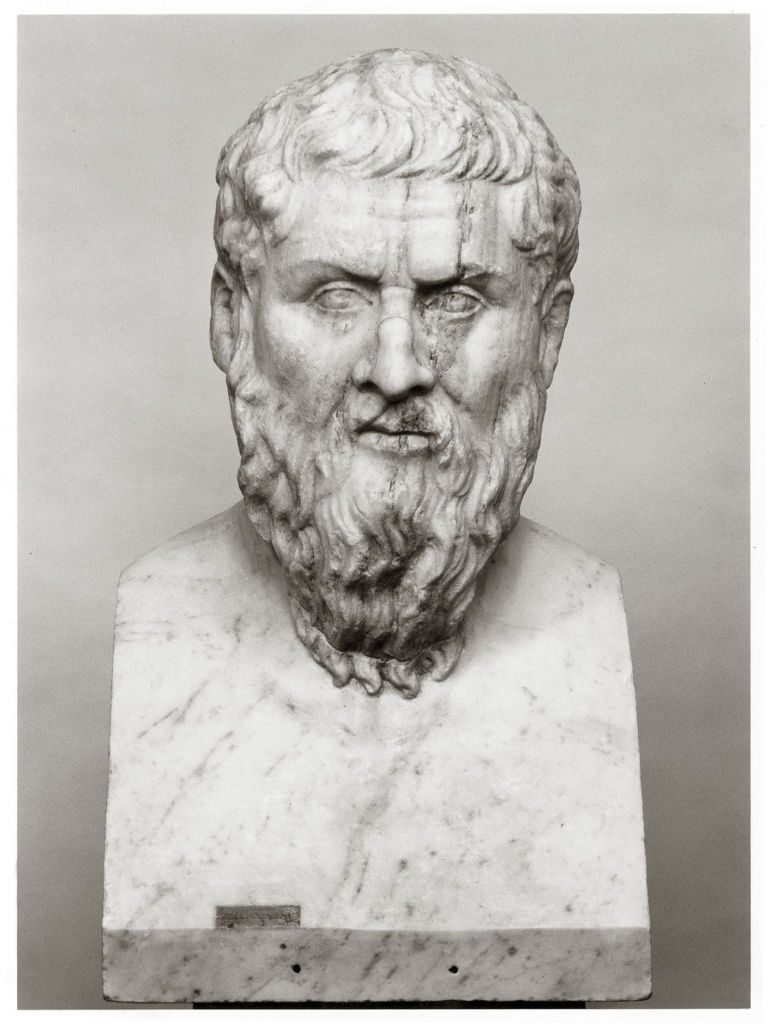
Plato’s depictions of intellectual labor in his dialogues contain a puzzle. On the one hand, the dialogues voice some of the most aggressive attacks on the intellectual merit of theatrical enterprises in all of Western litera-ture. Most famously, the Republic banishes poetry from the ideal city(607a–e). In the Laws, moreover, the Athenian Stranger decries the deterioration of democratic politics into a “wretched theatocracy” (theatro- kratia, 701a1). On the other hand, Plato likens serious intellectual toil, including philosophic understanding, to being a theater-goer. Through-out his dialogues he sustains a delicate metaphor: “Intellectual labor is like the activity of being a theate¯s,” where theate¯s refers to an audience memberat the theater, during the dramatic competitions held on grand civic festival occasions.