Machiavelli, Niccolò. Le Istorie Fiorentine. Florence: Bernardo di Giunta, 1532.
1532 Giunta Edition
The editio princeps published in Florence is a cornerstone of Renaissance bibliographical history. Notable surviving copies and their histories include:
Biblioteca Nazionale Centrale di Firenze (BNCF): Holds several copies, including those originating from the Biblioteca Magliabechiana, the first public library in Florence. These copies often bear the “MD” duplicate stamps indicating their long-standing residency in the city of Machiavelli’s birth.
The Magalotti-Crevenna Copy: A significant copy with contemporary marginalia by Galeotto Magalotti, a Florentine consul in Antwerp and financier for the Medici. It later passed through the collection of Pietro-Antonio Bolongaro-Crevenna, a renowned 18th-century bibliophile whose library was a major auction event in Amsterdam in 1790.
The Marsh Copy: Formerly owned by Henry Wheelwright Marsh (1860–1943), the American insurance magnate. This copy is notable for its 17th-century Roman red morocco binding, suggesting it was part of elite Italian collections before moving to the United States in the 19th century.
Machiavelli, Niccolò. Tutte le opere di Nicolo Machiavelli: cittadino et secretario fiorentino. Rome: Antonio Blado, 1550.
Despite the 1550 date on the title page, scholars have identified five distinct versions, most of which were printed in the 17th century (primarily in Geneva) to bypass Catholic censorship after Machiavelli’s works were placed on the Index Librorum Prohibitorum.
Columbia University Libraries (Rare Book & Manuscript Library): Holds a well-documented “false imprint” copy published between 1628 and 1660. It is used in their curricula to demonstrate the history of printing as a tool for evading censorship.
The British Library: Holds copies of the various “Testina” states, categorized by the specific woodcut portrait of Machiavelli (the testina) used on the title page, which was famously adapted from earlier 1540 woodcuts.
Petrucciani, Alberto. “Le ‘Testine’ di Machiavelli: Nuovi dati su un enigma bibliografico.” La Bibliofilia 102, no. 1 (2000): 43–81.
Note: This article examines the various states of the Testina woodcut and the typographical history of the Blado editions.
Richardson, Brian. Print Culture in Renaissance Italy: The Editor and the Vernacular Text, 1470–1600. Cambridge: Cambridge University Press, 1994.
Note: Richardson provides a deep dive into how editors like those at the Giunta press shaped the presentation of Machiavelli’s works for the public eye.
Machiavelli, Niccolò. Tutte le opere di Niccolò Machiavelli. 6 vols. Florence: Gaetano Cambiagi, 1782–1783.
Sasso, Gennaro. “L’edizione ‘Cambiagi’ e la fortuna di Machiavelli nel Settecento.” In Machiavelli e i suoi interpreti, 112–145. Naples: Guida, 1987.
Note: This work situates the Cambiagi edition within the broader Enlightenment recovery of Renaissance political thought and its artistic patronage.
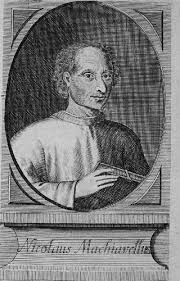
This is the Testina woodcut for the book cover
On the featured image
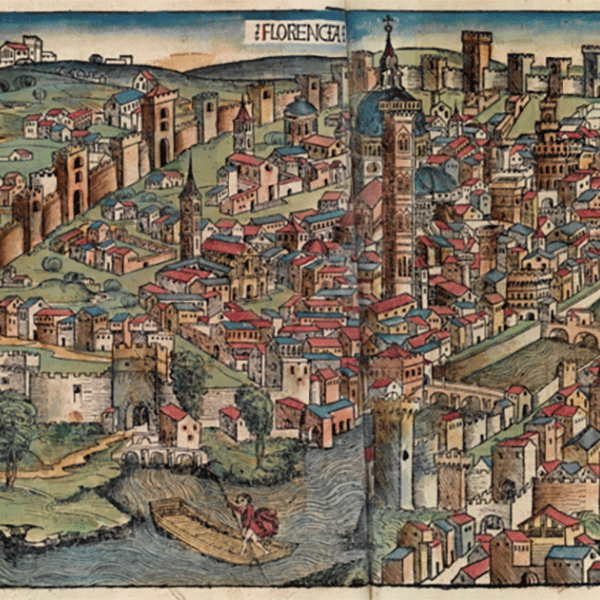
Schedel, Hartmann. Liber Chronicarum [Nuremberg Chronicle]. Nuremberg: Anton Koberger, 1493.
a hand-colored double-page woodcut of Florence from the Nuremberg Chronicle (Liber Chronicarum). Published in 1493, this work is the most famous and extensively illustrated incunable (a book printed before 1501) in history.
Artists: The woodcuts were produced in the Nuremberg workshop of Michael Wolgemut and Wilhelm Pleydenwurff. Notably, a young Albrecht Dürer was an apprentice in this workshop during the book’s preparation and likely contributed to some of the illustrations.
Visual Strategy: While many cityscapes in the Chronicle were “stock images” reused for multiple locations, the view of Florence was intended to be topographically realistic. It was based on the famous “Chain Map” (Carta della Catena) attributed to Francesco Rosselli (c. 1482), showing the city before the major 16th-century architectural shifts.
Iconography: You can clearly identify the Duomo (Santa Maria del Fiore) with Brunelleschi’s dome, the Campanile di Giotto, and the Palazzo Vecchio. The Arno River and the city’s medieval defensive walls are prominent, capturing the “Golden Age” of the city under Lorenzo the Magnificent.
Connection to Machiavelli’s Florentine Histories
Although the Nuremberg Chronicle predates the publication of Machiavelli’s Florentine Histories (1532) by nearly forty years, they are deeply linked through the Humanist tradition and the specific political moment they capture.
The Shared Subject: Machiavelli’s Histories begin their primary narrative in 1434 (the rise of the Medici) and conclude in 1492 with the death of Lorenzo de’ Medici. This woodcut depicts the exact physical city Machiavelli lived in and describes in his final chapters—a city at the height of its Renaissance power just before the “calamities of Italy” began in 1494.
A Shift in Perspective: The Chronicle presents Florence as a “Christian City” within a providential history of the world. In contrast, Machiavelli’s Florentine Histories famously stripped away this theological lens, focusing instead on internal factionalism and the secular “necessity” of power.
Printing Context: Both works represent “prestige” printing projects. The Chronicle was the pinnacle of 15th-century German printing technology, while the first editions of Machiavelli’s Histories (Giunta and Blado, 1532) were the high-water mark of 16th-century Italian publishing, often including similar (though updated) architectural frontispieces to establish the “character” of the city.