Read more about the article Kant Religion within the Bounds of Reason Alone
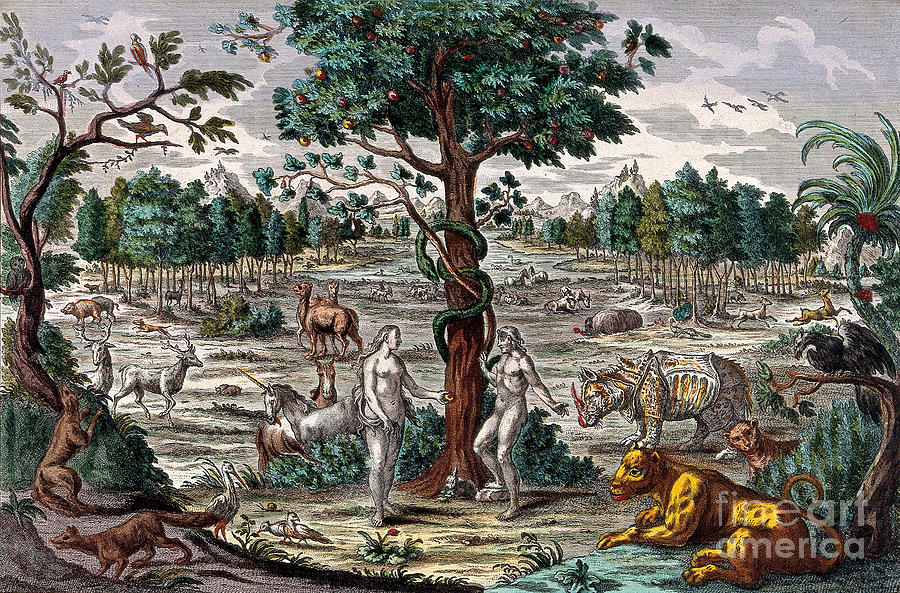
garden of eden illustration c 1780 science source

Kant Religion within the Bounds of Reason Alone

However exalted the application of our concepts, and however far up from sensibility we may abstract them, still they will always be appended to image representations, whose proper function is to make these concepts, which are not otherwise derived from experience, serviceable for experiential use.

Continue ReadingKant Religion within the Bounds of Reason Alone
Read more about the article Kant Perpetual Peace
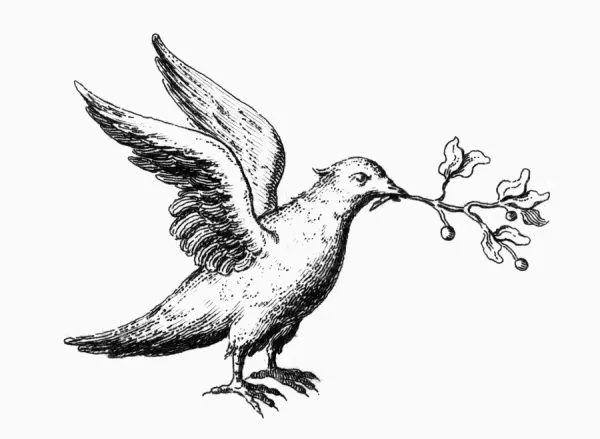
dove noahs ark dove 18th century french 7522057.jpg

Kant Perpetual Peace

For a state is not a property (patrimonium), as may be the ground on which its people are settled. It is a society of human beings over whom no one but itself has the right to rule and to dispose. Like the trunk of a tree, it has its own roots, and to graft it on to another state is to do away with its existence as a moral person, and to make of it a thing.

Continue ReadingKant Perpetual Peace
Read more about the article Kant Prolegomena to any Future Metaphysics
supposedly the second part of the augsburg book of miracles v0 80jvmfm04dpc1

Kant Prolegomena to any Future Metaphysics

First, as concerns the sources of metaphysical cognition, its very concept implies that they cannot be empirical. Its principles (including not only its basic propositions but also its basic concepts) must never be derived from experience. It must not be physical but metaphysical knowledge, i.e., knowledge lying beyond experience. It can therefore have for its basis neither external experience, which is the source of physics proper, nor internal, which is the basis of empirical psychology. It is therefore a priori cognition, coming from pure understanding and pure reason. p.11

Continue ReadingKant Prolegomena to any Future Metaphysics
Read more about the article Kant Critique of Judgment
infinityeternity

Kant Critique of Judgment

A singular judgement of experience, e.g., when we perceive a moveable drop of water in an ice-crystal, may justly claim that every one else should find it the same; because we have formed this judgement, according to the universal conditions of the determinant faculty of Judgement, under the laws of a possible experience in general. Just in the same34 way he who feels pleasure in the mere reflection upon the form of an object without respect to any concept, although this judgement be empirical and singular, justly claims the agreement of every one; because the ground of this pleasure is found in the universal, although subjective, condition of reflective judgements, viz., the purposive harmony of an object (whether a product of nature or of art) with the mutual relations of the cognitive faculties (the Imagination and the Understanding), a harmony which is requisite for every empirical cognition. The pleasure, therefore, in the judgement of taste is dependent on an empirical representation, and cannot be bound up a priori with any concept (we cannot determine a priori what object is or is not according to taste; that we must find out by experiment). But the pleasure is the determining ground of this judgement only because we are conscious that it rests merely on reflection and on the universal though only subjective conditions of the harmony of that reflection with the cognition of Objects in general, for which the form of the Object is purposive.

Continue ReadingKant Critique of Judgment
Read more about the article Kant Critique of Practical Reason
tempImageOpuevl masterForCofPracticalReason

Kant Critique of Practical Reason

Practical principles are propositions which contain a general determination of the will, having under it several practical rules. They are subjective, or maxims, when the condition is regarded by the subject as valid only for his own will, but are objective, or practical laws, when the condition is recognized as objective, that is, valid for the will of every rational being.

Continue ReadingKant Critique of Practical Reason
Read more about the article Kant Groundwork of the Metaphysics of Morals
Goethe Elysium cropforKantGMM

Kant Groundwork of the Metaphysics of Morals

Ancient Greek philosophy was divided into three sciences: physics, ethics, and logic. This division is perfectly suitable to the nature of the subject and there is no need to improve upon it except, perhaps, to add its principle, partly so as to insure its completeness and partly so as to be able to determine correctly the necessary subdivisions. All rational cognition is either material and concerned with some object, or formal and occupied only with the form of the understanding and of reason itself and with the universal rules of thinking in general, without distinction of objects. Formal philosophy is called logic, whereas material philosophy, which has to do with determinate objects and the laws to which they are subject, is in turn divided into two. For these laws are either laws of nature or laws of freedom. The science of the first is called physics, that of the other is ethics; the former is also called the doctrine of nature, the latter the doctrine of morals.

Continue ReadingKant Groundwork of the Metaphysics of Morals
Read more about the article Kant Critique of Pure Reason
Copernicusgettyimages 1422832792 1024x1024

Kant Critique of Pure Reason

From the Norman Kemp-Smith Transcendental Deduction (A) p. 143 We entitle the synthesis of the manifold in imagination transcendental, if without distinction of intuitions it is directed exclusively to the a priori combination of the manifold; and the unity of this synthesis is called tanscendental, if it is represented as a priori necessary in relation to the original unity of apperception. Since this unity of apperception underlies the possibility of all knowledge, the transcental unity of the synthesis of imagination is the pure form of all possible knowledge; and by means of it all objects of possible experience must be represented a priori. The unity of apperception in relation to the synthesis of imagination is the understanding; and this same unity, with reference to the transcendental synthesis of the imagination, the pure understanding.

Continue ReadingKant Critique of Pure Reason
Read more about the article Kant What Is Enlightenment?
Immanuel Kant for Pianko 5 15

Kant What Is Enlightenment?

1. Enlightenment is man's emergence from his self-imposed immaturity. Immaturity is the inability to use one's understanding without guidance from another. This immaturity is self-imposed when its cause lies not in lack of understanding, but in lack of resolve and course to use it without buidance from another. Sapere Aude! Have courage to use your own understanding!" -- that is the motto of enlightenment.

Continue ReadingKant What Is Enlightenment?