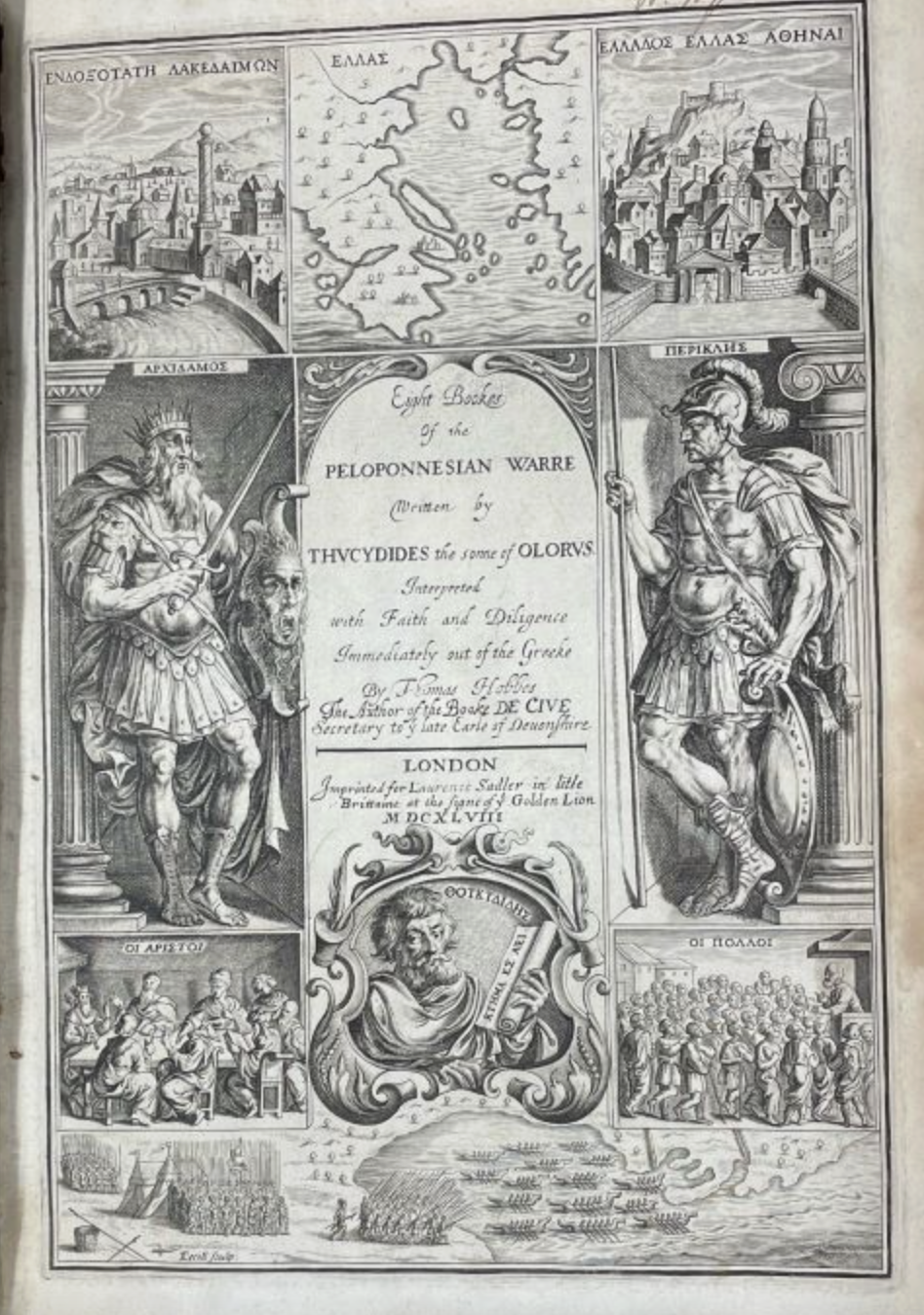
Hobbes Eight Bookes of the Peloponnesian Warre
Moreover, the penning up of the inhabitants of the country into the city was a great grievance to them; and especially to the new comers. For having no houses, but dwelling at that time of the year in stifling booths, the mortality was now without all form, and dead bodies lay inside one upon another, both in the streets and about every conduit, desiring water. > The temples also where they tented, were full of the dead bodies of them that died within them. For as the disaster passed all bounds, men, not knowing what was to become of them, became utterly careless of everything, whether sacred or profane. And all the laws which they had before used touching funerals were now broken, every one burying where he could find room. And many for want of things necessary, after so many deaths before, used shameless manner of burials. For when one had made a pile, another would come, and throwing down him that he had brought, set fire to it for himself; and some would fling the body they brought upon another that was already burning, and so go their way. > And the great licentiousness, which also in other kinds was used in the city, began at first from this disease. For that which before any man would dissemble, and not acknowledge to be done for voluptuousness, he durst now do freely, seeing the sudden change of the rich dying, and men worth nothing inheriting their estates. So they resolved to take their present profit and pleasure, holding their lives and their wealth to be alike but for a day. > And no man was eager to take any pains for that which was accounted honest, as being uncertain whether he should live to attain it or no. But whatsoever was delectable for the present, and whatsoever stood with their profit or pleasure, that was approved both for honesty and profit. Neither the fear of the gods nor the laws of men awed any man. Not the former, because they concluded that it was alike to worship or not worship, seeing all perished alike; nor the latter, because no man expected his life would last till he received punishment of his crimes by judgment. But they thought there was now over their heads some far greater judgment decreed against them, before which fell, it was reason they should enjoy some little part of their lives."