Read more about the article Wittgenstein Philosophical Investigations
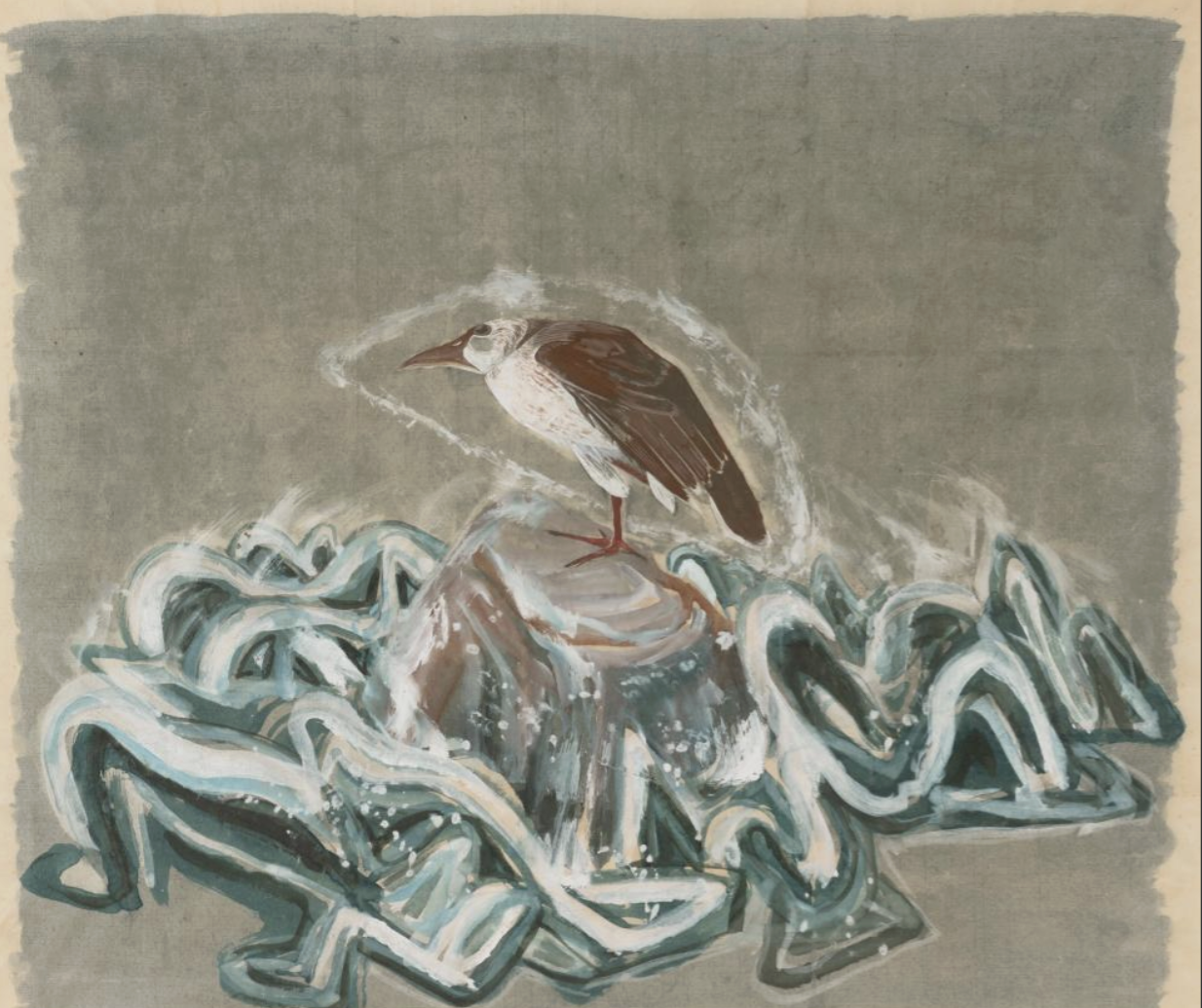
Duck Rabbit illusion

Wittgenstein Philosophical Investigations

The thoughts that I publish in what follows are the precipitate of philosophical investigations which have occupied me for the last sixteen years. They concern many subjects: the concepts of meaning, of understanding, of a proposition and sentence, of logic, the foundations of mathematics, states of consciousness, and other things. I have written down all these thoughts as remarks, short paragraphs, sometimes in longer chains about the same subject, sometimes jumping, in a sudden change, from one area to another. -- Originally it was my intention to bring all this together in a book whose form I thought of differently at different times. But it seemed to me essential that in the book the thoughts should proceed from one subject to another in natural, smooth sequence. After several unsuccessful attempts to weld my results together into such a whole, I realized that I should never succeed. The best that I could write would never be more than philosophical remarks; my thoughts soon grew feeble if I tried to force them along a single track against their natural inclination. --- And this was, of course, connected with the very nature of the investigation. For it compels us to travel criss-cross in every direction over a wide field of thought. -- The philosophical remarks in this book are, as it were, a number of sketches of landscapes which were made in the course of these long and meandering journeys.

Continue ReadingWittgenstein Philosophical Investigations
Read more about the article Wittgenstein Tractatus Logico-Philosophicus
Sterrett article foto MAIN

Wittgenstein Tractatus Logico-Philosophicus

The book deals with the problems of philosophy and shows, as I believe, that the method of formulating these problems rests on the misunderstanding of the logic of our language. Its whole meaning could be summed up somewhat as follows: What can be said at all can be said clearly; and whereof one cannot speak thereof one must be silent. The book will, therefore, draw a limit to thinking, or rather not to thinking, but to the expression of thoughts; for, in order to draw a limit to thinking we should have to be able to think both sides of this limit (we should therefore have to be able to think what cannot be thought). The limit can, therefore, only be drawn in language and what lies on the other side of the limit will be simply nonsense.

Continue ReadingWittgenstein Tractatus Logico-Philosophicus
Read more about the article Heidegger On Nietzsche
forHeideggersNietzsche

Heidegger On Nietzsche

Not only must the thought emerge out of the creative moment of decision in some given individual, but as a thought that pertains to life itself it must also be a historical decision -- a crisis. p.154 continued p. 155 This plan culminates in a fifth point entitled "The doctrine of eternal return as hammer in the hand of the most powerful man. Wherever the thought of thoughts is indeed thought, that is to say, is incorporated, it conducts the thinker to supreme decisions in such a way that he expands beyond himself, thus attaining power over himself and willing himself. In this way such a man is as will to power.

Continue ReadingHeidegger On Nietzsche
Read more about the article Heidegger  Being and Time
BeinginTime

Heidegger Being and Time

"Läßt sich die Zeit selbst als Horizont des Seins offenbaren? Ist die Zeit selbst der Modus der Zeitlichkeit, oder ist diese nur ein Modus der Zeit? Ist die Zeit selbst das Ziel des Entwurfs, oder ist sie nur der Horizont des Seins? Welcher Art ist dieser Unterschied zwischen Sein und Zeit? Die Untersuchung ist auf dem Wege — wohin?"

Continue ReadingHeidegger Being and Time
Read more about the article John Stuart Mill On Liberty
John Stuart Mill by London Stereoscopic Company, c1870

John Stuart Mill On Liberty

The subject of this Essay is ... Civil, or Social Liberty: the nature and limits of the power which can be legitimately exercised by society over the individual. A question seldom stated, and hardly ever discussed, in general terms, but which profoundly influences the practical controversies of the age by its latent presence, and is likely soon to make itself recognised as the vital question of the future. It is so far from being new, that in a certain sense, it has divided mankind, almost from the remotest ages; but in the stage of progress into which the more civilised portions of the species have now[Pg 2] entered, it presents itself under new conditions, and requires a different and more fundamental treatment. The struggle between Liberty and Authority is the most conspicuous feature in the portions of history with which we are earliest familiar, particularly in that of Greece, Rome, and England.

Continue ReadingJohn Stuart Mill On Liberty
Read more about the article John Rawls Theory of Justice
veilofignorance

John Rawls Theory of Justice

If men’s inclination to self-interest makes their vigilance against one another necessary, their public sense of justice makes their secure association together possible. Among individuals with disparate aims and purposes a shared conception of justice establishes the bonds of civic friendship; the general desire for justice limits the pursuit of other ends. One may think of a public conception of justice as constituting the fundamental charter of a well-ordered human association. Existing societies are of course seldom well-ordered in this sense, for what is just and unjust is usually in dispute. Men disagree about which principles should define the basic terms of their association. Yet we may still say, despite this disagreement, that they each have a conception of justice. That is, they understand the need for, and they are prepared to affirm, a characteristic set of principles for assigning basic rights and duties and for determining what they take to be the proper distribution of the benefits and burdens of social cooperation.

Continue ReadingJohn Rawls Theory of Justice
Read more about the article Michael Sandel Liberalism and the Limits of Justice
Bud Fields family Walker Evans photograph Hale

Michael Sandel Liberalism and the Limits of Justice

For justice to be the first virtue, certain things must be true of us. We must be creatures of a certain kind, related to human circumstance in a certain way. We must stand at a certain distance from our circumstance, whether as transcendental subject in the case of Kant, or as essentially unencumbered subject of possession in the case of Rawls. Either way, we must regard ourselves as independent: independent from the interests and attachments we may have at any moment, never identified by our aims but always capable of standing back to survey and assess and possibly to revise them (Rawls 1979: 7; 1980: 544–5). DEONTOLOGY'S LIBERATING PROJECT Bound up with the notion of an independent self is a vision of the moral universe this self must inhabit. Unlike classical Greek and medieval Christian conceptions, the universe of the deontological ethic is a place devoid of inherent meaning, a world ‘disenchanted’ in Max Weber's phrase, a world without an objective moral order. Only in a universe empty of telos, such as seventeenth-century science and philosophy affirmed, is it possible to conceive a subject apart from and prior to its purposes and ends. Only a world ungoverned by a purposive order leaves principles of justice open to human construction and conceptions of the good to individual choice. In this the depth of opposition between deontological liberalism and teleological world views most fully appears.

Continue ReadingMichael Sandel Liberalism and the Limits of Justice
Read more about the article Michael Walzer Spheres of Justice
1338 1340 lorenzetti good government country 1

Michael Walzer Spheres of Justice

And equality is simply the outcome of the art -- at least for us, working with the materials here at hand. For the rest of the book, then, I shall try to describe those materials, the things we make and distribute, one by one. I shall try to get at what security and welfare, money, office, education, free time, political power, and so on, mean to us' how they figure in our lives; and how we might share, divide, and exchange them if we were free from every sort of domination.

Continue ReadingMichael Walzer Spheres of Justice
Read more about the article Alasdair MacIntyre After Virtue
Benedict of Nursia act painting Benedictine Rule 1926

Alasdair MacIntyre After Virtue

My own critique of liberalism derives from a judment that the best type of human life, that in which the tradition of the virtues is most adequately embodied, is lived by those engaged in constructing and sustaining forms of community directed towards the shared achievement of those common goods without which the ultimate human good cannot be achieved. Liberal political societies are characteristicallly committed to denying any place for a determinate conception of the human good in their public discourse, let alone allowing that their common life should be grounded in such a conception. On the dominant liberal view, government is to be neutral as between rival conceptions of the human good, yet in fact what liberalism promotes is a kind of instutional order that is inimical to the construction and sustaining of the types of communal relationship required for the best kind of human life. p. xv Prologue

Continue ReadingAlasdair MacIntyre After Virtue