Aeschylus. The Eumenides. Translated by Robert Fagles. New York: Penguin Classics, 1979.
Aeschylus. Oresteia: Agamemnon, Libation-Bearers, Eumenides. Edited and translated by Alan H. Sommerstein. Loeb Classical Library 146. Cambridge, MA: Harvard University Press, 2009.
Brown, A. L. “Aeschylus, ‘Eumenides’ 1-93.” The Journal of Hellenic Studies 102 (1982): 26–32.
Sommerstein, Alan H. “The Court of the Areopagus in the Eumenides.” The Journal of Hellenic Studies 109 (1989): 124–127.
Shilo, Sheila. “The Ghost of Clytemnestra in the Eumenides: Ethical Claims Beyond Human Limits.” American Journal of Philology 139, no. 1 (2018): 1–32.
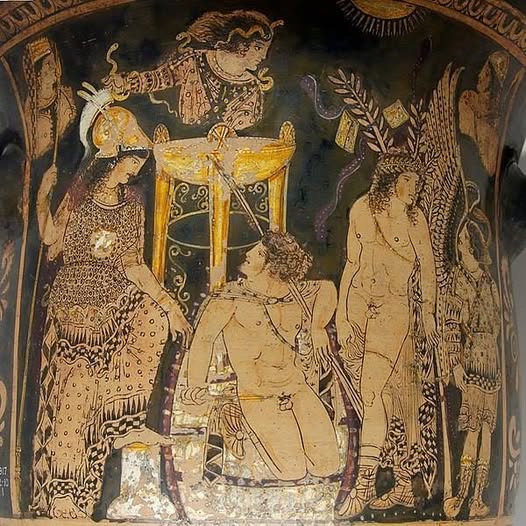
On the featured image
Eumenides Painter. Apulian Red-Figure Bell-Krater: The Purification of Orestes. c. 380–370 BCE. Terracotta, 48.7 x 52 cm. Musée du Louvre, Paris.
Museum/Location: Musée du Louvre, Paris, France. (Department of Greek, Etruscan, and Roman Antiquities, Sully wing, Room 44).
Provenance: This piece is part of the Campana Collection, acquired by the Louvre in 1861. It was likely discovered in Armento, Italy, and is a premier example of “Ornate Apulian” pottery.
Art History Context: The scene depicts the opening of Aeschylus’s Eumenides. Apollo is shown purifying Orestes with the blood of a piglet at the Omphalos (the navel of the world) in Delphi. To the left, the ghost of Clytemnestra attempts to rouse the sleeping Furies (Erinyes) to continue their pursuit of her son.
Trendall, Arthur Dale, and Alexander Cambitoglou. The Red-Figured Vases of Apulia: Volume I, Early and Middle Apulian. Oxford: Clarendon Press, 1978.
Taplin, Oliver. Pots and Plays: Interactions between Tragedy and Greek Vase-painting of the Fourth Century B.C. Los Angeles: J. Paul Getty Museum, 2007.