Plato, Meno
Can you tell me, Socrates, can virtue be taught? Or is not teachable but the result of practice, or is it neither of these, but men possess it by nature or in some other way?
Polus: Very well, I shall. Tell me, Socrates, since you think Gorgias is confused about oratory, what do you say it is? Socrates: Are you asking me what craft I say it is? Polus: Yes, I am. Socrates: To tell you the truth, Polus, I dont think it's a craft at all.
Socrates: And that the good life, the beautiful life, and the just life are the same; does that still hold, or not? p.129
Euthyphro: I don't know him, Socrates. What charge does he bring against you? Socrates: What charge? A not ignoble one I think, for it is no small thing for a young man to have knowledge of such an important subject. He says he knows how our young men are corrupted and who corrupts them.
Now, the hour to part has come. I go to die, you go to live. Which of use goes to the better lot is known to no one, except the god.
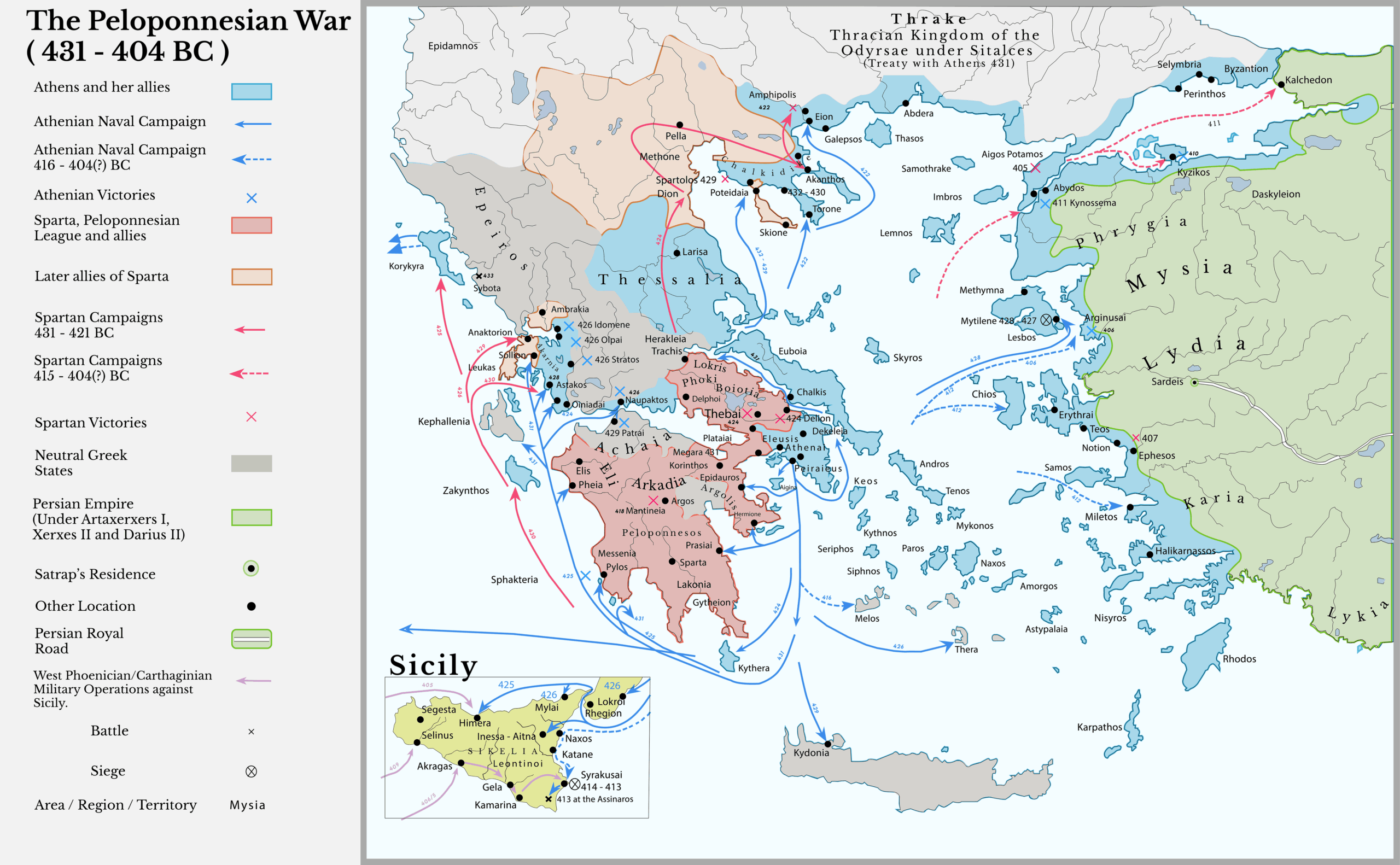
...since you know as well as we do that right, as the world goes, is only in question between equals in power, while the strong do what the can and the weak suffer what they must. 5.84 - 5.116 pp. 350-357
"O light of day! O shadows of the night! Why do I linger here, a slave, who once was Queen of Troy?"
"O god—it has all come true. Light, let me look on you for the last time!"
"What law of the mighty gods have I transgressed? Why look to the heavens any more, tormented as I am? Whom to call, what allies? Devout as I am, they call me impious—and so for my piety, I am destroyed." — Translated by Robert Fagles
I track Home to its hidden spring the flowing of fire, By stealth infringe it, drawing what doth charge A reed: the thing, reveal'd to man, is mighty, Teacher of every art, the main of life,