Read more about the article Michael Sandel Liberalism and the Limits of Justice
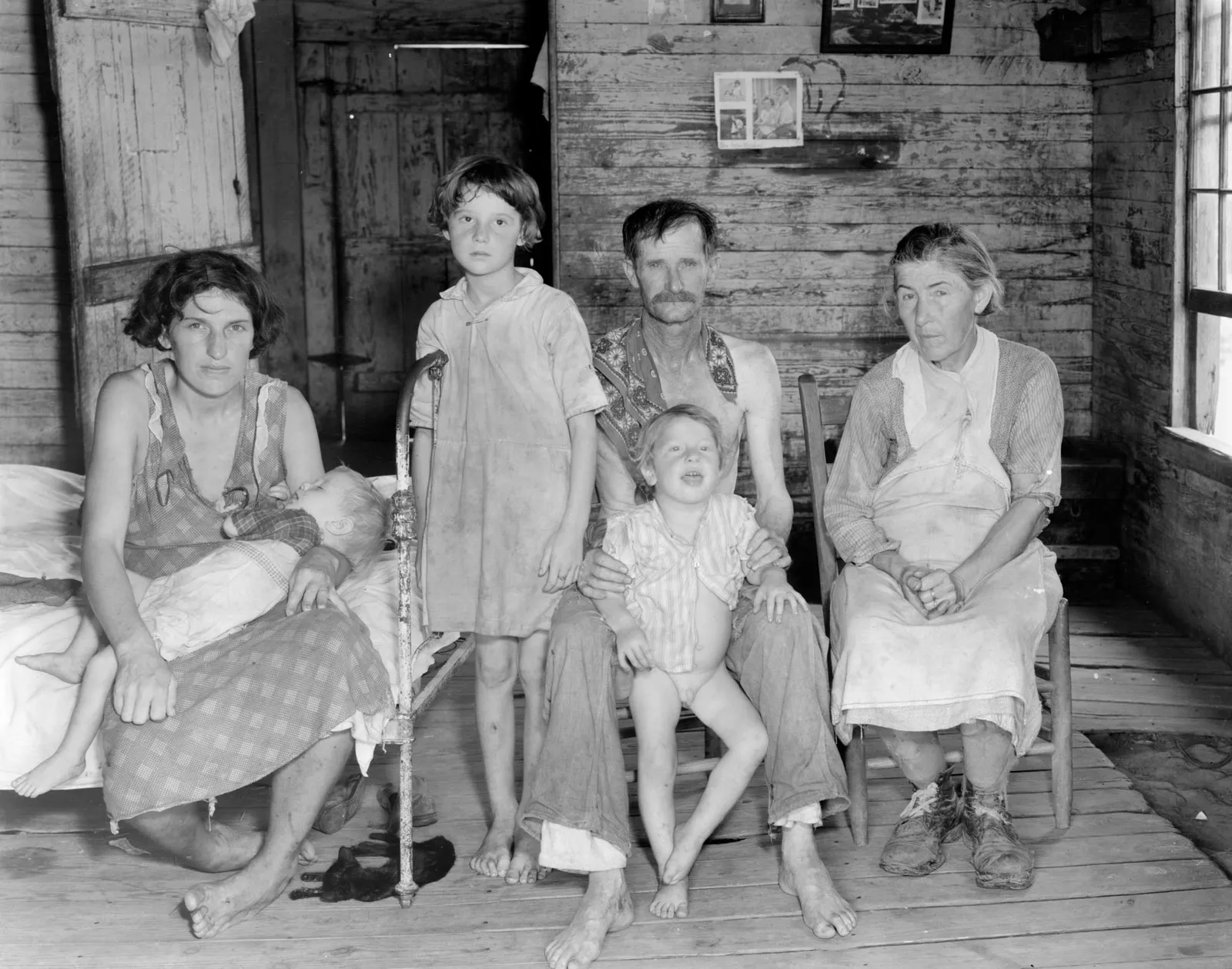
Bud Fields family Walker Evans photograph Hale

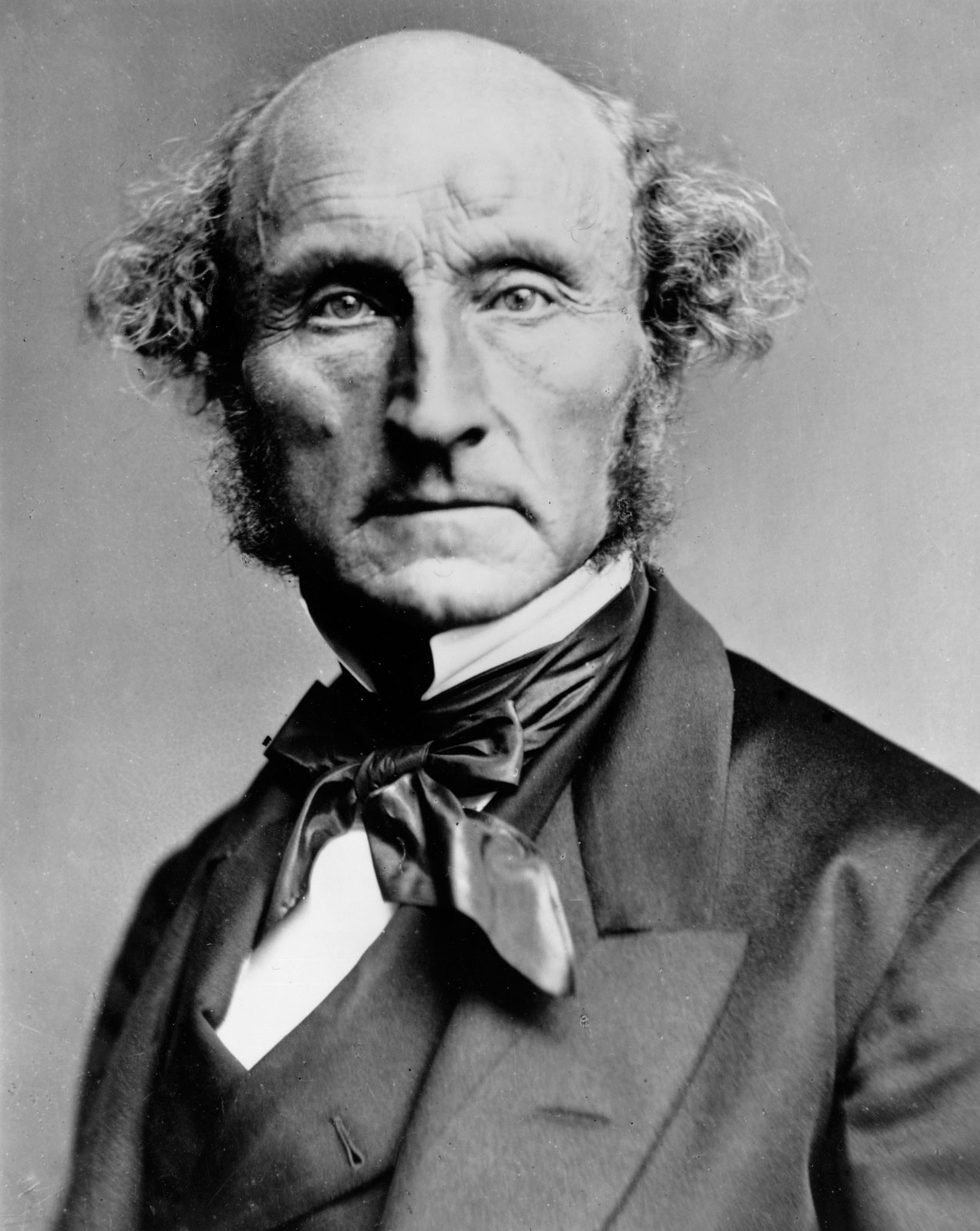
Michael Sandel Liberalism and the Limits of Justice

For justice to be the first virtue, certain things must be true of us. We must be creatures of a certain kind, related to human circumstance in a certain way. We must stand at a certain distance from our circumstance, whether as transcendental subject in the case of Kant, or as essentially unencumbered subject of possession in the case of Rawls. Either way, we must regard ourselves as independent: independent from the interests and attachments we may have at any moment, never identified by our aims but always capable of standing back to survey and assess and possibly to revise them (Rawls 1979: 7; 1980: 544–5). DEONTOLOGY'S LIBERATING PROJECT Bound up with the notion of an independent self is a vision of the moral universe this self must inhabit. Unlike classical Greek and medieval Christian conceptions, the universe of the deontological ethic is a place devoid of inherent meaning, a world ‘disenchanted’ in Max Weber's phrase, a world without an objective moral order. Only in a universe empty of telos, such as seventeenth-century science and philosophy affirmed, is it possible to conceive a subject apart from and prior to its purposes and ends. Only a world ungoverned by a purposive order leaves principles of justice open to human construction and conceptions of the good to individual choice. In this the depth of opposition between deontological liberalism and teleological world views most fully appears.

Continue ReadingMichael Sandel Liberalism and the Limits of Justice
Read more about the article Michael Walzer Spheres of Justice
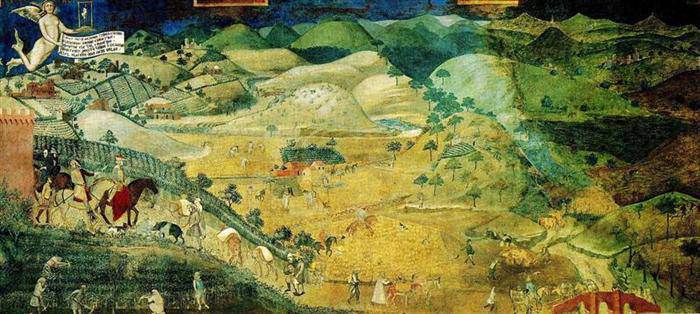
1338 1340 lorenzetti good government country 1

Michael Walzer Spheres of Justice

And equality is simply the outcome of the art -- at least for us, working with the materials here at hand. For the rest of the book, then, I shall try to describe those materials, the things we make and distribute, one by one. I shall try to get at what security and welfare, money, office, education, free time, political power, and so on, mean to us' how they figure in our lives; and how we might share, divide, and exchange them if we were free from every sort of domination.

Continue ReadingMichael Walzer Spheres of Justice
Read more about the article Alasdair MacIntyre After Virtue
Benedict of Nursia act painting Benedictine Rule 1926

Alasdair MacIntyre After Virtue

My own critique of liberalism derives from a judment that the best type of human life, that in which the tradition of the virtues is most adequately embodied, is lived by those engaged in constructing and sustaining forms of community directed towards the shared achievement of those common goods without which the ultimate human good cannot be achieved. Liberal political societies are characteristicallly committed to denying any place for a determinate conception of the human good in their public discourse, let alone allowing that their common life should be grounded in such a conception. On the dominant liberal view, government is to be neutral as between rival conceptions of the human good, yet in fact what liberalism promotes is a kind of instutional order that is inimical to the construction and sustaining of the types of communal relationship required for the best kind of human life. p. xv Prologue

Continue ReadingAlasdair MacIntyre After Virtue
Read more about the article Quentin Skinner Liberty before Liberalism
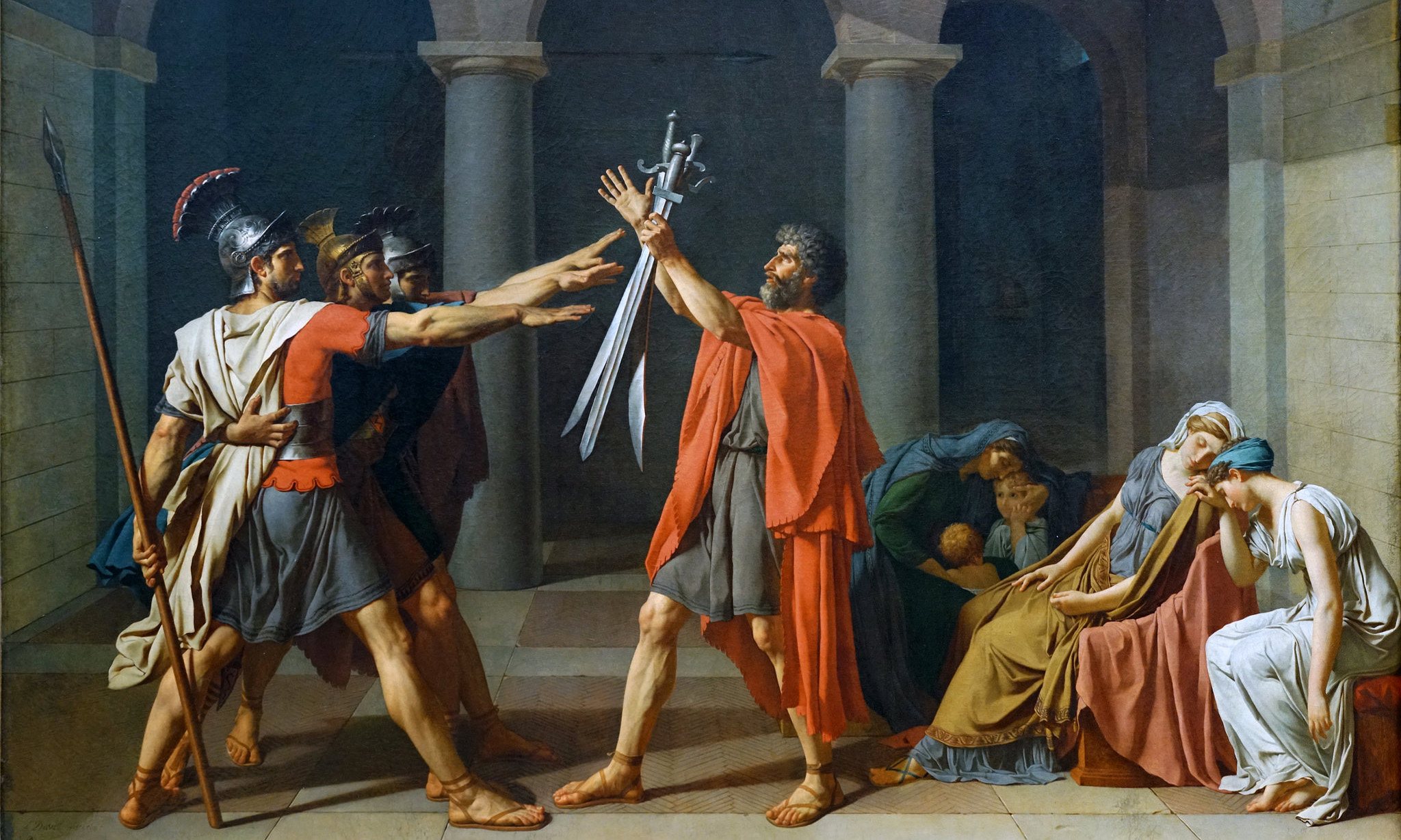
Jacques LouisDavidOathofHoratii

Quentin Skinner Liberty before Liberalism

The history of philosophy, and perhaps especially of moral, social and political philosophy, is there to prevent us from becoming too readily bewitched. The intellectual historian can help us to appreciate how far the values embodied in our present way of life, andd our present ways of thinking about those values, reflect a series of choices made at different times between different possible worlds. This awareness can help to liberate us from the grip of any one hegemonal account of those values and how they should be interpreted and understood. p.117

Continue ReadingQuentin Skinner Liberty before Liberalism
Read more about the article Hegel The Elements of the Philosophy of Right
The revolutions of 1820 5 ForHegelPhilofRight

Hegel The Elements of the Philosophy of Right

A treatise in philosophy is usually not expected to be constructed on such a pattern, perhaps because people suppose that a philosophical product is a Penelope’s web which must be started anew every day. This treatise differs from the ordinary compendium mainly in its method of procedure. It must be under-stood at the outset that the philosophic way of advancing from one matter to another, the general speculative method, which is the only kind of scientific proof available in philosophy, is essentially different from every other. Only a clear insight into the necessity for this difference can snatch philosophy out of the ignominious condition into which it has fallen in our day.

Continue ReadingHegel The Elements of the Philosophy of Right
Read more about the article Hegel The Encyclopedia of the Philosophical Sciences
forhegelcopyright german circa 1830 group of f 1WAEY 570

Hegel The Encyclopedia of the Philosophical Sciences

Philosophy thus may definitely presuppose a familiarity with its objects indeed it must do so as well as an interest in them from the outset, if only because chronologically speaking consciousness produces for itself representations of objects prior to generating concepts of them. What is more, only by passing through the process of representing and by turning towards it, does thinking spirit progress to knowing by way of thinking [denkendes Erkennen] and to comprehending [Begreif/m].

Continue ReadingHegel The Encyclopedia of the Philosophical Sciences
Read more about the article Hegel the Science of Logic
OwllH7DpLowR8izi1jZACVfJQ

Hegel the Science of Logic

§ 1814 By virtue of the nature of the method just indicated, the science exhibits itself as a circle returning upon itself, the end being wound back into the beginning, the simple ground, by the mediation; this circle is moreover a circle of circles, for each individual member as ensouled by the method is reflected into itself, so that in returning into the beginning it is at the same time the beginning of a new member. Links of this chain are the individual sciences [of logic, nature and spirit], each of which has an antecedent and a successor −− or, expressed more accurately, has only the antecedent and indicates its successor in its conclusion.

Continue ReadingHegel the Science of Logic
Read more about the article Hegel Phenomenology of Spirit
hegel

Hegel Phenomenology of Spirit

Φ 89. The experience which consciousness has concerning itself can, by its essential principle, embrace nothing less than the entire system of consciousness, the whole realm of the truth of mind, and in such wise that the moments of truth are set forth in the specific and peculiar character they here possess — i.e. not as abstract pure moments, but as they are for consciousness, or as consciousness itself appears in its relation to them, and in virtue of which they are moments of the whole, are embodiments or modes of consciousness. In pressing forward to its true form of existence, consciousness will come to a point at which it lays aside its semblance of being hampered with what is foreign to it, with what is only for it and exists as an other; it will reach a position where appearance becomes identified with essence, where, in consequence, its exposition coincides with just this very point, this very stage of the science proper of mind. And, finally, when it grasps this its own essence, it will connote the nature of absolute knowledge itself.

Continue ReadingHegel Phenomenology of Spirit
Read more about the article Jurgen Habermas Theory of Communicative Action
forhabermastheoryofcommaction

Jurgen Habermas Theory of Communicative Action

The concept of communicative action is developed in the first set (Chapter III) of "Intermedicate Reflections" [Zwischenbetrachtung], which provides access to three intertwined topic complexes: first, a concept of communication rationality that is sufficiently skeptical in its development but is nevertheless resistant to cognitive-instrumental abridgments of reason; second, a two-level concept of society that connects the "lifeworld" and "system" paradigms in more than a rhetorical fashion; and finally, a theory of modernity that explains the type of social pathologies that are today becoming increasingly visible, by way of the assumption that communicatively structured domains of life are being subordinated to the imperatives of autonomous, formally organized systems of action. Thus the theory of communicative action is intended to make possible a conceptualization of the social-life context that is tailored to the paradoxes of modernity.

Continue ReadingJurgen Habermas Theory of Communicative Action
Read more about the article Jurgen Habermas Between Facts and Norms
habermas

Jurgen Habermas Between Facts and Norms

Moreover, a moral-practical self-understanding of modernity as a whole is articulated in the controversies we have carried on since the seventeenth century about the best constitution of the political community. This self-understanding is attested to both by a universalistic moral consciousness and by the liberal design of the constitutional state. Discourse theory attempts to reconstruct this normative self-understanding in a way that resists both scientistic reductions and aesthetic assimilations.

Continue ReadingJurgen Habermas Between Facts and Norms