Book of Mark
Why would we be reviewing the Book of Mark in a blog about the history of political philosophy.Because it turns out that god-likeness is a central theme of accounts of…
"O god—it has all come true. Light, let me look on you for the last time!"
The subjects to which I would ask each of my readers to devote his earnest attention are these-the life and morals of the community; the men and the qualities by which through domestic policy and foreign war dominion was won and extended. Then as the standard of morality gradually lowers, let him follow the decay of the national character, observing how at first it slowly sinks, then slips downward more and more rapidly, and finally begins to plunge into headlong ruin, until he reaches these days, in which we can bear neither our diseases nor their remedies.
Since the occasion has thus brought public morals under my notice, the subject itself seems to call upon me to look back, and briefly to describe the conduct of our ancestors in peace and war; how they managed the state, and how powerful they left it; and how, by gradual alteration, it became, from being the most virtuous, the most vicious and depraved.
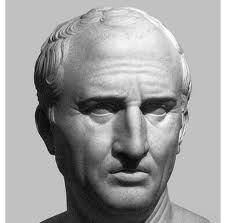
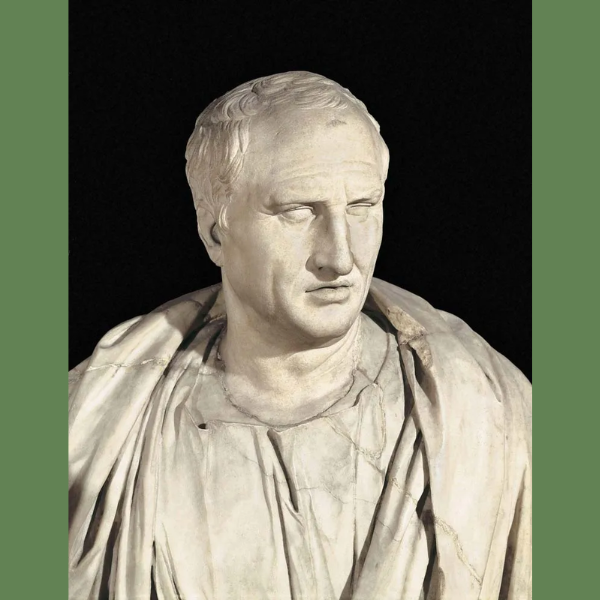
When, O Catiline, do you mean to cease abusing our patience? How long is that madness of yours still to mock us? When is there to be an end of that unbridled audacity of yours, swaggering about as it does now? Do not the nightly guards placed on the Palatine Hill—do not the watches posted throughout the city—does not the alarm of the people, and the union of all good men—does not the precaution taken of assembling the senate in this most defensible place—do not the looks and countenances of this venerable body here present, have any effect upon you? Do you not feel that your plans are detected? Do you not see that your conspiracy is already arrested and rendered powerless by the knowledge which every one here possesses of it? What is there that you did last night, what the night before— where is it that you were—who was there that you summoned to meet you—what design was there which was adopted by you, with which you think that any one of us is unacquainted? [2]
At this point you will see the political circle turning; you should learn to recognize its natural motion and circuit from the very beginning. This is the essential element of civic prudence (the topic of our entire discussion); to see the paths and turns of commonwealths, so that when you know in what direction any action tends, you can hold it back or anticipate it. Book 2 p.47
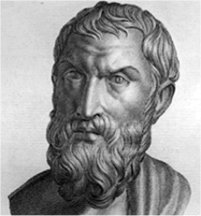
Next, I maintain that mind and spirit are interconnected and compose between them a single substance. But what I may call the head and the dominant force in the whole body is that guiding principle which we term mind or intellect. This is firmly lodge in the mid-region of the breast. Here is the place where fear and alarm pulsate. He is felt the caressing touch of joy. Here, then, is the seat of intellect and mind. The rest of the vital sprit, diffused throughout the body, obeys the mind and moves under its direction and impulse. The mind by itself experiences thought and joy of its own at a time when nothing moves either the body or the spirit. p.70
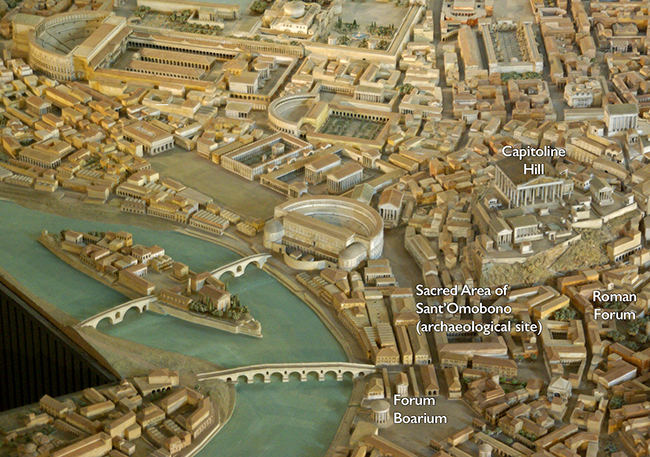
For it is only by observing how each of these constitutions comes into being that one can see when, how, and where the growth, the perfection, the change and the end of each is likely to recur. I believe that the Roman constitution is a better subject than any other for this method of analysis, because its origin and growth have from the very beginning followed natural causes.
"For if the whole of a man's life is to be measured by the standard of pleasure, you see how much trouble is in store for us. We must consider not what is pleasant, but what is consistent with the dignity of human nature; for there is a certain dignity in man, which the beasts do not share. If we lose sight of this, we shall be unable to maintain any standard of conduct." (Cicero, De Finibus 2.44).
"But what is this 'bearing'? It is the same as the endurance of labor... we must then apply to the soul that which is called fortitude, which consists of two parts, the contempt of pain and the contempt of death. To these we must bring a certain alertness of mind, so that we may not only not fear, but even despise them." (Cicero, Tusculan Disputations 2.53).