Read more about the article Francis Bacon Novum Organum
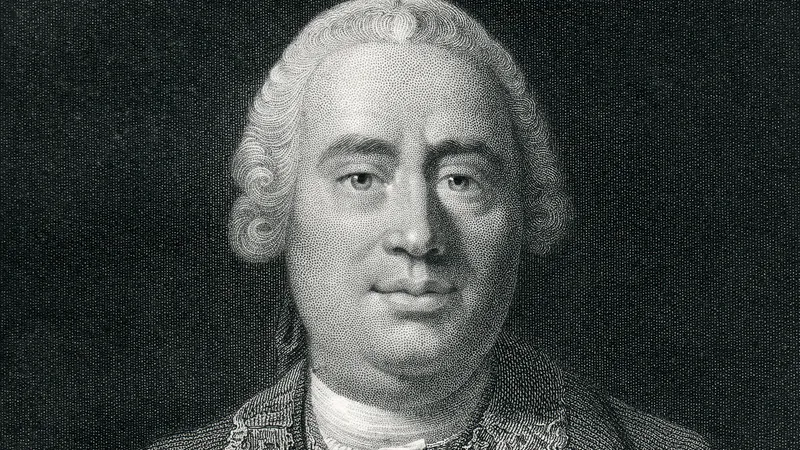
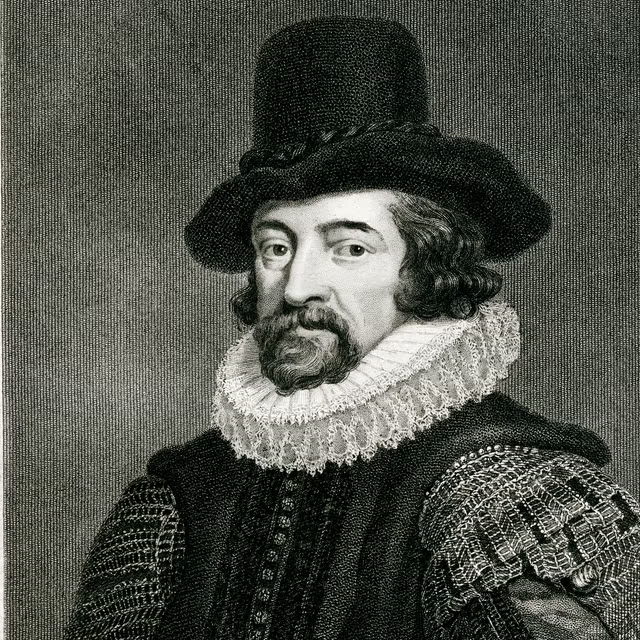
francis bacon royalty free illustration 1691614750

Francis Bacon Novum Organum

LXXXV. Nor is it only the admiration of antiquity, authority, and unanimity, that has forced man’s industry to rest satisfied with present discoveries, but, also, the admiration of the effects already placed within his power. For[63] whoever passes in review the variety of subjects, and the beautiful apparatus collected and introduced by the mechanical arts for the service of mankind, will certainly be rather inclined to admire our wealth than to perceive our poverty: not considering that the observations of man and operations of nature (which are the souls and first movers of that variety) are few, and not of deep research; the rest must be attributed merely to man’s patience, and the delicate and well-regulated motion of the hand or of instruments. To take an instance, the manufacture of clocks is delicate and accurate, and appears to imitate the heavenly bodies in its wheels, and the pulse of animals in its regular oscillation, yet it only depends upon one or two axioms of nature.
Continue ReadingFrancis Bacon Novum Organum
Read more about the article Machiavelli the Florentine Histories
florence

Machiavelli the Florentine Histories

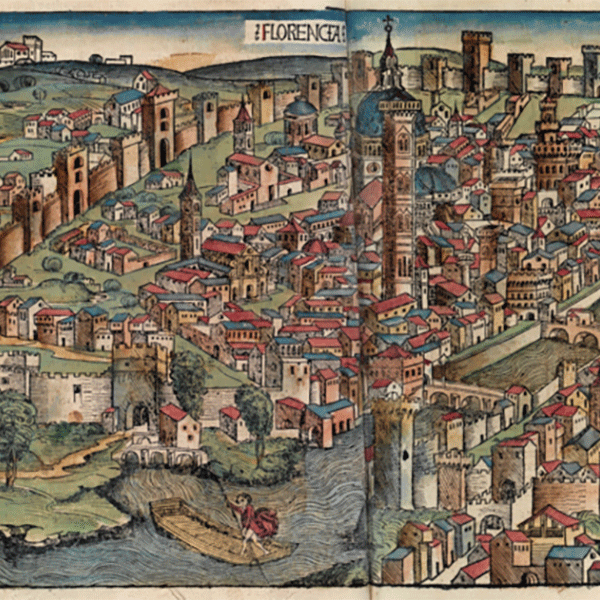
Those serious, though natural enmities, which occur between the popular classes and the nobility, arising from the desire of the latter to command, and the disinclination of the former to obey, are the causes of most of the troubles which take place in cities; and from this diversity of purpose, all the other evils which disturb republics derive their origin. This kept Rome disunited; and this, if it be allowable to compare small things with great, held Florence in disunion; although in each city it produced a different result; for animosities were only beginning with the people and nobility of Rome contended, while ours were brought to a conclusion by the contentions of our citizens. A new law settled the disputes of Rome; those of Florence were only terminated by the death and banishment of many of her best people.

Continue ReadingMachiavelli the Florentine Histories
Read more about the article Machiavelli, Discourses on Livy
discoursesonlivy

Machiavelli, Discourses on Livy

I then only remained to assign its place to the popular element, and the Roman nobles growing insolent from causes which shall be noticed hereafter, the commons against them, when, not to lose the whole of their power, they were forced to concede a share to the people; while with the share which remained, the senate and consults retained so much authority that they still held their own place in the republic. In this way the tribunes of the people came to be created, after whose creation the stability of the State was much augmented, since each the three forms of government had now is due influence allowed it. And such was the good fortune of Rome that although her government passed from the kings to the nobles, and from these to the people, by the steps and for the reasons noticed above, still the entire authority of the kingly element was not sacrificed to strengthen the authority of the nobles, nor were the nobles divested of their authority to bestow it on the commons; but three, blending together, made up a perfect State; which perfection, as shall be fully shown in the next two Chapters, was reached through the dissensions of the commons and the senate.

Continue ReadingMachiavelli, Discourses on Livy
Read more about the article St. Thomas Aquinas, On Kingship
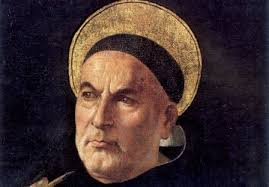
Stthomasaquinas

St. Thomas Aquinas, On Kingship

Now the end which befits a multitude of free men is different from that which befits a multitude of slaves, for the free man is one who exists for his own sake, while the slave, as such, exists for the sake of another. If, therefore, a multitude of free men is ordered by the ruler towards the common good of the multitude, that rulership will be right and just, as is suitable to free men. If, on the other hand, a rulership aims, not at the common good of the multitude, but at the private good of the ruler, it will be an unjust and perverted rulership.

Continue ReadingSt. Thomas Aquinas, On Kingship
Read more about the article Montesquieu, The Spirit of the Laws
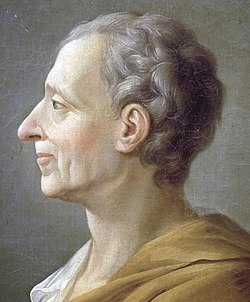
250px Charles Montesquieu

Montesquieu, The Spirit of the Laws

1. For the better understanding of the first four books of this work, it is to be observed that what I distinguish by the name of virtue, in a republic, is the love of one's country, that is, the love of equality. it is not a moral, nor a Christian, but a political virtue; and it is the spring which sets the republican government in motion, as honour is the spring which gives motion to monarchy. Hence it is that I have distinguished the love of one's country, and of equality, by the appellation of political virtue.

Continue ReadingMontesquieu, The Spirit of the Laws
Read more about the article Pierre Bayle, Political Writings
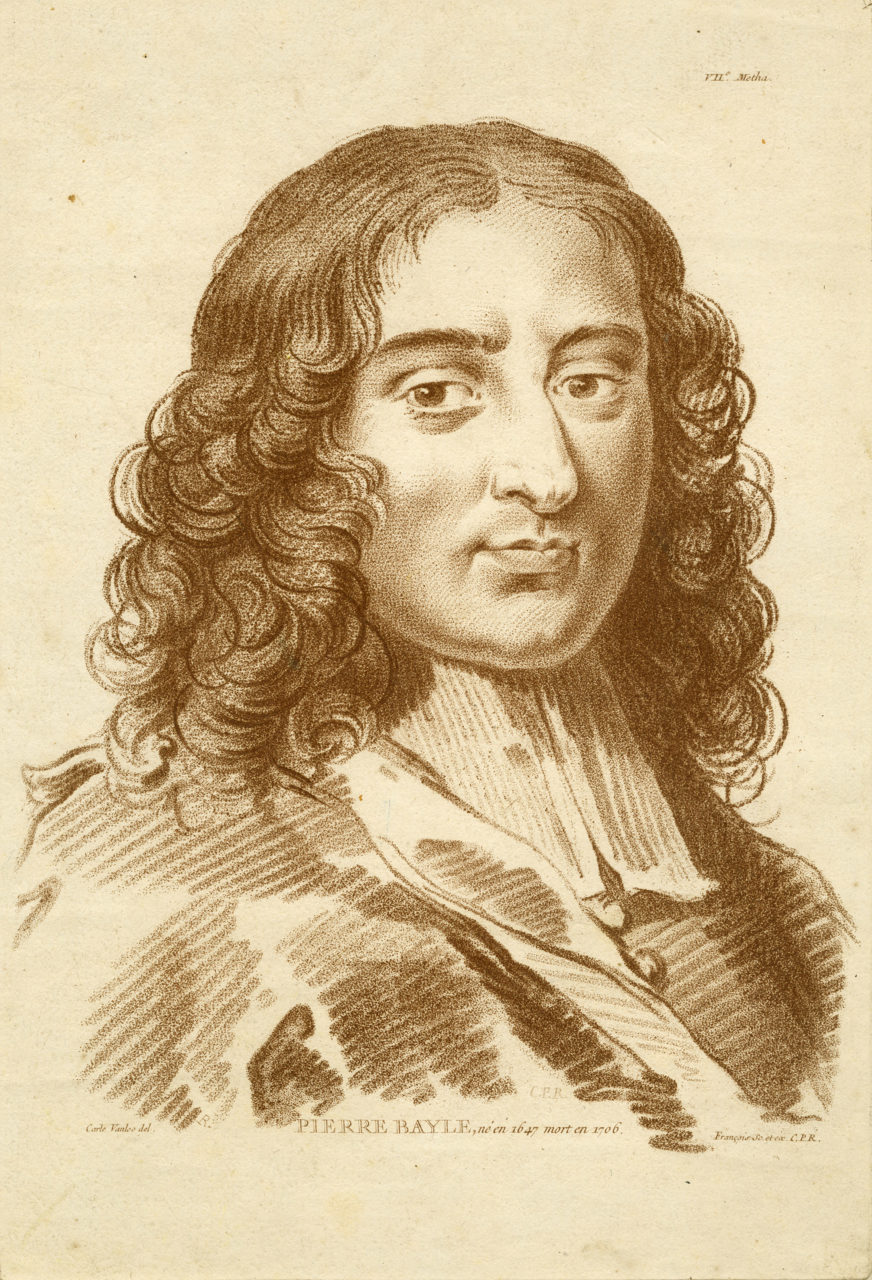
bayle stadsarchief 872x1280

Pierre Bayle, Political Writings

He spoke out very forthrightly against those who maintained that the authority of monarchs was unlimited. He maintained that monarchs cannot impose taxes without the consent of the people, and that they are more obliged than their subject to observe the laws of God and those of nature; and that the covenants which they make impose the same obligations on themselves as on their subjects. p.23-24

Continue ReadingPierre Bayle, Political Writings
Read more about the article Leo Strauss Natural Right and History
Hiero of Syracuse and victors

Leo Strauss Natural Right and History

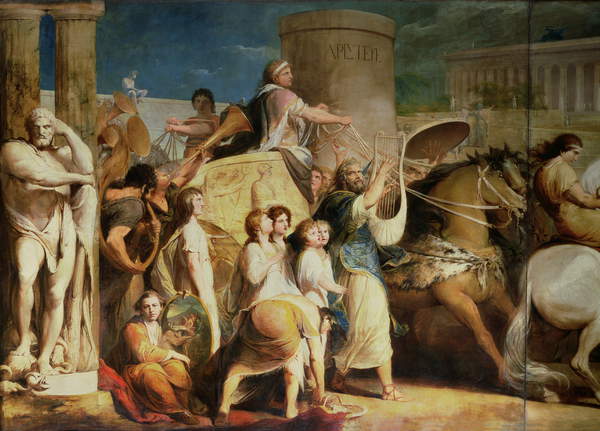
If there is no standard higher than the ideals of one’s society, there exists no possibility of taking a critical distance from those ideals. But the mere fact that we can raise the question of the worth of the ideals of our society shows that there is something in man that is not altogether enslaved to his society, and therefore that we are able, and even obliged, to look for a standard with reference to which we can judge of the ideals of our society, as well as of any other society. This standard cannot be found in the needs of the society concerned.

Continue ReadingLeo Strauss Natural Right and History
Read more about the article Arendt, What is Freedom?
arendt mezz

Arendt, What is Freedom?

Political institutions, no matter how well or how badly designed, depend for continued existence upon acting men; their conservation is achieved by the same means that brought them into being. Independent existence marks the work of art as a product of making; utter dependence upon further acts to keep it in existence marks the state as a product of action. p.153

Continue ReadingArendt, What is Freedom?