
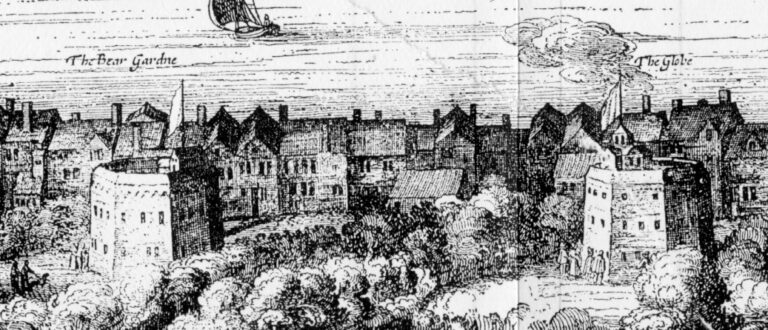
The Early Modern period was a sea change in social relationships and political possibilities due to the emergence of towns. Technologies of reading and writing spread. In these early social exchanges between men who were determined, privileged and aware enough to learn how to read and write and practice it. Renewed quest for knowledge, Renaissance humanism, the development of the Royal Society, and learnings that shattered world views. The Reformation challenged the institution of the Catholic church. In political thought the theories of divine right are crumbling, the 30 years war ensues.
First they discovered the heavens and the earth were not positioned or moving as they thought.
Then came to grips with being in a church that is not the Catholic Church — throwing off a major institution from critiques of its legitimacy. The Reformation may have begun with the throwing off of a yoke but what emerged from it a number of men believing in their own ability to interpret the Bible and lead politically. Since one’s confession had been something to die for the Reformation also led to the Wars of Religion due to the mistaken leftover idea from the theory of divine right that he who is closest to God must be the political leader. If it is this closeness that bestows the legitimacy, then who is right about the details of their confession would then be the rightful political leader. Since there are various points of contention when reading the Good Book, factions ensued, each thinking it had some sort of Holy Imperative to also rule politically. Hobbes works on this problem.
The Enlightenment– a society of letters, the Royal Society of England, groups of scholars coming together to work through problems in the mechanical sciences– the epoch it became clear that accelerated learning occurred when men with similar interests could come together and turn the problems over together — when it was realized that progress in science seemed to be phenomenally related to cosmopolitanism.
Why did I include multiple texts, some of which are hard to read? Well we have to get to Hegel before we can explore the modern age. Secondly, when a text is hard to read, the answer is to read secondary literature that was written by a learned person in the field. The secondary literature on these authors is phenomenal and extensive. I have engaged in severe restraint in choosing texts for this syllabus.
Machiavelli
Florentine Histories 1520-1525
Castiglione
The Book of the Courtier 1528
Hobbes
1642
Spinoza
Theological Political Treatise 1670
Pierre Bayle
Various Thoughts on the Occasion of a Comet 1682
Locke
Locke Second Treatise on Government 1689
Hume
Treatise on Human Nature 1739-1740
Rousseau
Discourse on the Arts and Sciences 1750
Discourse on the Origin of Inequality 1755
The Social Contract 1762
Kant
Prolegomena to any Future Metaphysics 1783
Groundwork of the Metaphysics of Morals 1785
Critique of Practical Reason 1788
Critique of Judgment 1790
Religion within the Bounds of Reason Alone 1793
Perpetual Peace 1795
Hegel
Science of Logic 1812
Encyclopedia of the Philosophical Sciences 1817
Philosophy of Right 1820
All so we can read and evaluate Leo Strauss’s 1953 Natural Right and History